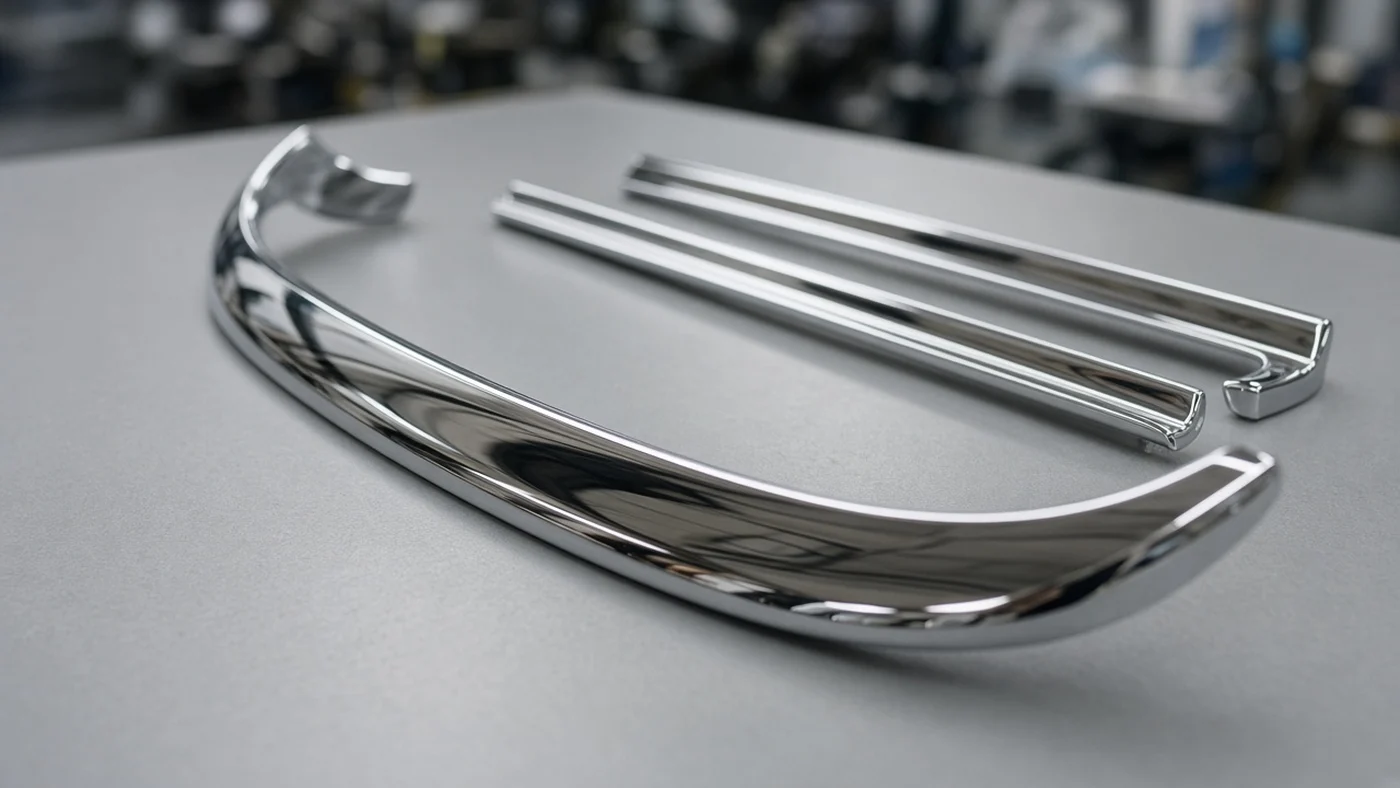
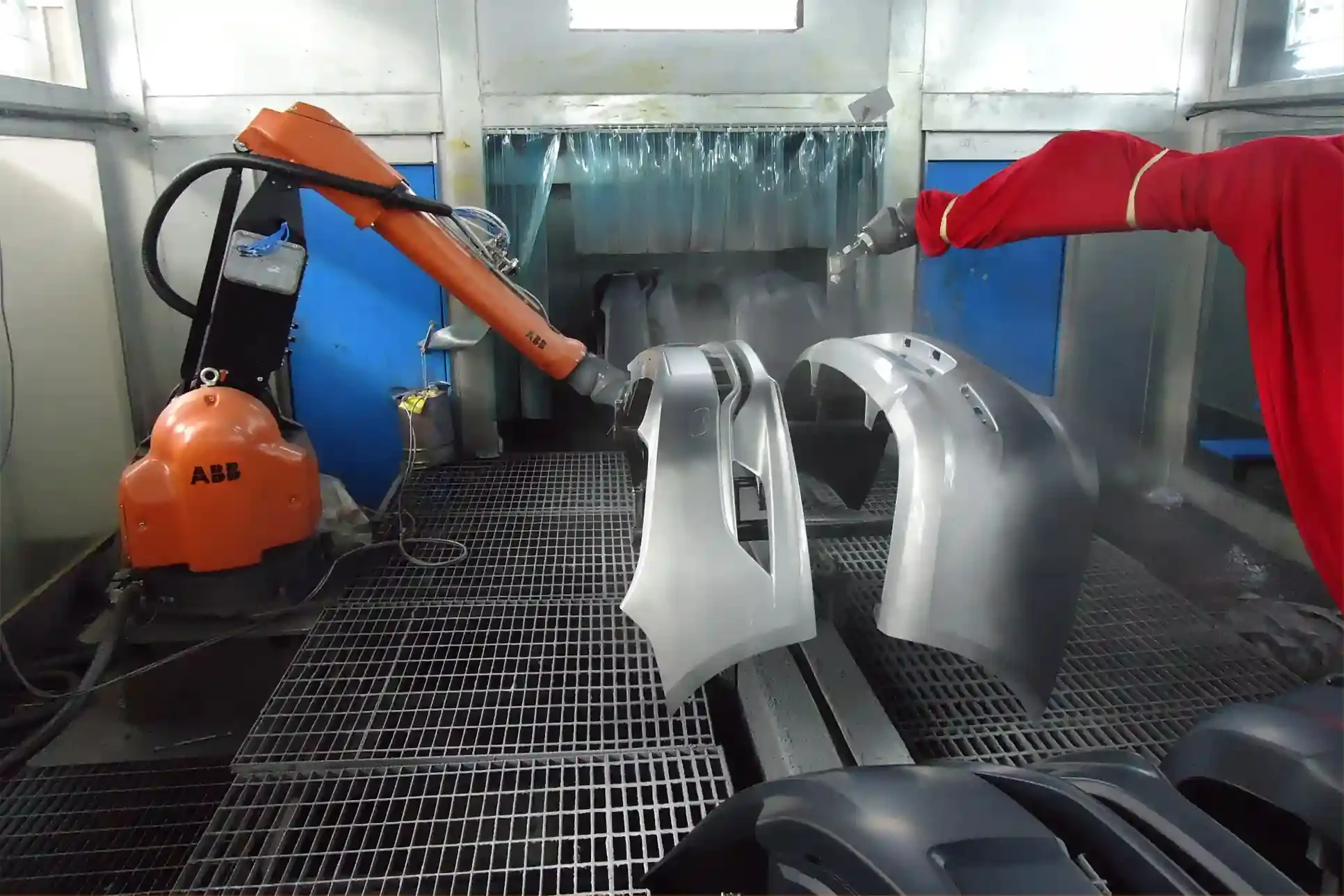
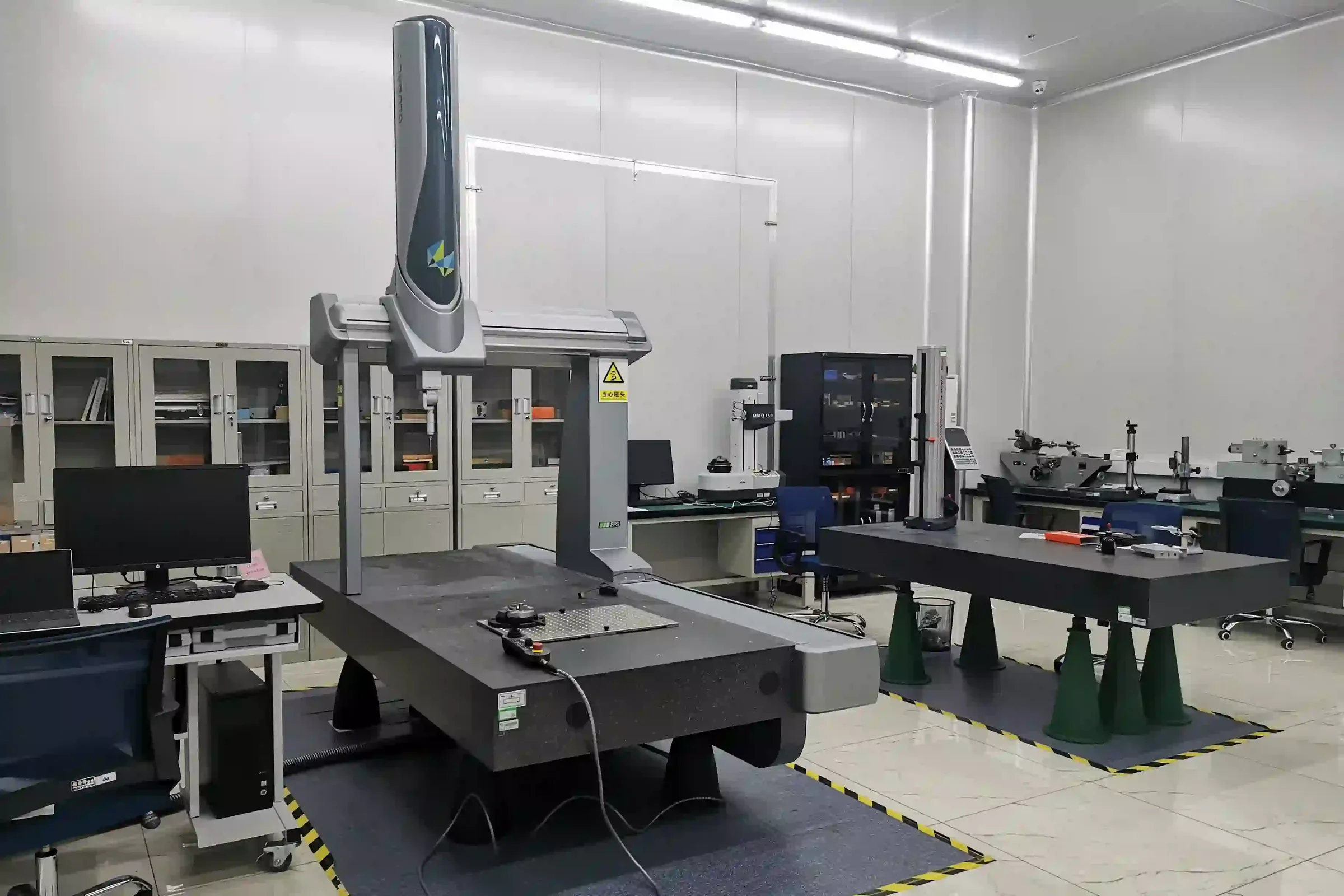
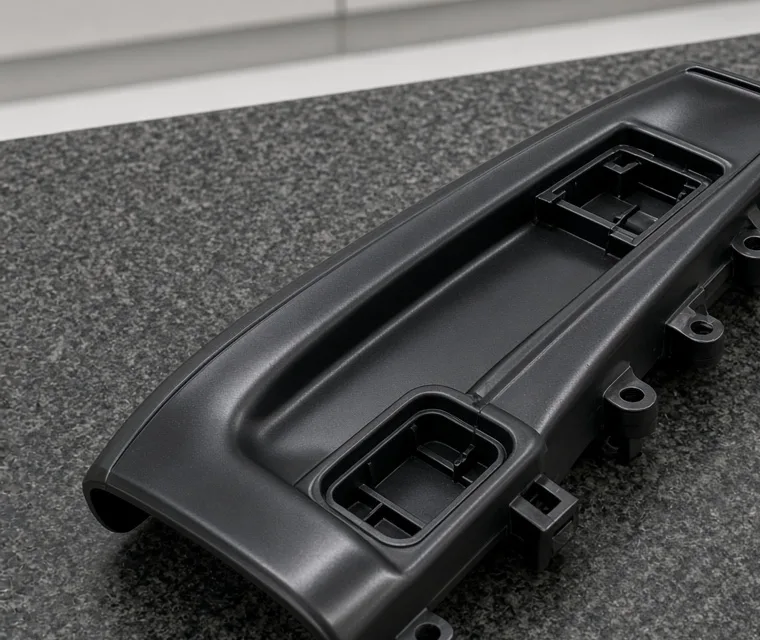
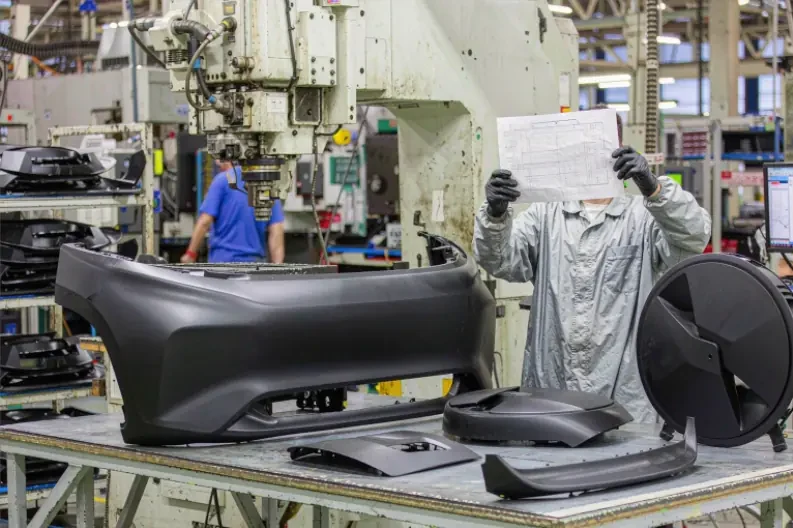
Decorative chrome plating on plastic for grilles, trim, door handle covers and mirror housings. Yirox runs its own fully automatic gantry rack plating line with 28 tanks, plating copper, nickel and trivalent chrome onto plating-grade ABS parts molded in the same factory in Wuxi.
| Item | Yirox capability |
|---|---|
| Plating line | 1 fully automatic gantry rack plating line, 28 tanks, in-house |
| Process | Electroless nickel → pyrophosphate copper → semi-bright nickel → bright nickel → microporous nickel → chrome |
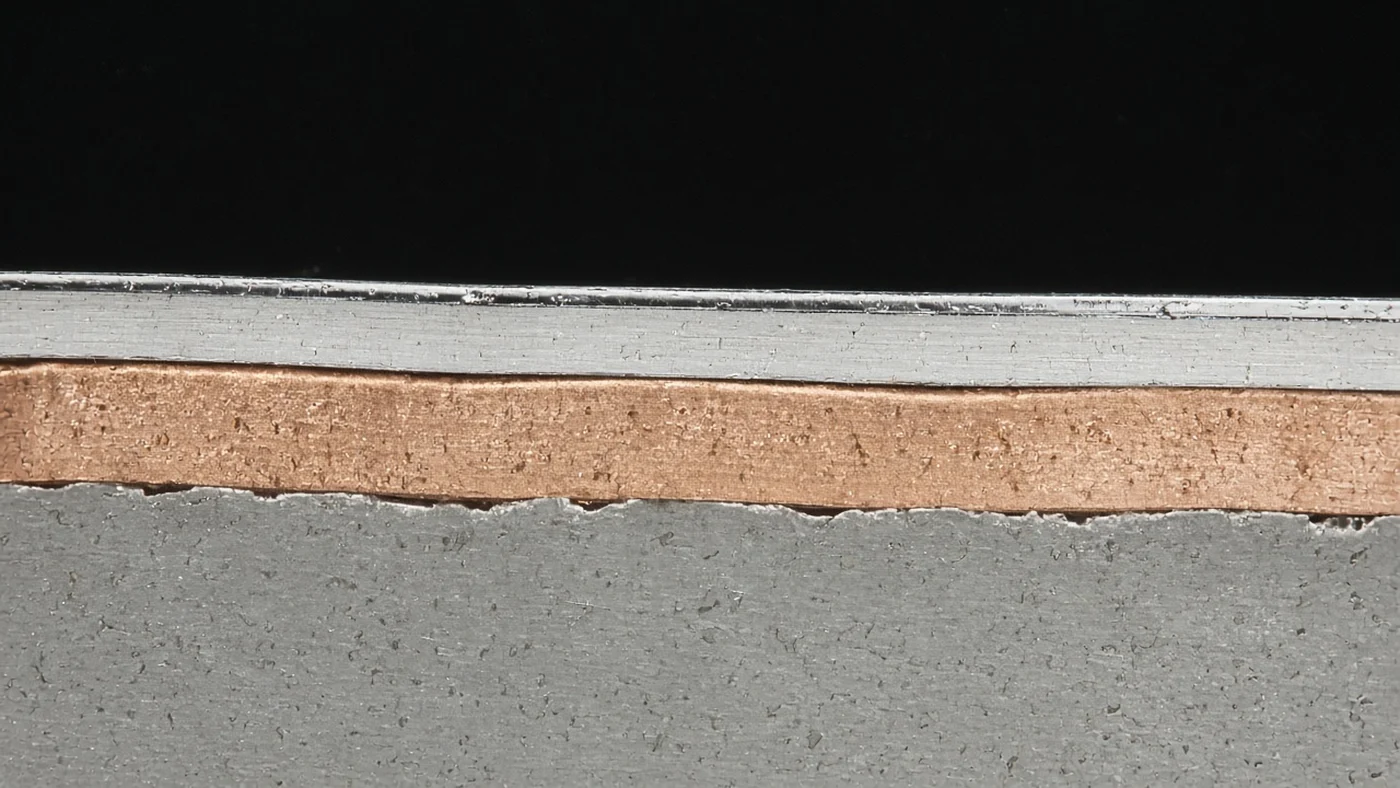
| Layer thickness | Copper 18–22 μm, nickel 12–18 μm, chrome 0.2–0.3 μm; total 32 μm or more |
| Chrome type | Trivalent chrome as standard; hexavalent only on written request |
| Corrosion test | CASS 48 h with no blistering |
| Thermal cycle | −30 ↔ 80 °C, 4 cycles |
| Substrate | Plating-grade ABS (PA-727 / HR-500 equivalent); ordinary PC/ABS is not suitable |
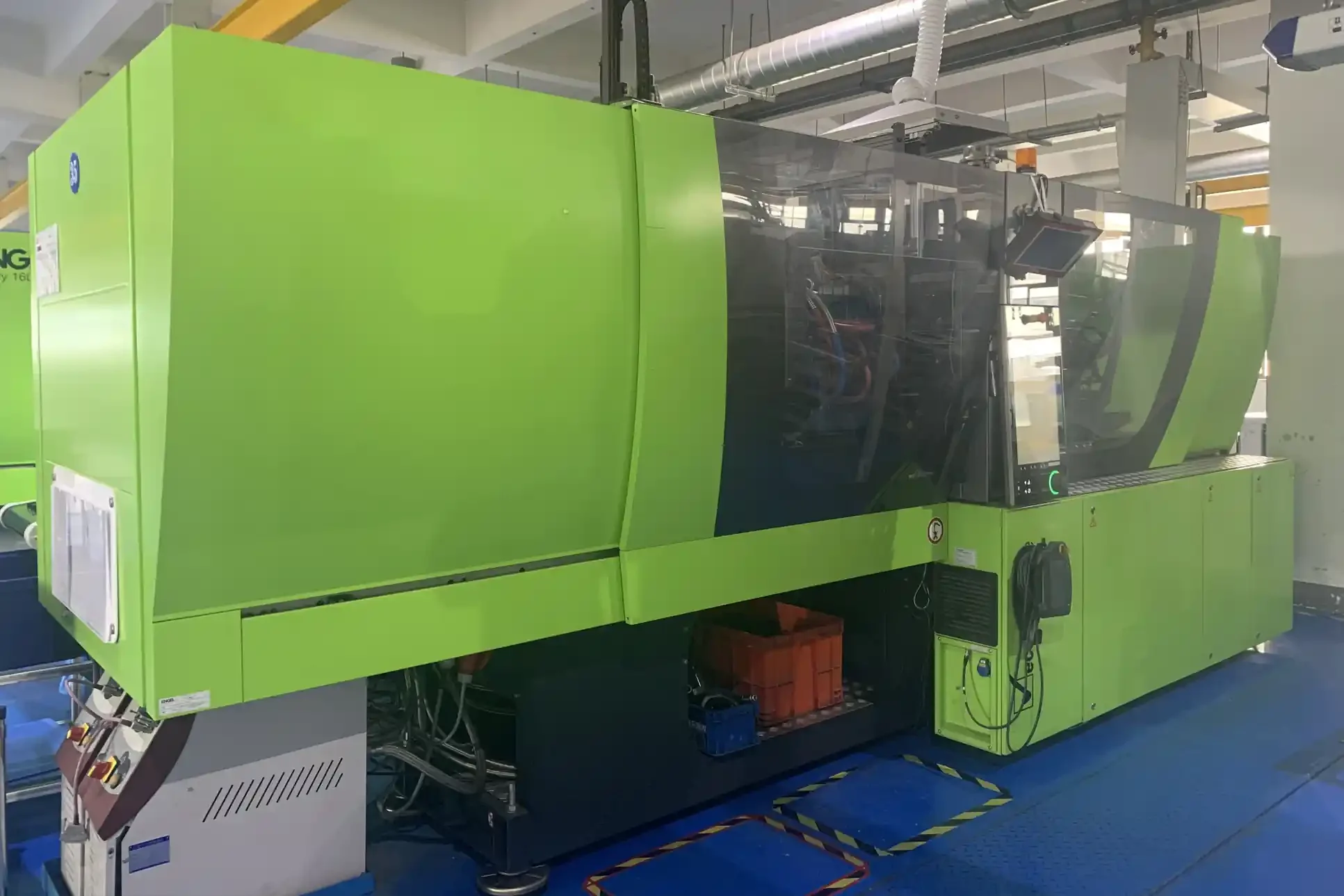
| Molding | Parts molded in-house on 42 machines, 90–2,500 t |
| Order size | Low MOQ on selected items; confirmed in your quote |
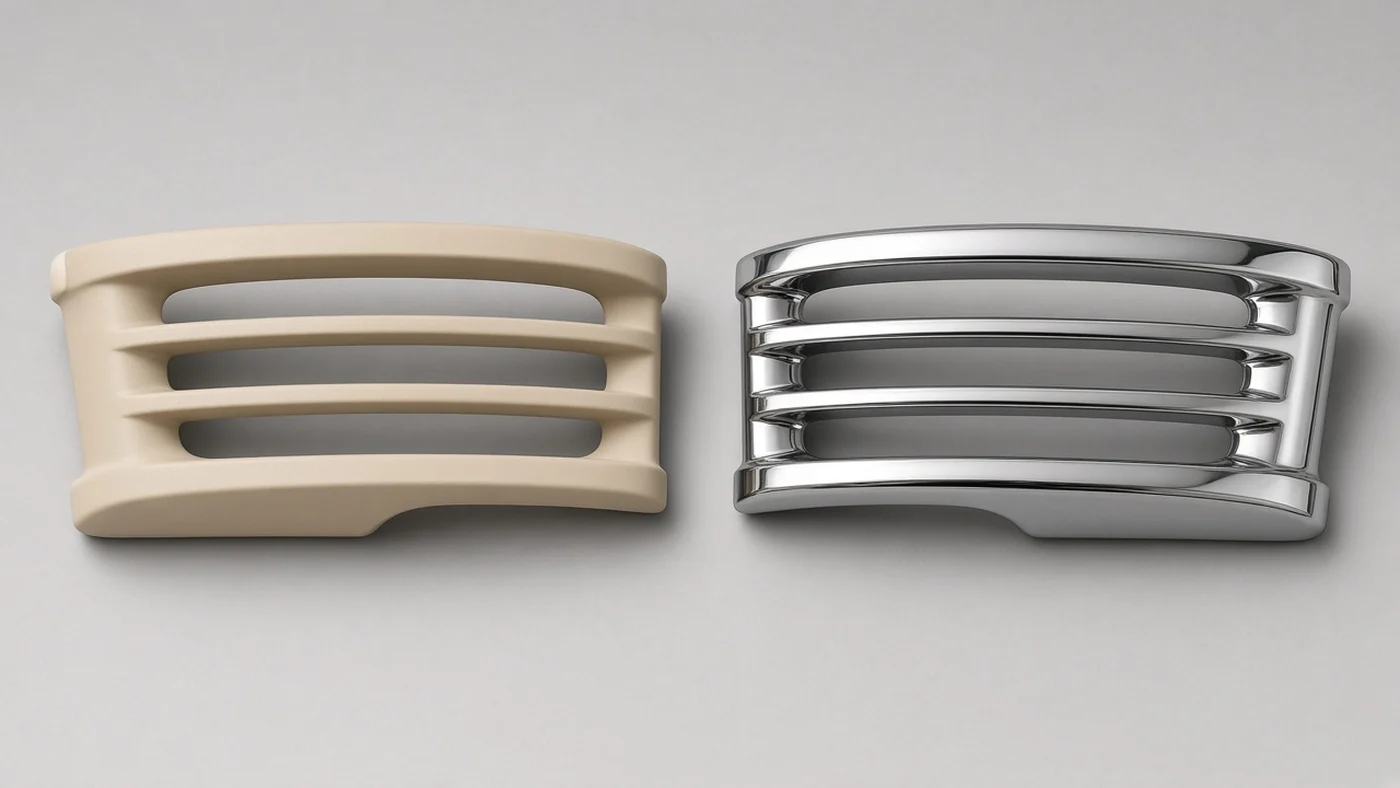
Chrome plating on plastic, also called plating on plastics (POP) or plastic electroplating, puts a thin metal coating on a molded plastic part so it looks like polished chrome. The part stays light and corrosion-free underneath, but the surface has the bright, reflective finish buyers expect on grilles, emblems and trim.
Chrome plating plastic parts this way gives the bright metal look at a fraction of the weight of metal. Most of what we plate is chrome plated ABS, finished with trivalent chrome plating.
Plastic does not conduct electricity, so it cannot go straight into a chrome bath like steel. The surface is first etched and given a thin chemical metal layer. After that, copper, nickel and chrome are built up by electroplating. The result is a layered coating where each metal has a job: copper levels the surface, nickel gives brightness and corrosion resistance, and chrome gives the final color and hardness.
Our line plates parts on racks moved automatically by a gantry between 28 tanks. Rinses and activation steps sit between the main stages below.

The ABS surface is etched so metal can anchor to it, then activated to accept the first metal layer.
A thin nickel layer is deposited chemically, without current, so the plastic becomes conductive.
Copper builds a ductile, level base layer of 18–22 μm that absorbs stress between plastic and metal.
Two nickel layers give corrosion protection and brightness. Total nickel is 12–18 μm.
A thin nickel layer with tiny pores spreads corrosion over the surface so it does not attack one spot.
A final chrome layer of 0.2–0.3 μm gives the chrome color, hardness and tarnish resistance.
Buyers sometimes compare chrome parts only by how bright they look on day one. Long-term appearance depends on the layer build underneath. Too little copper and the coating can crack when the plastic expands and contracts. Too little nickel and corrosion reaches the copper. Our standard build is a total of 32 μm or more.

| Layer | Thickness | Function |
|---|---|---|
| Copper | 18–22 μm | Levels the surface and absorbs thermal stress |
| Nickel (semi-bright, bright, microporous) | 12–18 μm | Corrosion resistance and brightness |
| Chrome | 0.2–0.3 μm | Color, hardness and tarnish resistance |
| Total | 32 μm or more | Minimum total build |
Decorative chrome can be plated from a trivalent or a hexavalent chrome bath. Hexavalent chrome is the older process and gives a slightly bluer, brighter color. Trivalent chrome is now widely used because it is less hazardous in the plating process.
Yirox uses trivalent chrome as standard. Hexavalent chrome is used only when a customer asks for it in writing, for example to match an existing part. If you sell in markets with chemical restrictions, tell us at the quote stage so we can confirm the right process and documents.
Not every plastic can be chrome plated. The etching step works on the butadiene in ABS, so the material must be a plating-grade ABS with the right structure.

| Material | Suitable for plating? | Notes |
|---|---|---|
| Plating-grade ABS (PA-727 / HR-500 equivalent) | Yes | Our standard substrate for chrome parts |
| General-purpose ABS | Not recommended | Adhesion and appearance can be inconsistent |
| Ordinary PC/ABS | No | Not suitable on our line |
| PP, TPO, ASA | No | Use paint or a molded-in finish instead |
If a part needs chrome on some areas and paint or texture on others, we can discuss masking or a two-part design during DFM.
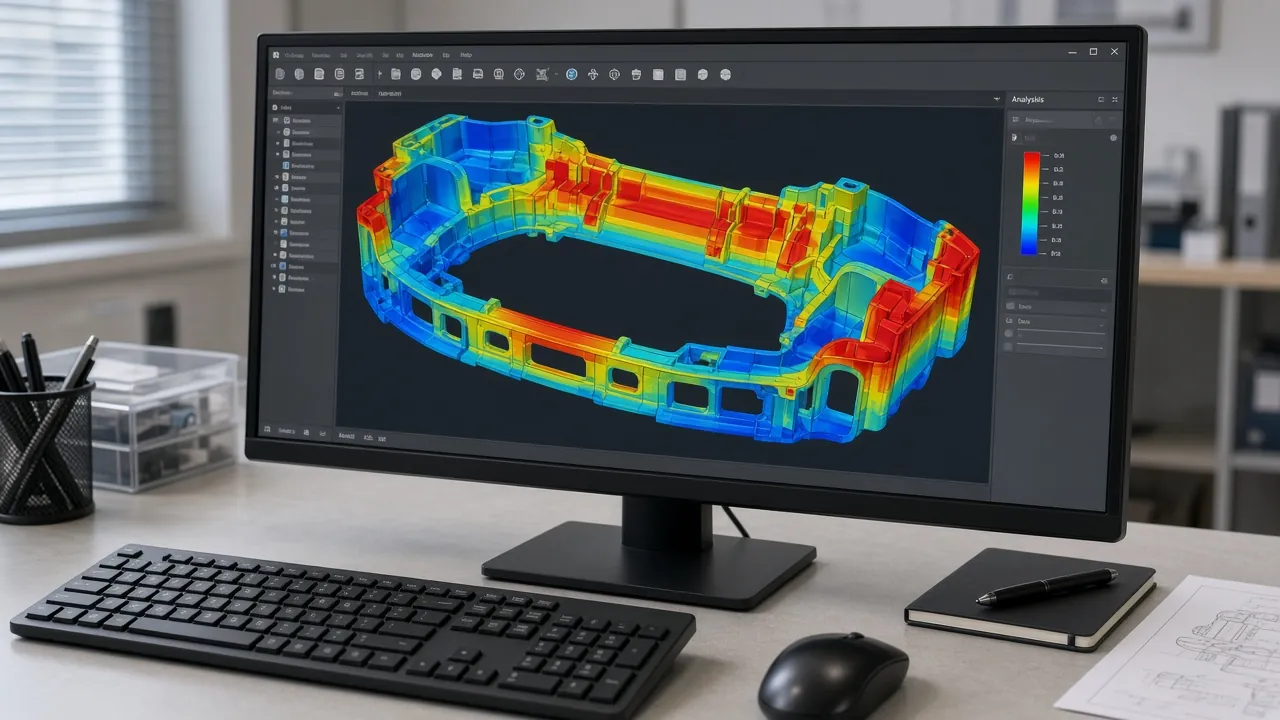
Plating copies every detail of the molded surface and adds a thin, rigid metal skin. Designs that work well for paint can fail in plating. These are general guidelines for plated parts.

Current concentrates on sharp edges, which build thick metal, while deep recesses receive less. Rounded edges and shallow features plate more evenly.
Sink marks and flow lines are magnified by bright chrome. Even wall thickness and well-placed gates are essential.
Each part is held on a rack by contact points. These points need to be on hidden faces, and the part must hang so solution drains away.
Molded-in stress can cause poor adhesion or blistering. Mold temperature and injection settings are tuned for plated parts, and we mold them in our own factory.
The plating adds about 32 μm or more. Tight clip or snap fits should allow for it.
| Advantages | Limitations |
|---|---|
| Bright chrome look at a fraction of the weight of metal | Only plating-grade ABS is suitable on our line |
| No rust on the substrate | Design rules are stricter than for paint |
| Complex shapes molded in one piece | Rack points must be planned on hidden faces |
| Consistent finish across a product range | Damaged plating cannot be touched up like paint |
Chrome plating is not the only way to give a part a metallic look. This comparison helps decide which finish fits your product.

| Finish | Look | Durability | Best for |
|---|---|---|---|
| Chrome plating on ABS | True mirror chrome | High, with the right layer build and testing | Grilles, trim, handle covers |
| Metallic or silver paint | Painted metallic, not mirror | Good with clearcoat | Parts where a chrome look is not required |
| Gloss black paint | Piano black | Good with clearcoat | Black styling and chrome-delete looks |
| Molded-in color | Plain resin color | Depends on resin | Low-cost hidden or textured parts |
Some buyers want the opposite of chrome: black trim to replace factory chrome. For those parts, see gloss black painting on our painting and surface finishing page.
Most of these are prevented in design and molding, not in the plating tank. That is why we review plated parts in DFM and mold them with settings for low stress.
| Defect | What it looks like | Typical cause |
|---|---|---|
| Blistering | Small bubbles under the plating | Poor adhesion from molding stress or etching |
| Pitting | Tiny holes in the surface | Contamination or gas on the surface during plating |
| Burning | Dull, rough edges | Too much current on sharp edges |
| Dull areas | Low brightness in recesses | Low current in deep features |
| Rack marks | Small unplated spots | Contact points on visible faces |
| Cracking | Fine cracks in the coating | Thin copper layer or thermal stress |

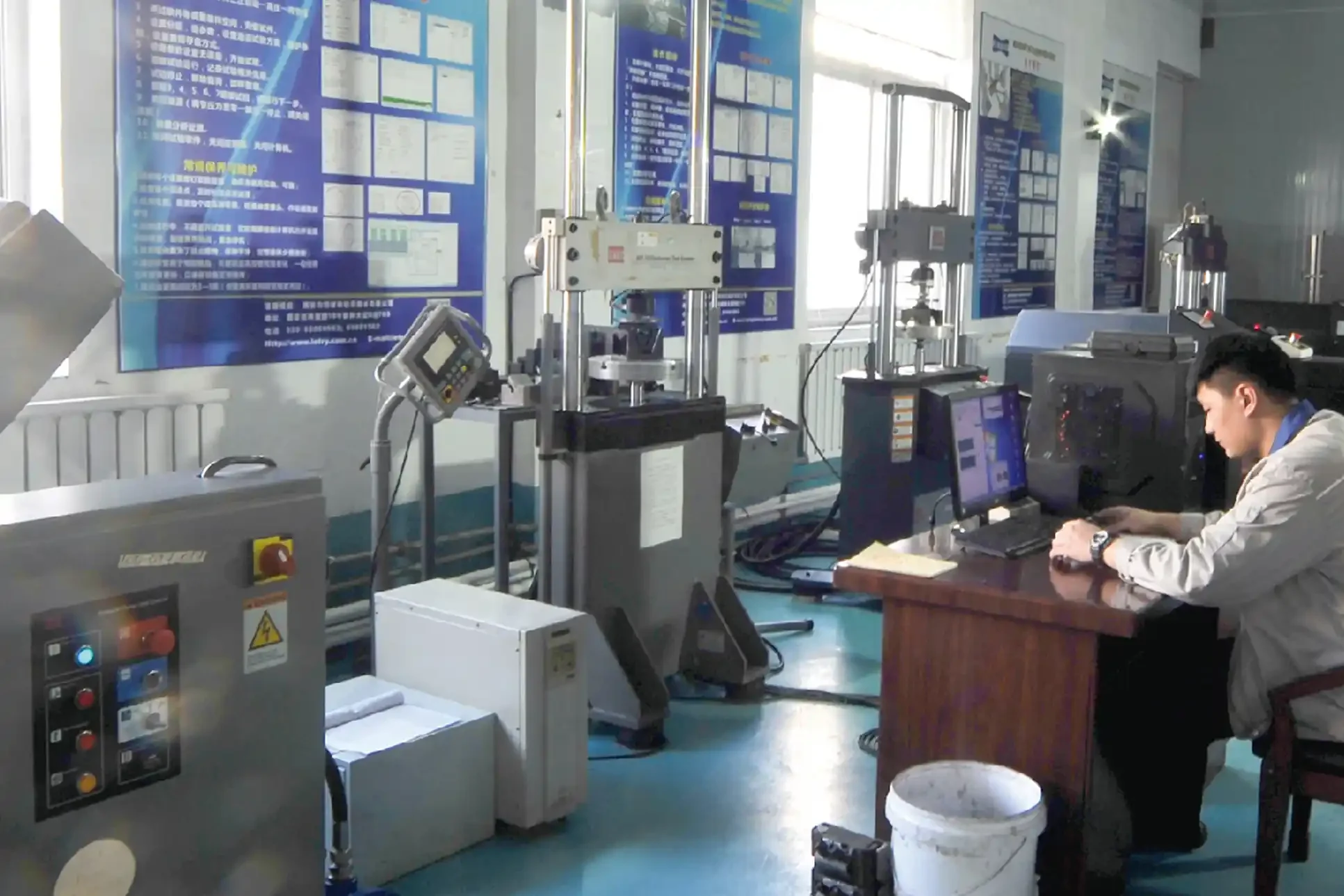
Copper-accelerated acetic acid salt spray. Our standard is 48 hours with no blistering. CASS 24/48 h and neutral salt spray to ASTM B117 can also be run by SGS or CTI.
Parts are cycled between −30 °C and 80 °C for 4 cycles to check that the coating does not crack or lift as the plastic expands and contracts.
The copper, nickel and chrome build is set in the process sheet and checked on samples against the 32 μm minimum.
Plating adhesion is checked on samples, with outsourced tests to ISO 2409 / ASTM D3359 when your standard requires it.
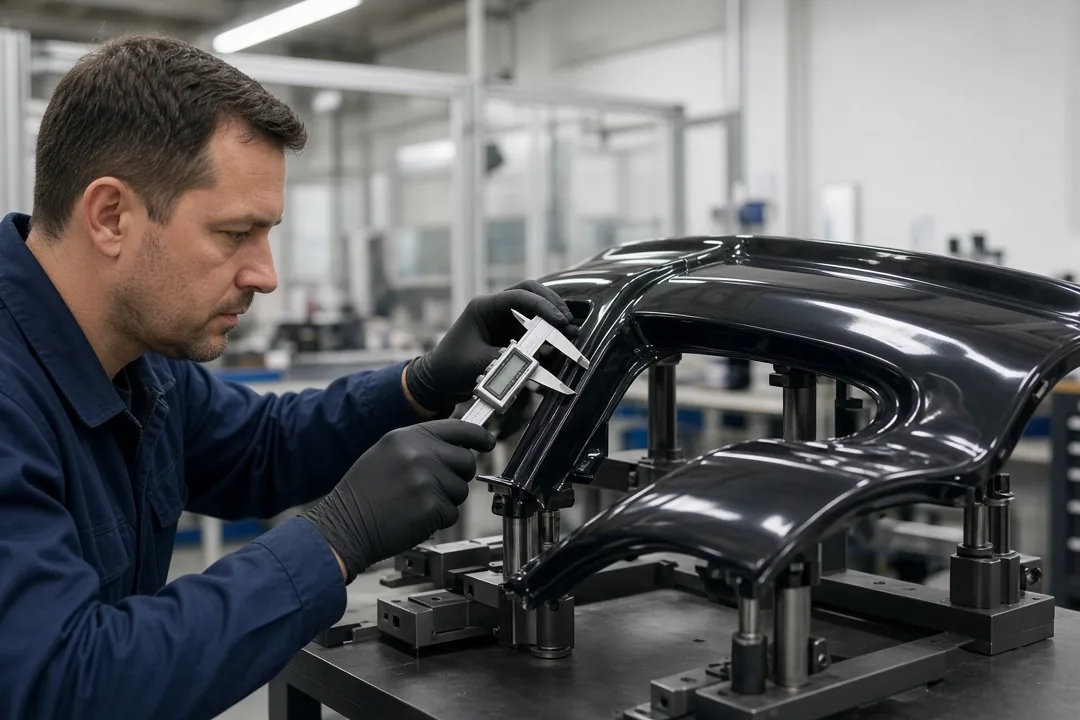
Every part is checked for pits, burns, dull areas and rack marks against an approved master sample.
Have a test standard to meet?Tell us the tests your customer requires and we will confirm the test plan for your chrome plating on plastic parts.
These exterior parts are typical candidates for chrome on plating-grade ABS. Whether a specific design can be plated is confirmed in DFM.
Molded on our 250–450 t machines, then plated.
Small visible covers with a close fit to the handle.
Full chrome or chrome accents.
Decorative trim for body sides, bumpers and tailgates.
Plating quality depends on the whole chain: material, molding, racking, plating chemistry and testing. When you compare suppliers, ask:

At Yirox, molding and plating are in the same factory, our layer build is documented, and CASS 48 h with no blistering is our standard. Because the mold, the molding settings and the plating are controlled by one team, adhesion problems can be traced and fixed without arguments between suppliers.

No shipping raw parts between suppliers, and plating problems are fed back to molding quickly.
Plating-grade ABS chosen at the DFM stage.
Copper, nickel and chrome to a documented thickness.
Hexavalent only on written request.
CASS 48 h and thermal cycle checks.
FAI, inspection records and PPAP up to Level 3 when required.
You send CAD or a sample and tell us where chrome is needed. We sign an NDA if needed.
We check edges, recesses, rack points and material.
Parts are molded in plating-grade ABS in our factory.
Sample parts are plated and tested for appearance, adhesion and corrosion.
You approve a master sample.
Parts are plated, inspected and packed to protect the surface.
We offer low MOQ on selected items. The quantity for your part is confirmed in your quote.
Ready to quote chrome parts?Send the part file and quantity and we will quote molding and plating together.
A buyer on what to check before approving chrome trim.
“Chrome trim looks simple until you start checking the edges, reflections and surface consistency. We appreciated that the team understood our appearance requirements and was willing to review the details with us rather than just saying the finish was acceptable.”
Names and companies withheld at the customer’s request.
Yes. Plastic parts are made conductive with an electroless nickel layer, then plated with copper, nickel and chrome. The plastic must be a plating-grade ABS for good adhesion.
With the right layer build it is. Our parts have a total coating of 32 μm or more and are tested to CASS 48 h with no blistering and thermal cycling from −30 °C to 80 °C.
Ordinary PC/ABS is not suitable on our line. We use plating-grade ABS equivalent to PA-727 or HR-500.
Trivalent chrome is our standard. Hexavalent chrome is used only on written customer request.
Decorative chrome plating is a thin chrome layer over nickel, used for appearance and corrosion resistance rather than wear resistance. It is the type used on automotive trim, grilles and badges.
Our line is set up for parts molded in our own factory, because molding conditions affect plating adhesion. Contact us if you have existing parts and we will advise.
We offer low MOQ on selected items. The quantity is confirmed in your quote.
Send your part design or a sample and mark the chrome areas. We will reply with DFM comments and a quote.