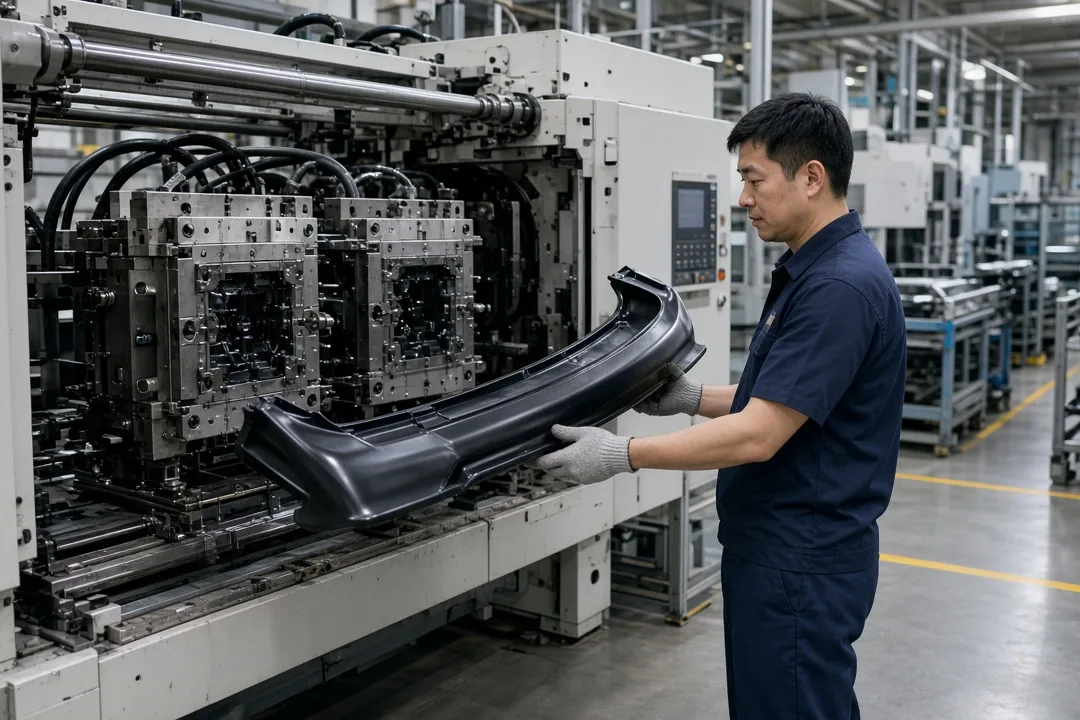
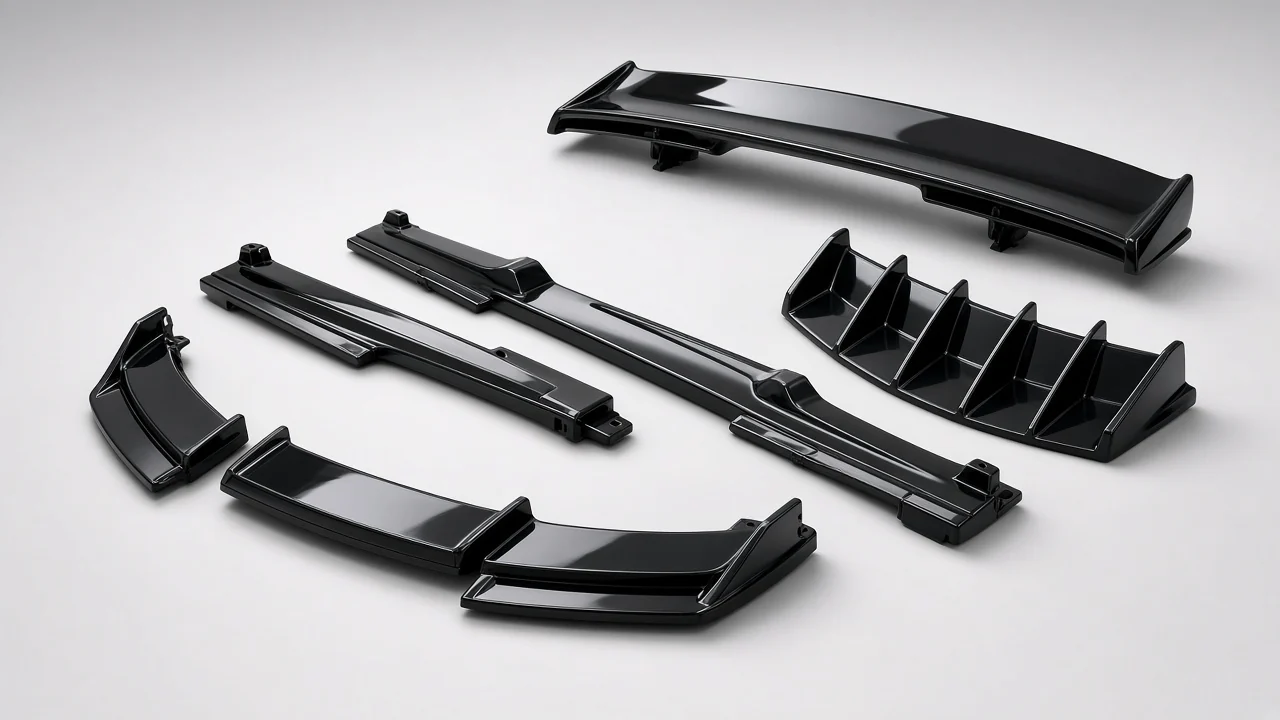
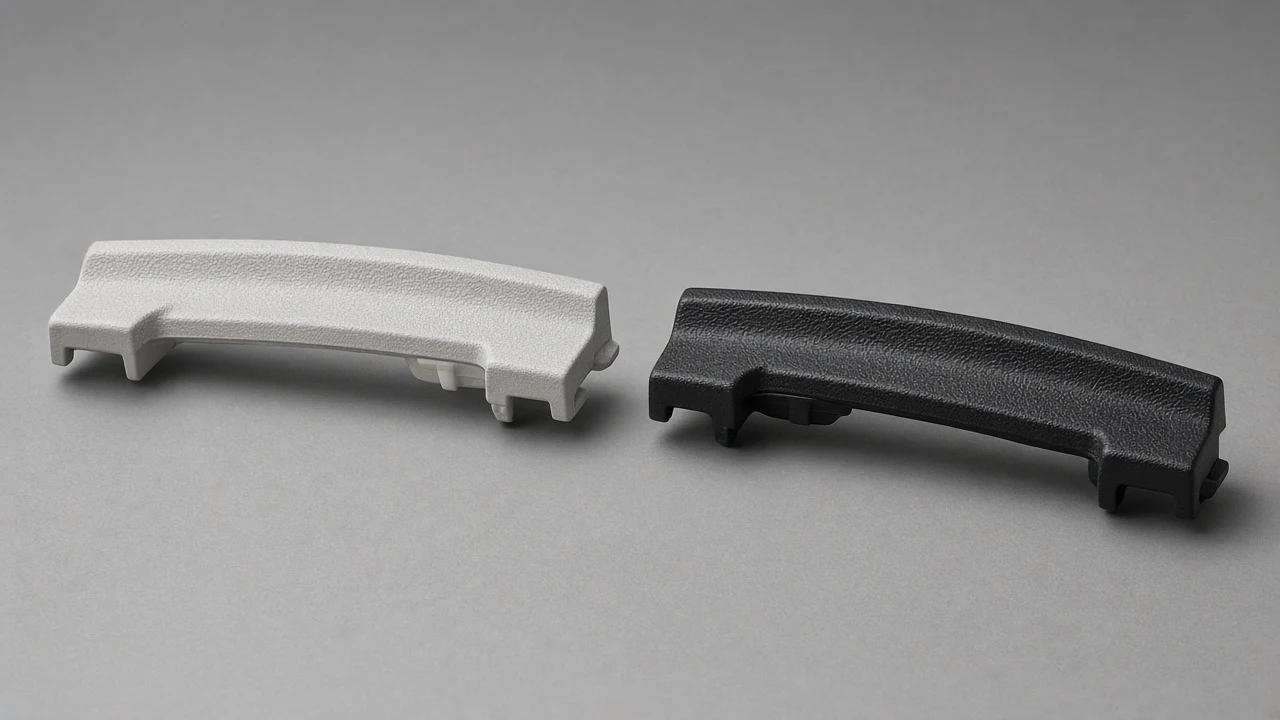
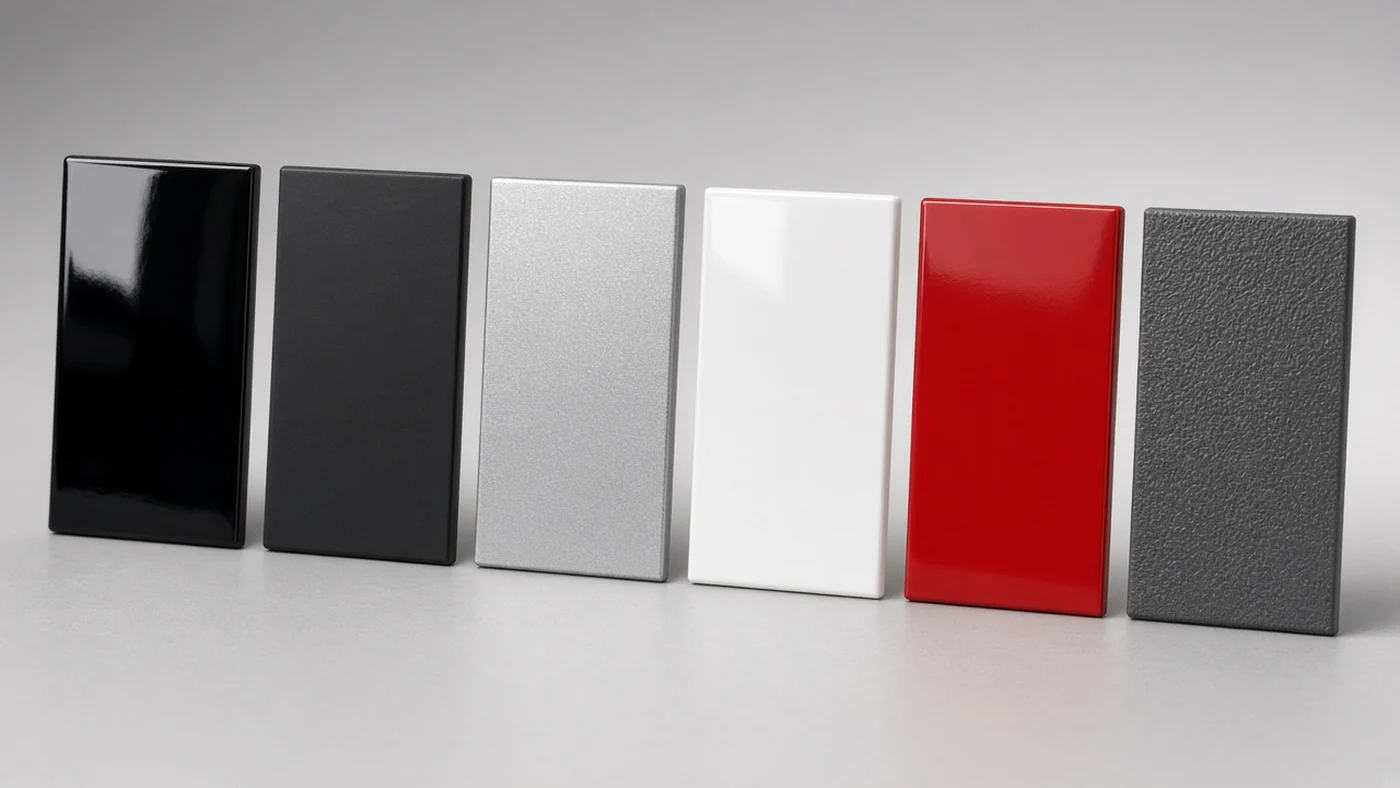
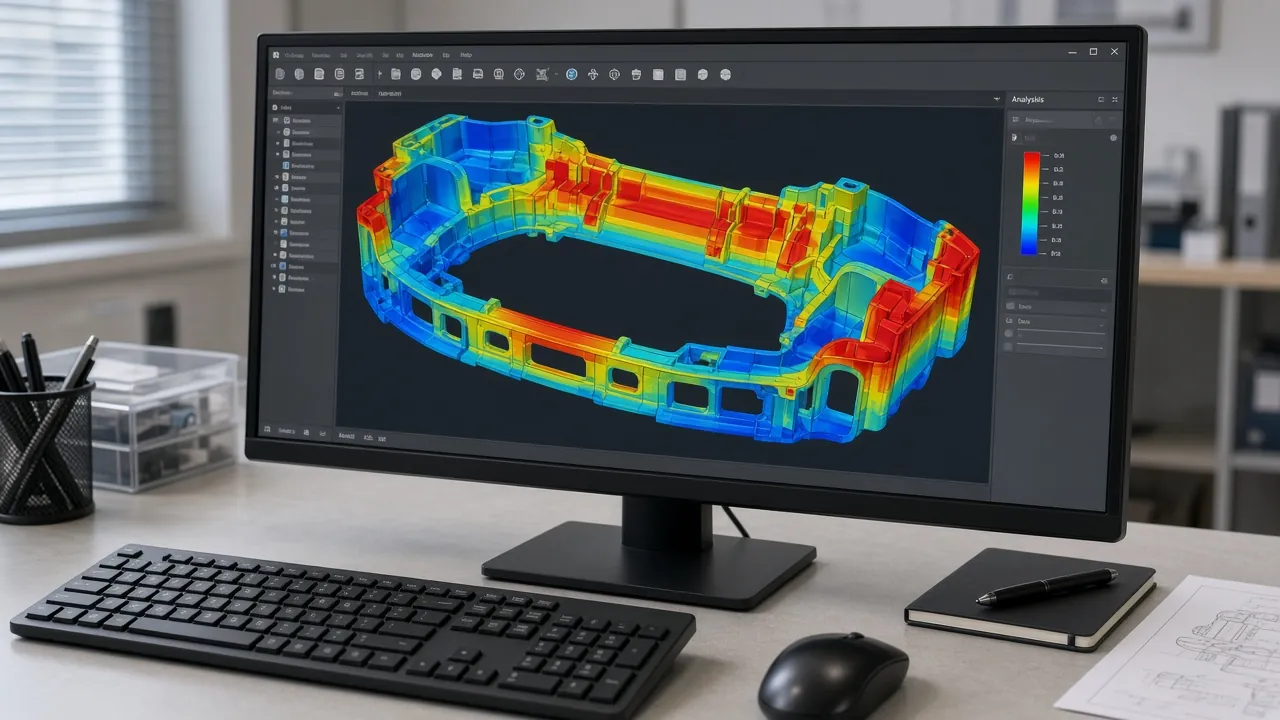
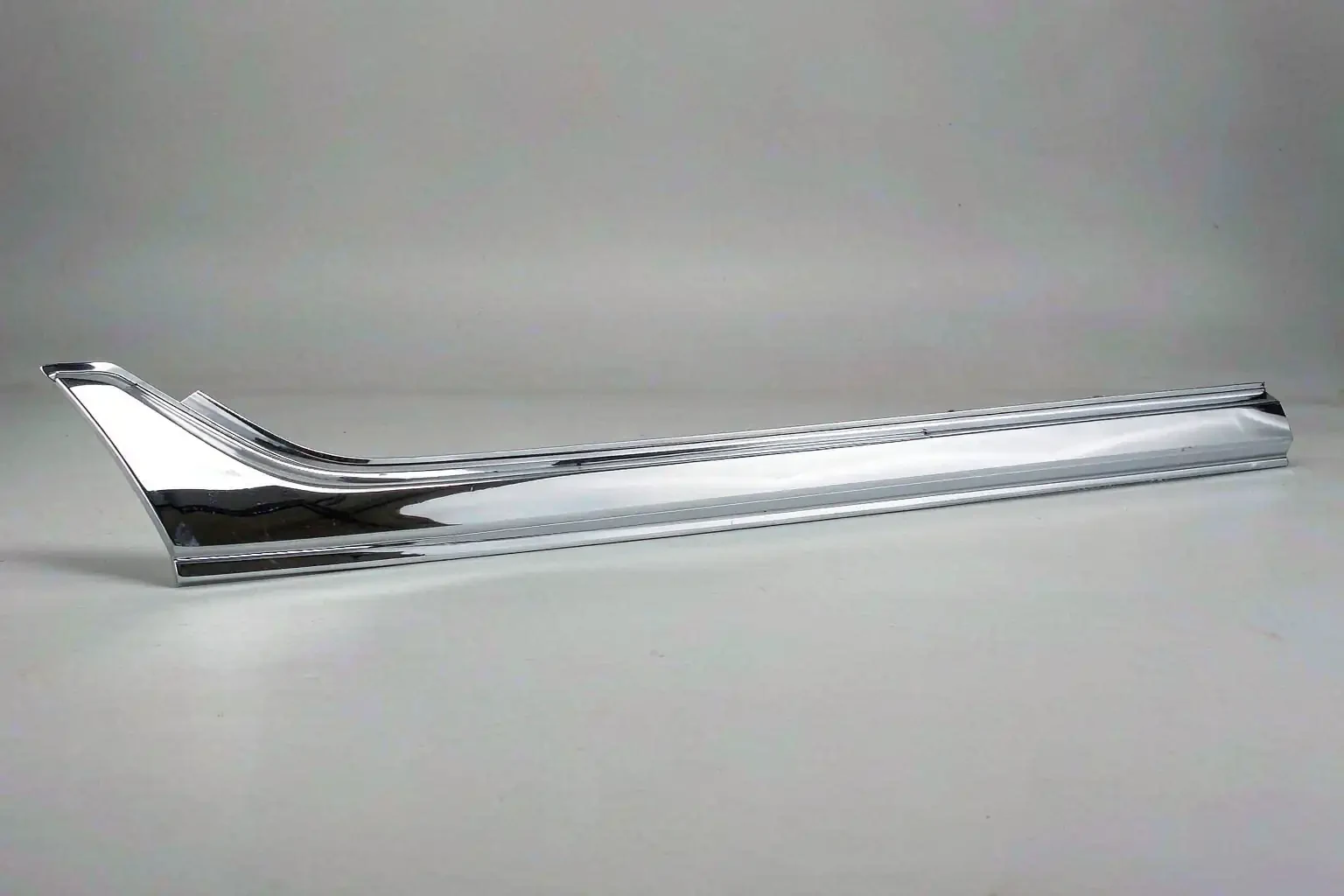
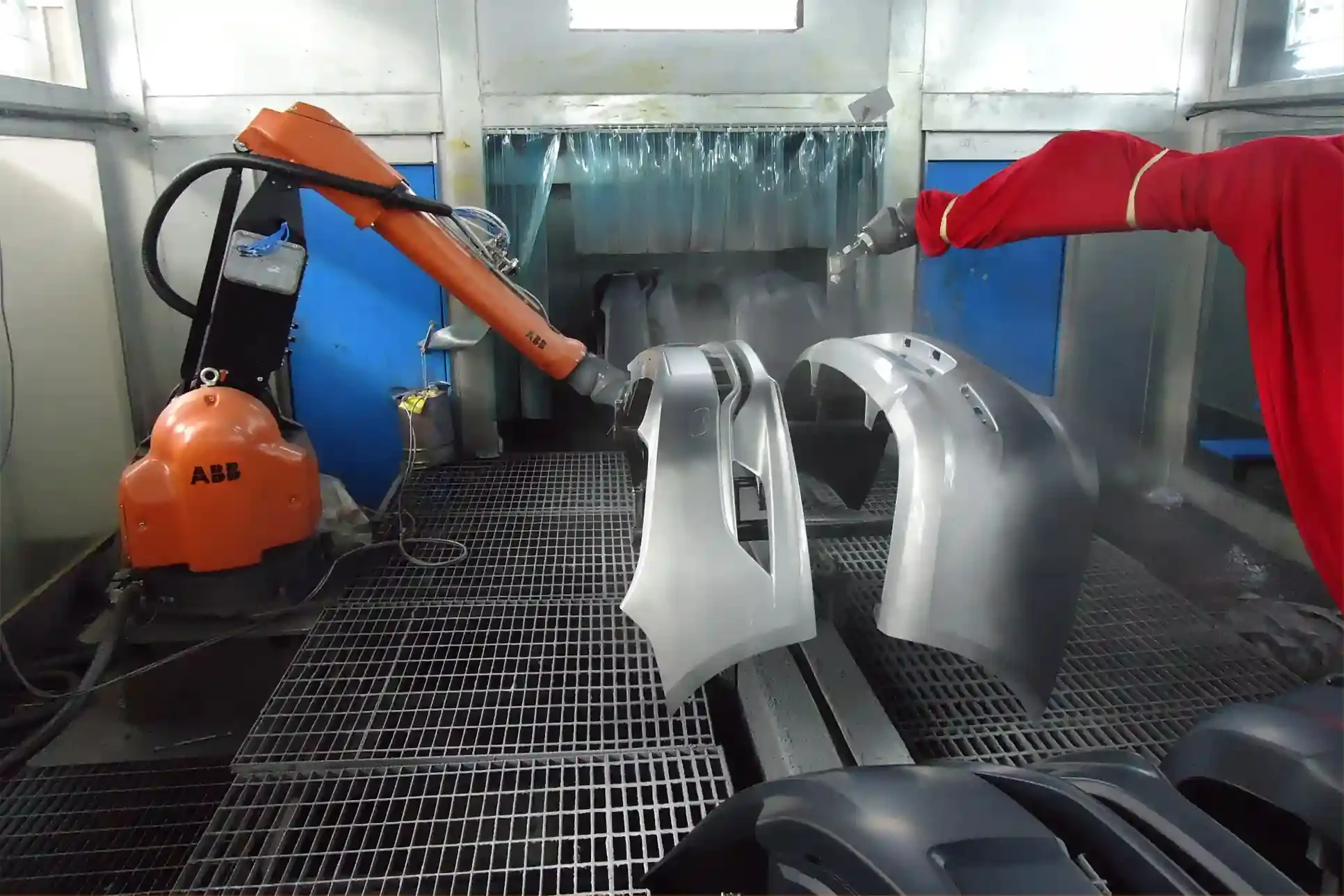
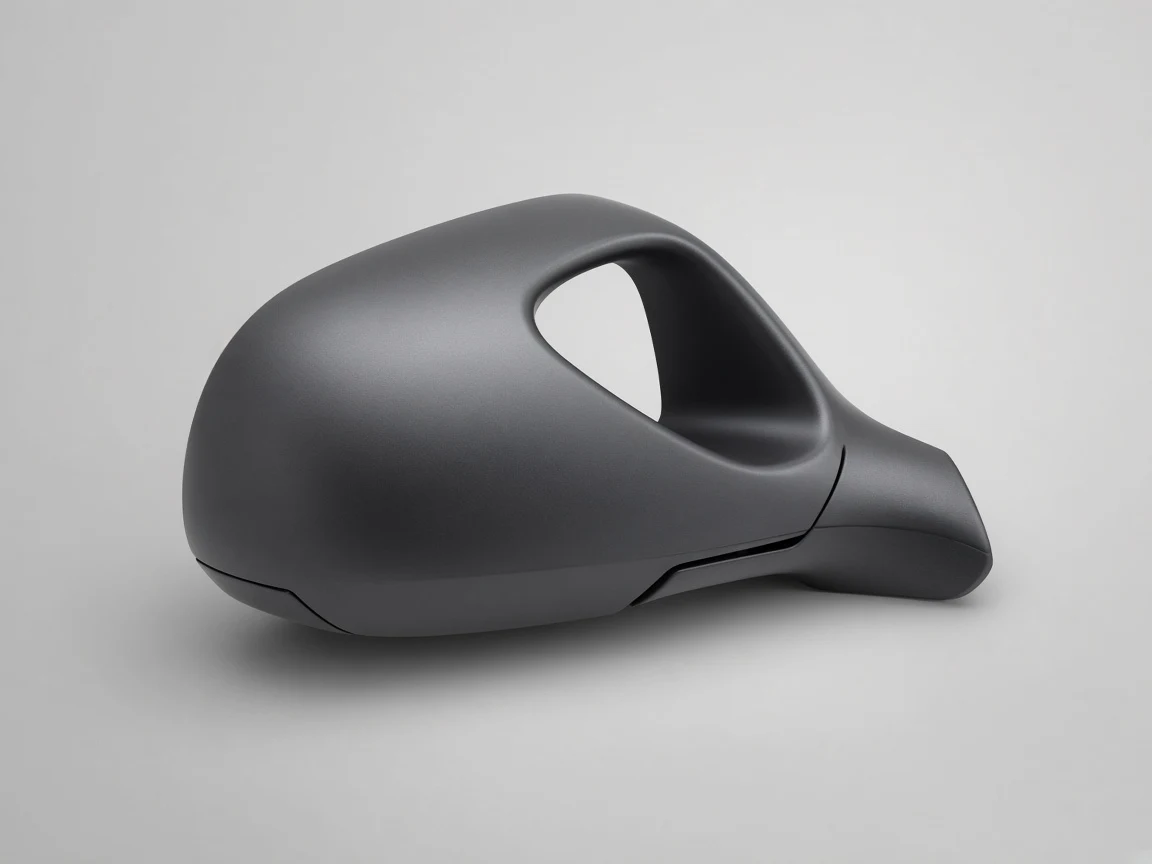
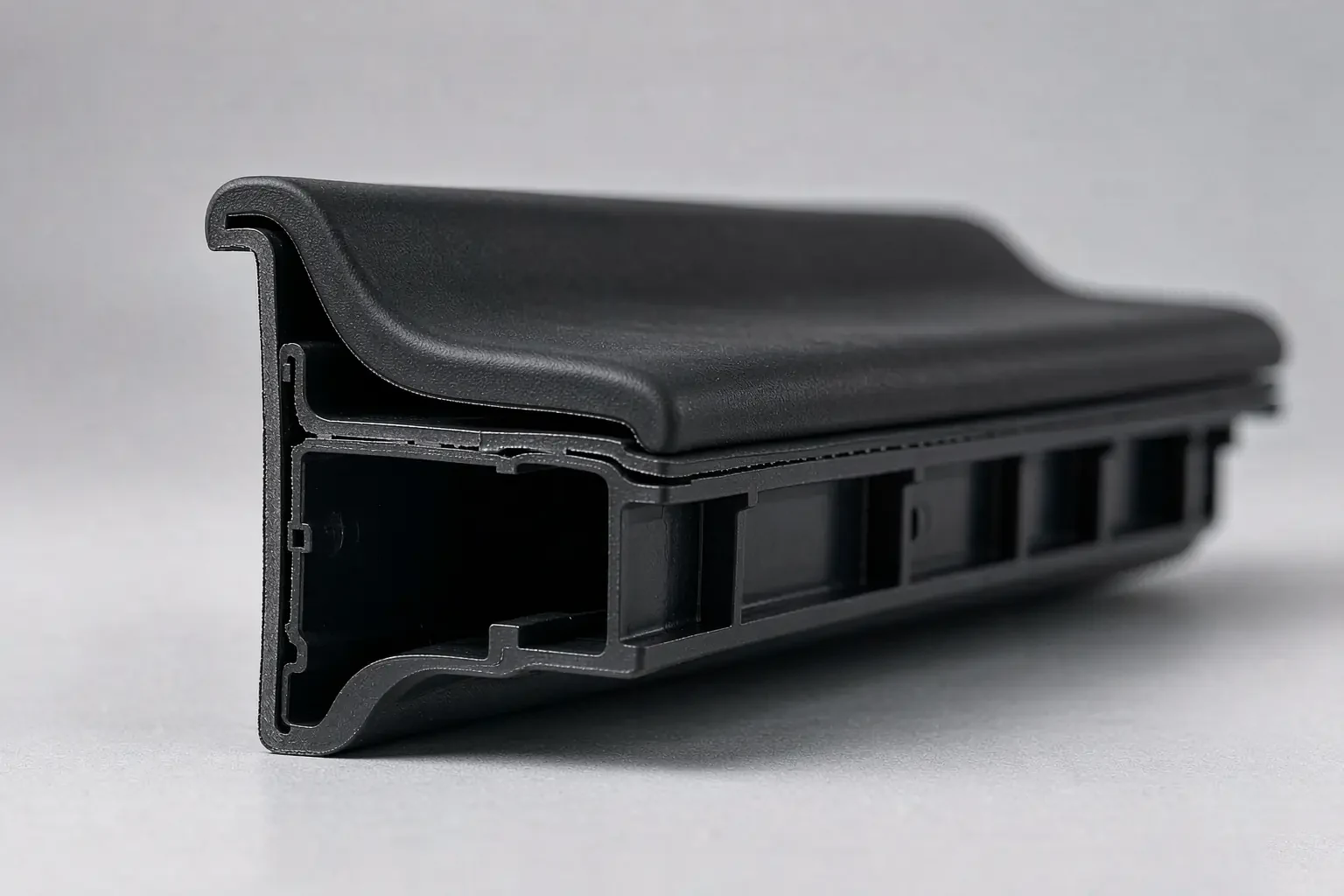
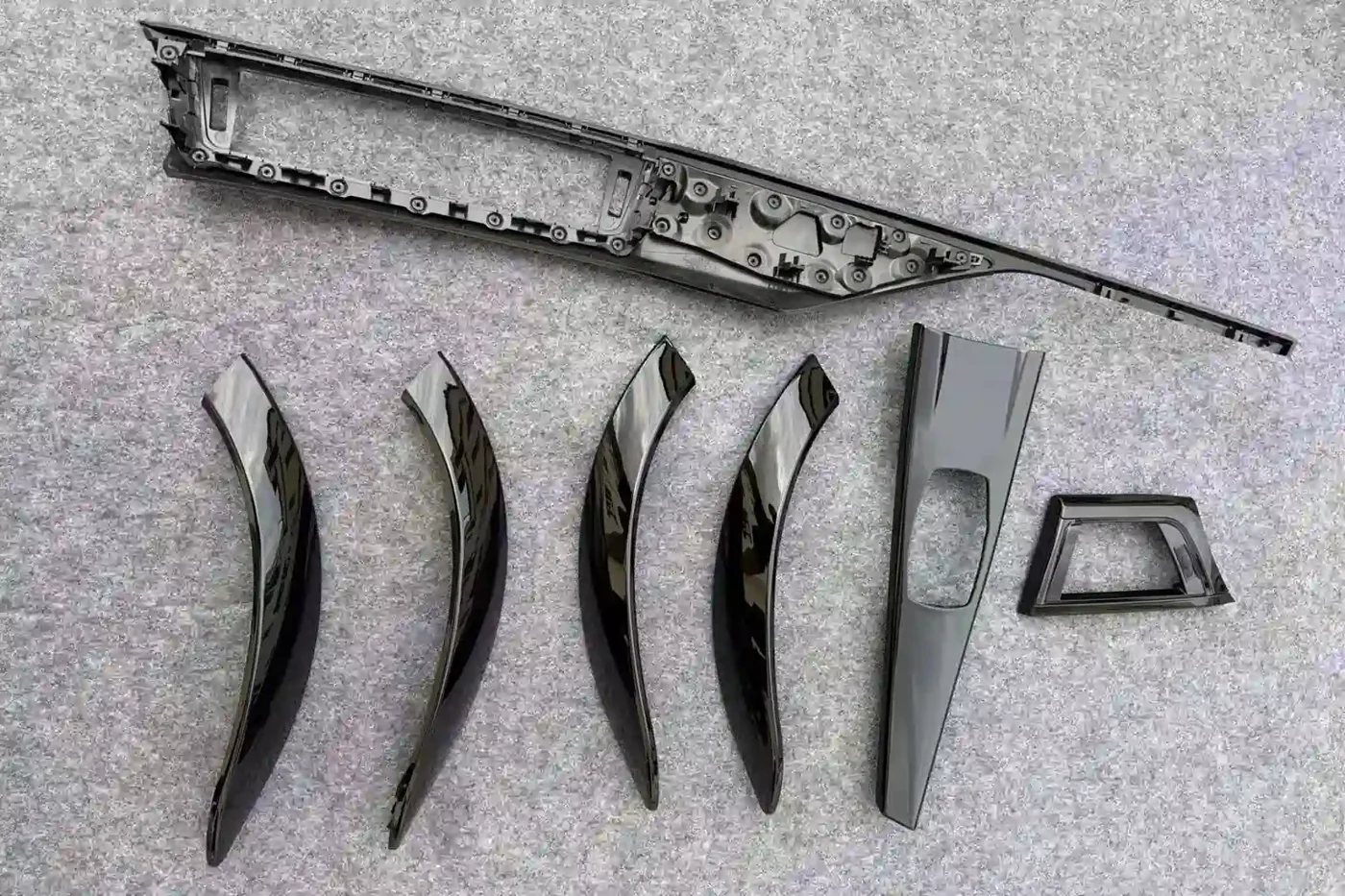
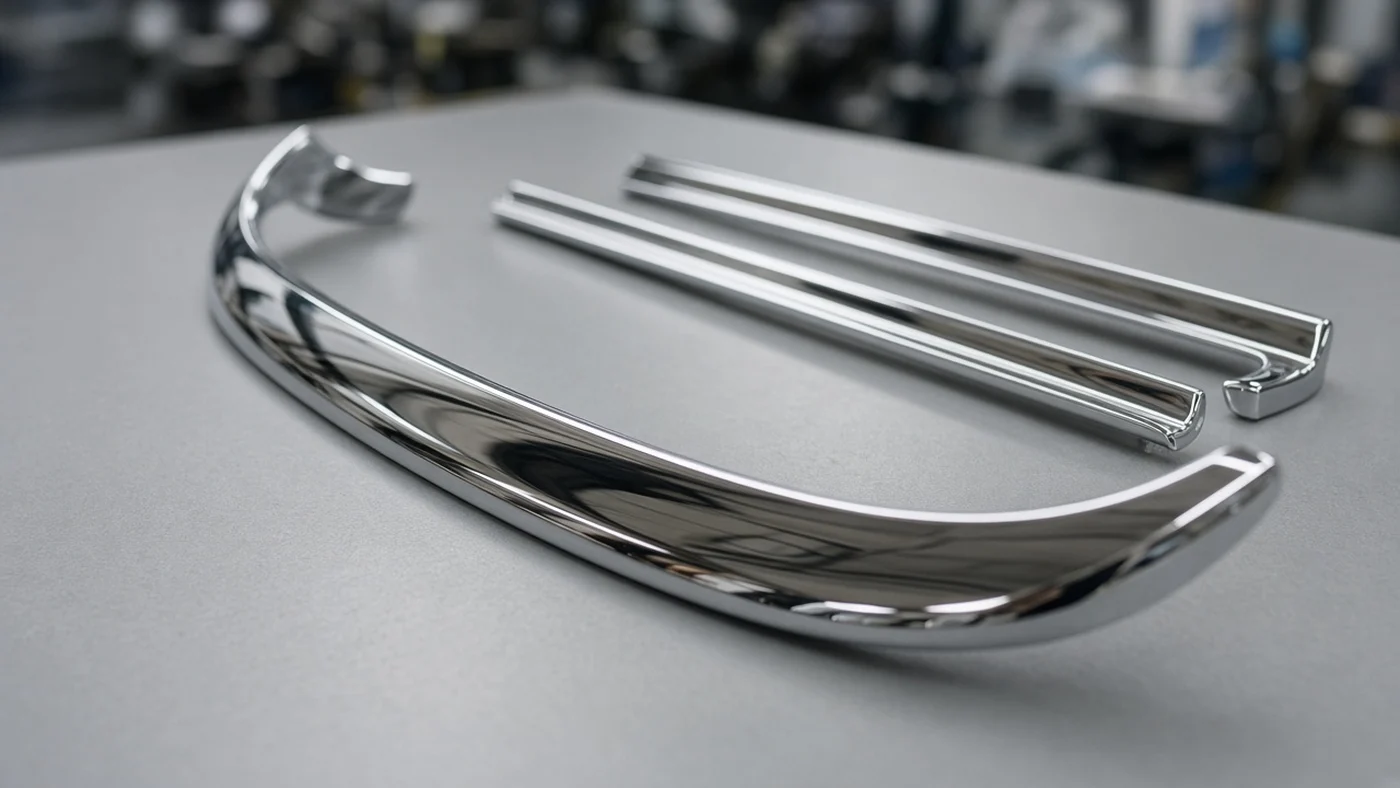
ABS plastic is the most common material for painted and chrome plated exterior styling parts: grilles, mirror caps, spoilers, front lips and trim. Yirox molds ABS on 42 machines, paints it on two 3C2B lines and chrome plates plating-grade ABS in the same factory in Wuxi.

| Item | Details |
|---|---|
| Full name | Acrylonitrile butadiene styrene (ABS) |
| Grade types we use | General-purpose and high-impact ABS, heat-resistant ABS, plating-grade ABS (PA-727 / HR-500 equivalent) |
| Typical parts | Grilles, mirror caps, spoilers, front lips, diffusers, side skirts, trim, wheel covers |
| Finishes | 3C2B gloss paint, piano black, matte and satin black, water transfer carbon look, chrome plating |
| Molding | 42 machines, 90–2,500 t; dried in desiccant dryers before molding |
| Not ideal for | Unpainted parts in strong sun (use ASA) |
| Order size | Low MOQ on selected items |
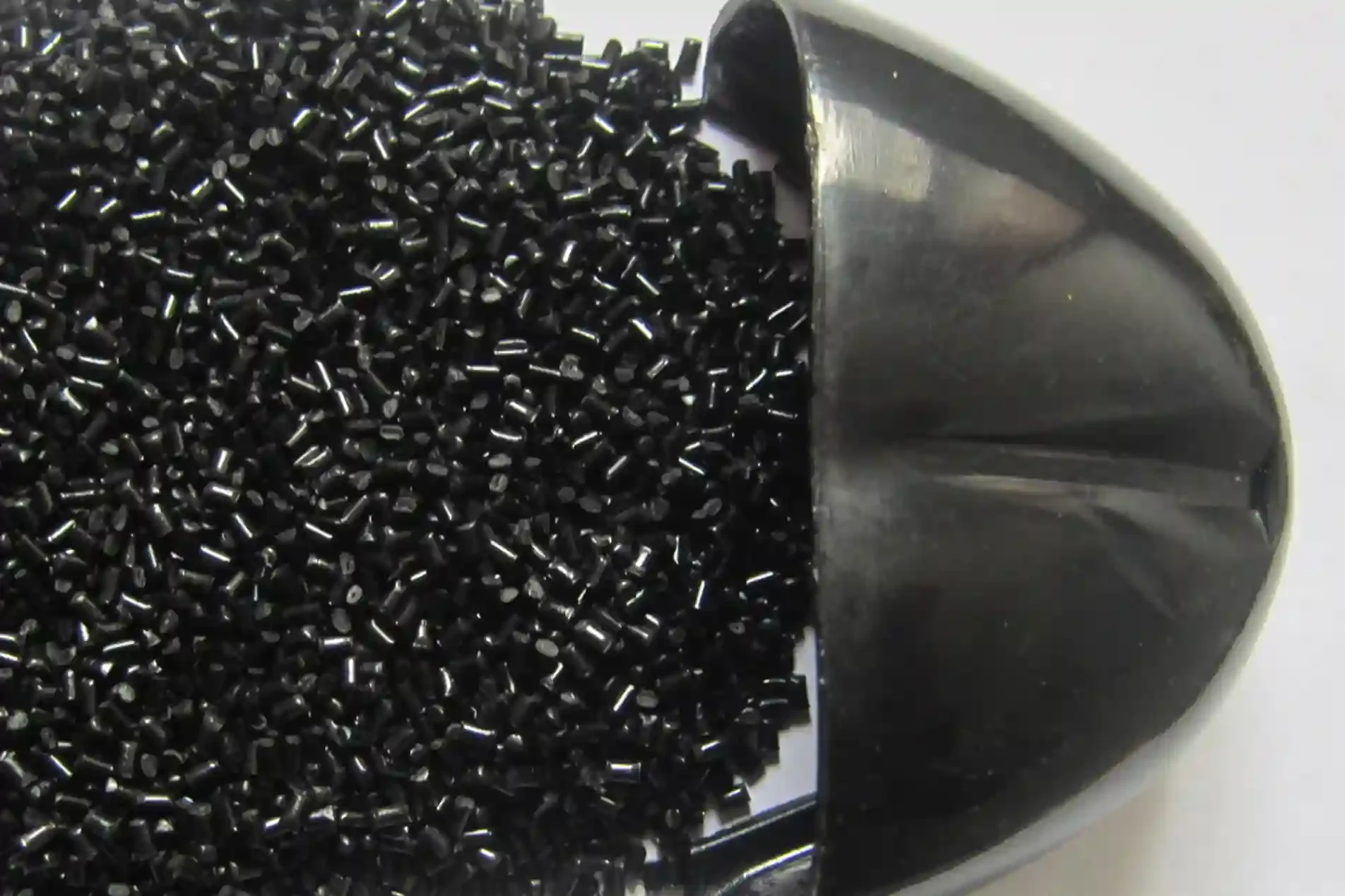
ABS is an amorphous thermoplastic made from three monomers. Acrylonitrile gives chemical resistance and heat stability, butadiene rubber gives toughness and impact strength, and styrene gives rigidity, gloss and easy processing. By changing the ratio of the three, resin makers produce ABS material grades for high impact, high heat, high gloss or electroplating.
ABS plastic is easy to mold, holds detail well, shrinks little and evenly, and has a smooth surface that takes paint and plating. That is why it is used for so many automotive exterior parts that must look good. Its main weakness is sunlight: unpainted ABS fades and turns chalky outdoors, so exterior ABS parts are almost always painted or plated.


Typical published datasheet ranges for general-purpose injection molding ABS, from resin manufacturers’ technical data sheets. These are not Yirox test results; values depend on the grade.
| Property | Typical value |
|---|---|
| Density | 1.03–1.07 g/cm³ |
| Tensile strength | 38–50 MPa |
| Flexural modulus | 2.0–2.6 GPa |
| Notched Izod impact (23 °C) | 200–400 J/m |
| Heat deflection temperature (0.45 MPa) | 90–100 °C |
| Mold shrinkage | 0.4–0.7 % |
| Melt temperature | 220–260 °C |
| Drying before molding | 80–85 °C, 2–4 h |

Standard ABS is not UV resistant. In sunlight, the butadiene rubber phase breaks down: the surface loses gloss, fades to grey and can become brittle. For exterior use, ABS is protected by paint with a UV-absorbing clearcoat, or by chrome plating. If a part must stay unpainted, ASA is the better choice because its acrylic rubber does not degrade in the same way.

For spoilers specifically, see our guide carbon fiber vs ABS vs fiberglass spoilers.

| Compared with | ABS is better at | The other material is better at |
|---|---|---|
| PC/ABS | Lower cost, easier plating (plating grades) | Heat resistance and impact strength |
| ASA | Cost, wide grade range, plating | UV stability unpainted |
| PP / TPO | Stiffness, gloss, paint without special primer | Low-temperature impact, flexibility, cost for bumpers |
| Fiberglass and carbon fiber | Volume production, cost, repeatability | Very large parts, very high stiffness |

These parts are made both as universal-fit items and as vehicle-specific parts, for example for Tesla Model 3 and Model Y, Toyota Hilux and Ford F-150 programs.
Piano black, chrome plated or body color.
Learn more →Gloss black, carbon look or body color covers.
Learn more →Trunk and roof spoilers in gloss or matte black.
Learn more →Front lips, diffusers and side skirt extensions.
Learn more →Plating-grade ABS (PA-727 / HR-500 equivalent) is the only material we chrome plate. The plating bath etches the butadiene phase at the surface to create anchor points for the first metal layer, which is why plating-grade ABS with a controlled rubber content gives the best adhesion.
Our line builds copper 18–22 μm, nickel 12–18 μm and chrome 0.2–0.3 μm, a total of 32 μm or more, with trivalent chrome as standard. Read more on our chrome plating on plastic page.

ABS takes paint without an adhesion promoter after cleaning and pre-treatment. We paint ABS in a 3C2B system on two lines in ISO 7 and ISO 8 clean rooms, with total film thickness of 35–50 μm, color ΔE*ab ≤1.0 and cross-hatch adhesion grade 0–1. See piano black and matte black finishes.


ABS is used for grilles, mirror caps, spoilers, front lips, diffusers, trim, wheel covers and many interior parts, mainly where the part is painted or chrome plated.
Yes. ABS has good impact strength and stiffness for styling parts. For parts near heat or with high impact loads, PC/ABS or PP/TPO may be better.
Not on its own. Exterior ABS should be painted with a UV-protective clearcoat or chrome plated. For unpainted parts, use ASA.
Yes, plating-grade ABS can. We plate ABS equivalent to PA-727 or HR-500 on our own 28-tank line.
No. They are typical published datasheet ranges. Your grade and test results are confirmed in the quote and sample stage.
We offer low MOQ on selected items. The quantity is confirmed in your quote.
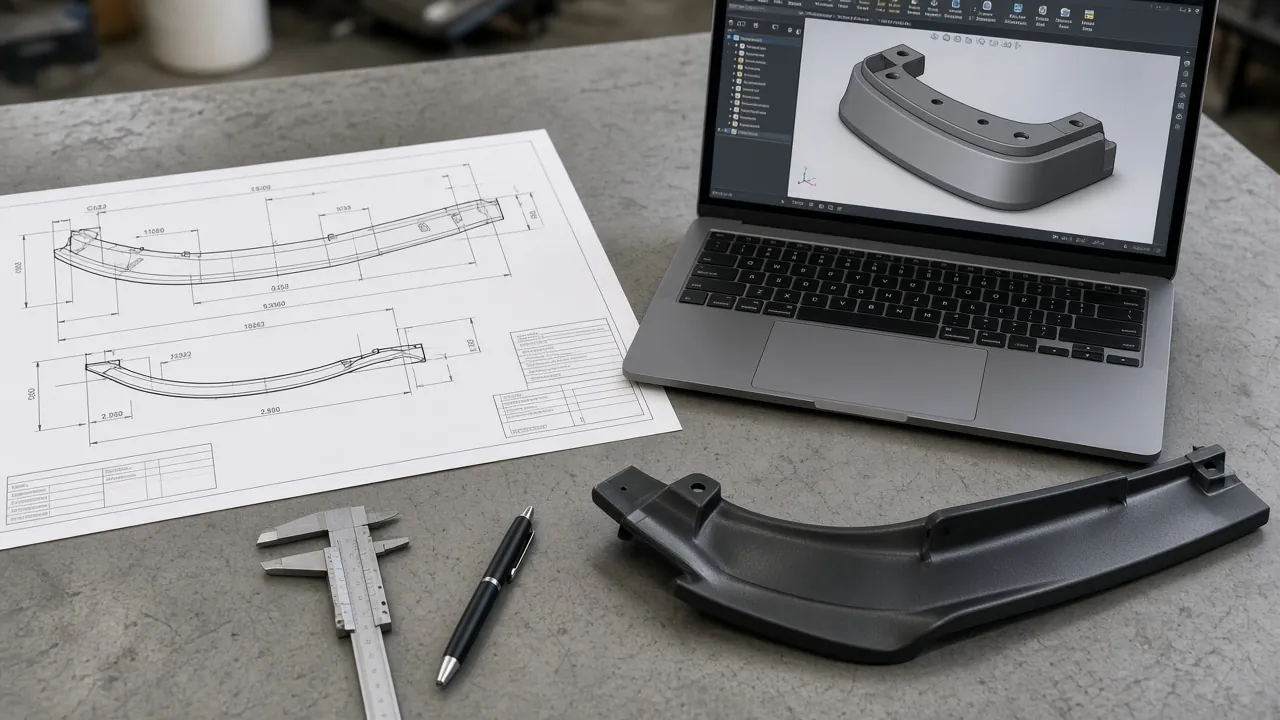
Send your drawing or a sample and tell us the finish you need. We will reply with DFM comments and a quote.