≥95 GUPiano black at 60°
≥90 GUGloss black at 60°
35–50 μmTotal film
ISO 7 / 8Clean rooms
ΔE ≤1.0Color tolerance
01 — Overview

Gloss Black at a Glance

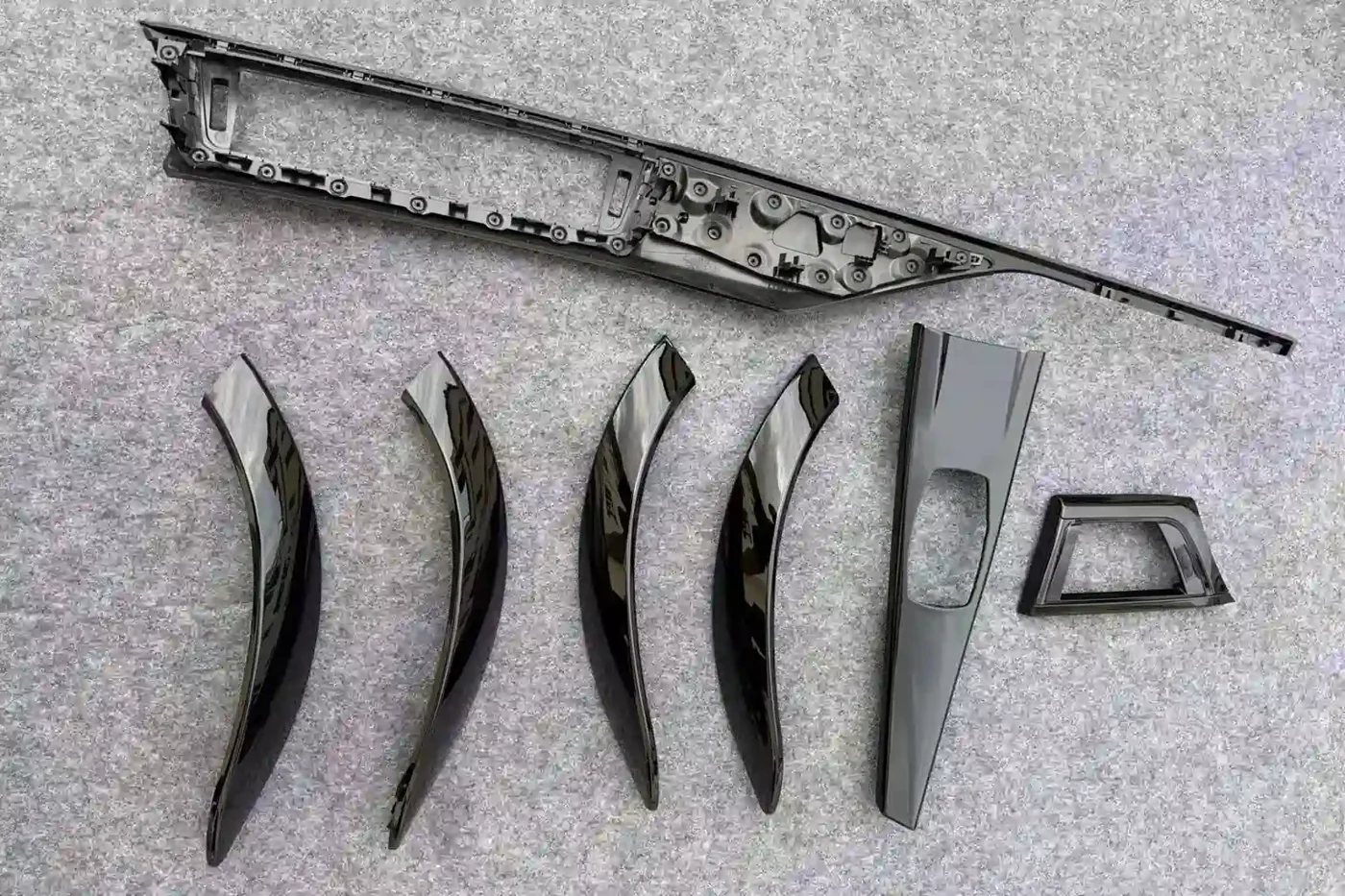
Gloss black interior trim parts
ItemPiano blackGloss black
Gloss at 60°≥95 GU≥90 GU
Extra check20° gloss / DOI20° gloss / DOI
Paint system3C2B (primer/base + color + clear)3C2B
Total film35–50 μm (base 10–15, color 12–18, clear 15–20)35–50 μm
ClearcoatStandard or UV-curedStandard or UV-cured
AdhesionCross-hatch grade 0–1Cross-hatch grade 0–1
MaterialsABS, PC/ABS, ASA, PP/TPO with adhesion primerSame
02 — Encyclopedia

What Is Piano Black?

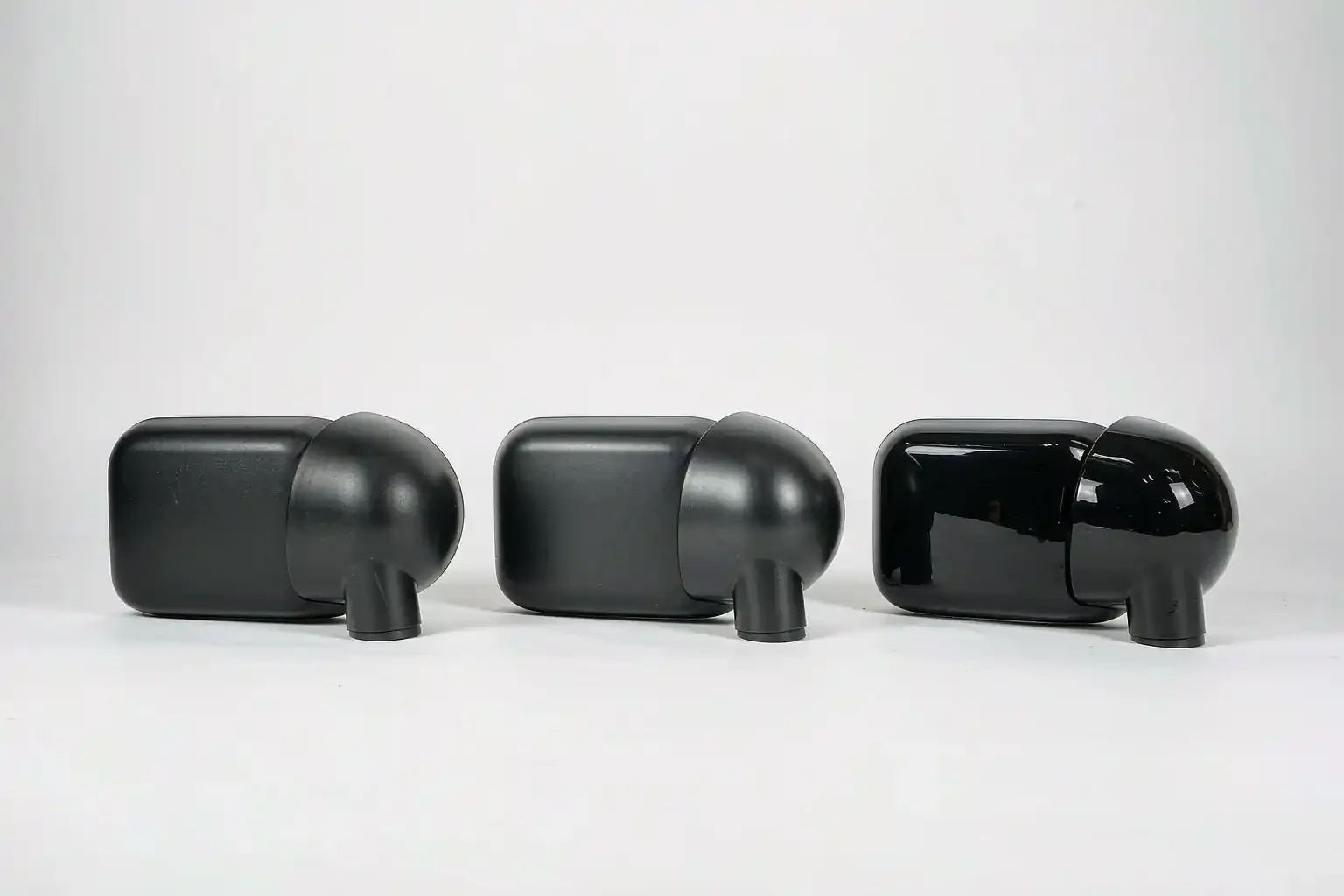
Piano black is a high-gloss, deep black finish named after the lacquered finish on grand pianos. On a car, a piano black finish means a black part with a mirror-like surface and very high distinctness of image, so reflections look sharp, not hazy. It is made by painting a black color coat and a thick, smooth clearcoat over a well-prepared plastic part.

Gloss black finish is the same idea with a slightly lower gloss target. The difference shows in reflections: on piano black, the edge of a reflected line looks crisp; on gloss black it is slightly softer. Both are used for chrome-delete trim, spoilers, mirror caps, diffusers and grilles.


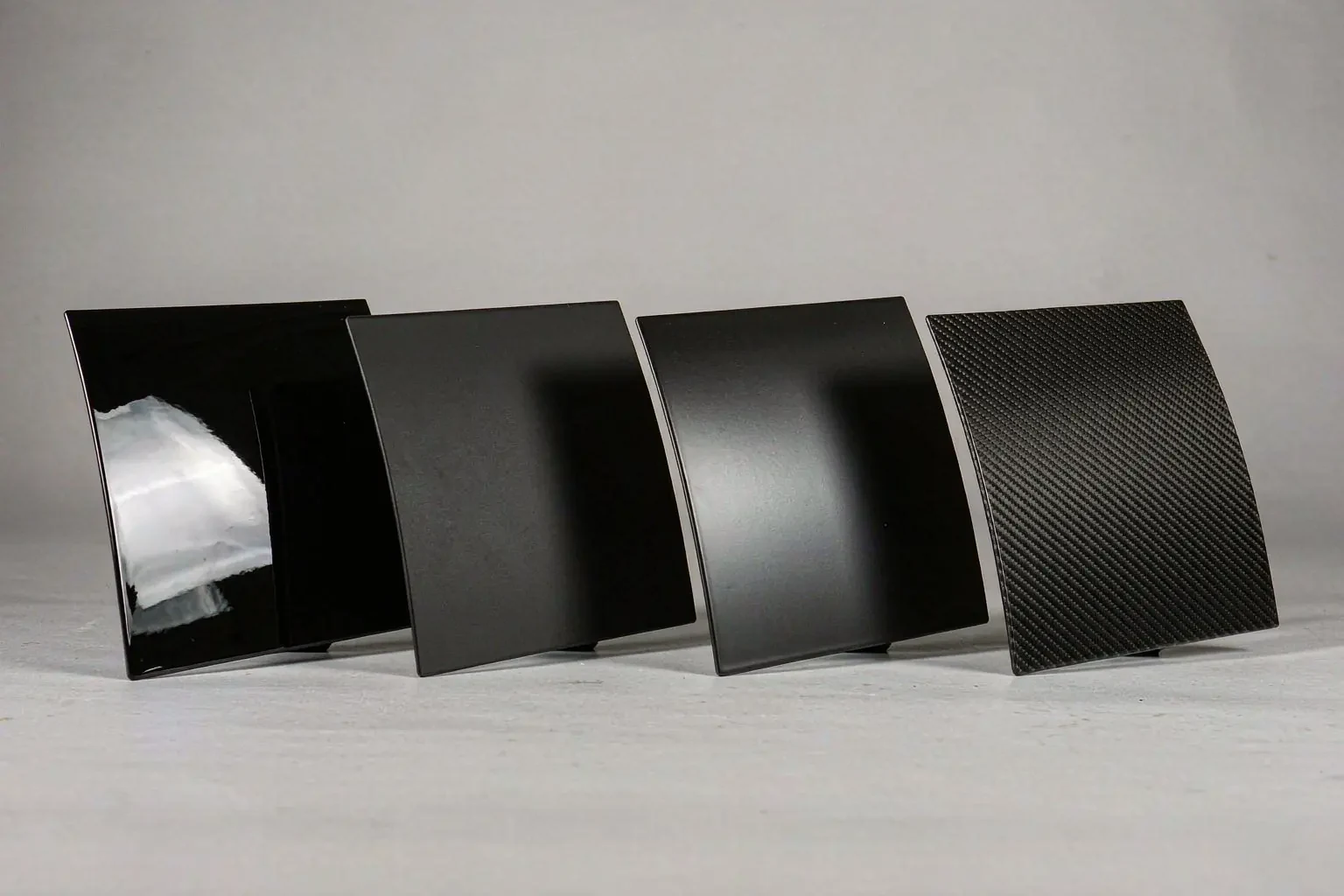
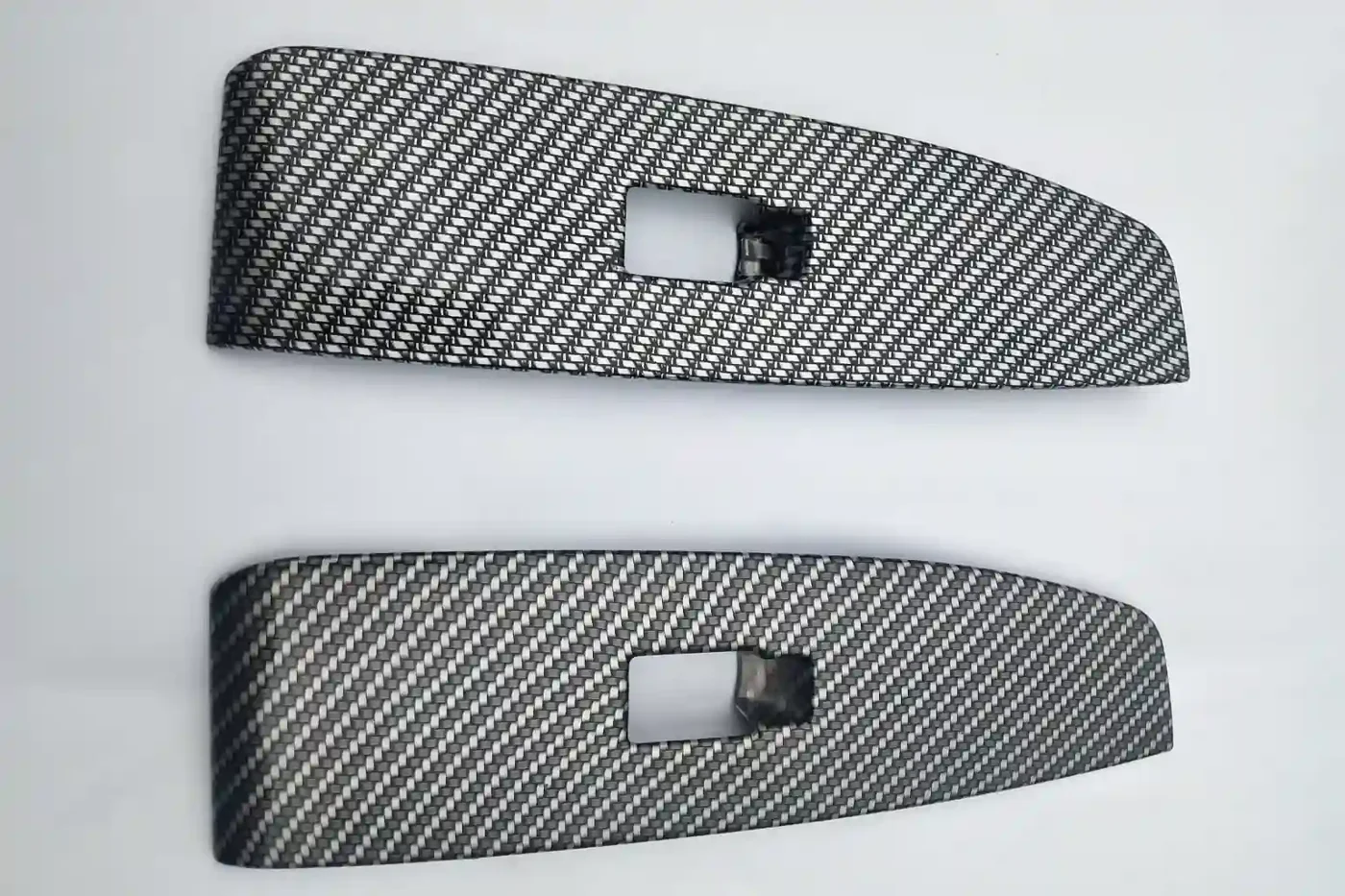
Four curved sample panels in gloss black, satin black, matte black and carbon pattern
03 — Encyclopedia

Why Automakers Use Piano Black Trim

Piano black trim gives a premium, modern look at a low cost compared with metal or real carbon fiber, and it matches black glass and dark wheels. It also hides joints between parts. The downside is that a mirror surface shows dust, swirl marks and scratches, which is why the quality of the clearcoat matters so much. A harder clearcoat, such as a UV-cured clear, improves scratch and weather resistance.

Yirox showroom displaying automotive exterior parts and pickup accessories
04 — Encyclopedia

How Piano Black Is Painted

  1. 01

    Molding for paint

    The part is molded with a smooth, defect-free surface; flow lines and sink marks show through gloss paint.

  2. 02

    Cleaning and pre-treatment

    Dust, release agent and oils are removed before painting.

  3. 03

    Base coat

    A base or primer layer of 10–15 μm levels the surface; PP and TPO get an adhesion primer.

  4. 04

    Black color coat

    A black color coat of 12–18 μm is applied in an ISO 8 spray booth.

  5. 05

    Clearcoat

    A clearcoat of 15–20 μm gives depth and gloss; UV-cured clear is optional.

  6. 06

    Bake and inspect

    60 °C × 10 min pre-bake, 80 °C × 30 min topcoat bake in an ISO 7 oven, then gloss, DOI and adhesion checks.

05 — Encyclopedia

How Gloss Is Measured

Gloss meters shine light onto the surface at a fixed angle and measure how much is reflected. 60° is the standard angle for most finishes. For high-gloss finishes above about 70 GU at 60°, the 20° angle separates small differences better and relates to DOI (distinctness of image).

We measure with a BYK micro-TRI-gloss meter at 20°, 60° and 85° (repeatability ±0.2 GU). Values at different angles are not comparable, so a specification should always state the angle.

Inspector recording test results in the Yirox quality control lab
Finish60° gloss targetAngle for fine control
Piano black≥95 GU20° / DOI
Gloss black≥90 GU20° / DOI
Satin black20–40 GU60°
Matte black5–15 GU85°
06 — Encyclopedia

Common Defects in Gloss Black Parts

Our ISO 8 spray booths and ISO 7 flash-off and oven areas reduce dust, and molding and painting are controlled by the same team, so surface defects can be traced to their cause.

Gloss black rear diffuser clamped on a checking fixture for dimensional inspection
DefectWhat it looks likeMain cause
Orange peelWavy, textured reflectionPaint flow and film build
Dust inclusionsSmall bumps in the clearBooth cleanliness
Sink marksShallow dips over ribsMolding and rib design
Flow linesLines visible under the paintMolding conditions or gate position
HazeCloudy, low-DOI surfaceClearcoat or bake conditions
07 — Encyclopedia

Piano Black vs Other Black Finishes

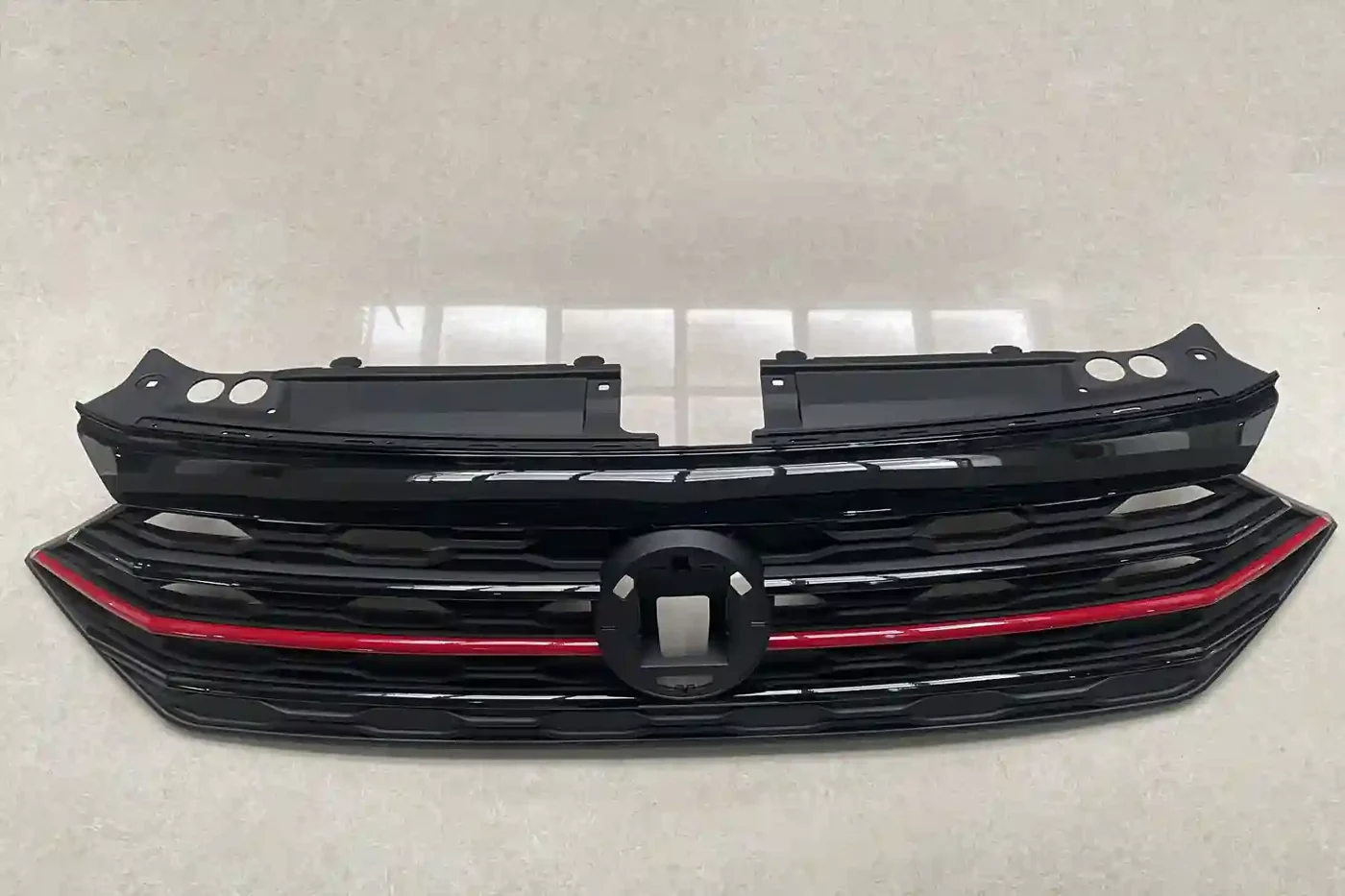
Gloss black front grille with a red trim line
FinishLookScratch visibilityBest for
Piano blackMirror-like, deepHighPremium trim, spoilers, mirror caps
Gloss blackHigh glossHighChrome-delete trim, grilles
Satin blackSoft sheenMediumSporty trim, roof parts
Matte blackFlatLowAero parts, wraps, sporty looks
Molded-in textureGrain, unpaintedVery lowFlares, cladding, louvers
09 — Capability

Our Paint Lines and Controls

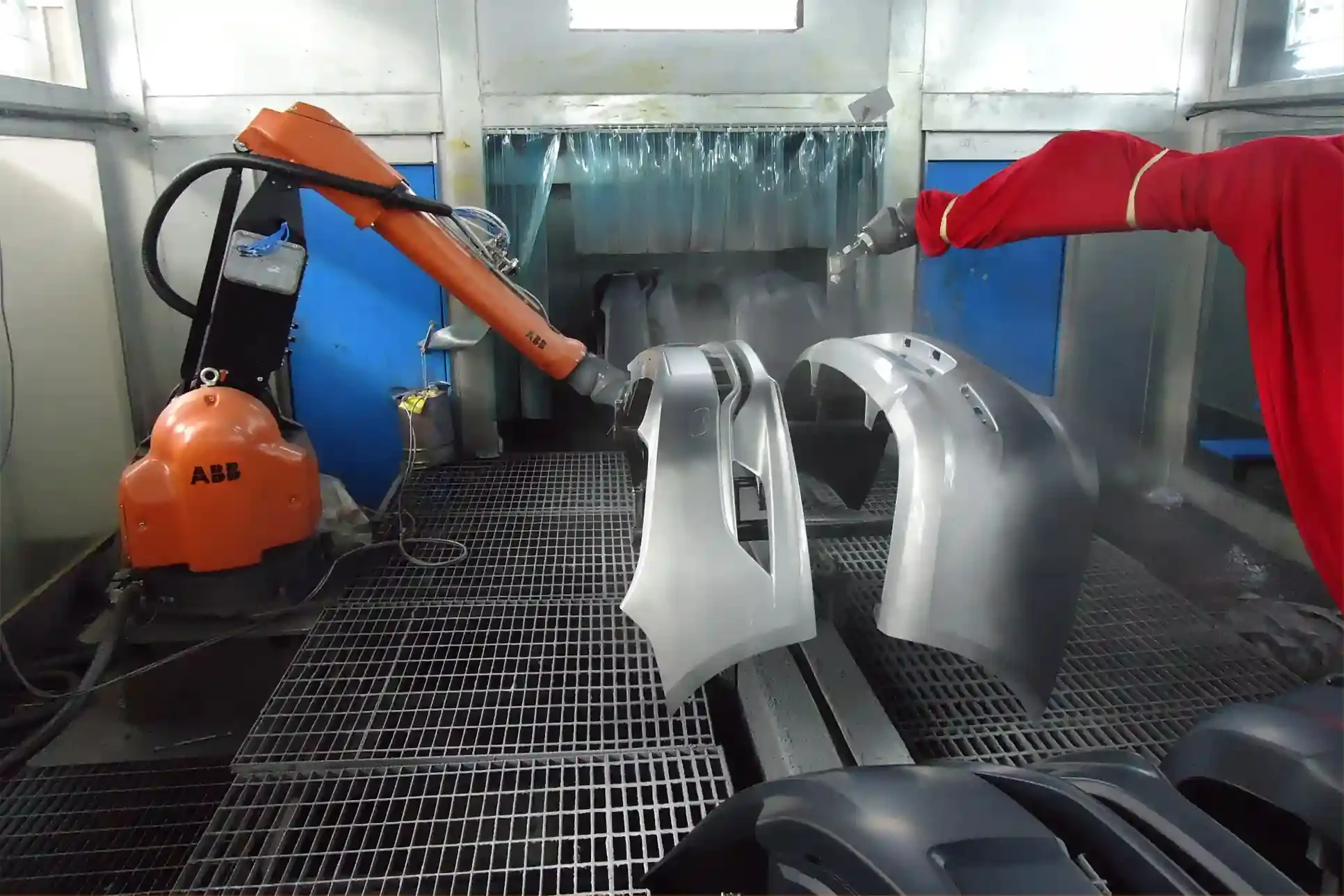
Robots spray-painting bumper covers in a paint booth

L1 rotary automatic line

24 stations for consistent film build on medium parts.

L2 overhead conveyor line

For larger parts, with 4 manual touch-up stations.

Color control

X-Rite Ci64 spectrophotometer; ΔE*ab ≤1.0, critical ≤0.8.

Film thickness

BYK 8500 gauge; total 35–50 μm.

10 — Capability

Durability Testing

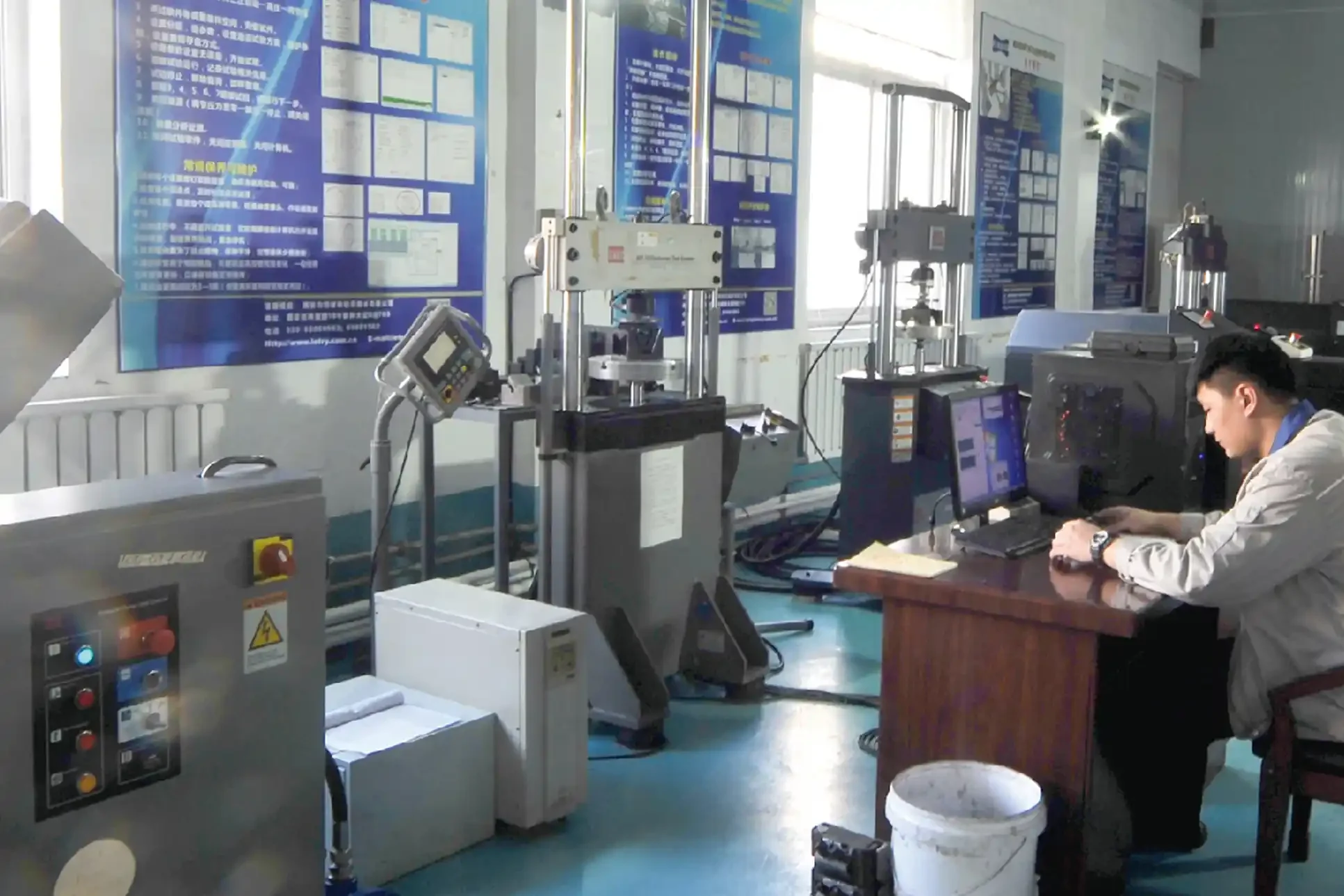
Adhesion is checked in-house by cross-hatch (grade 0–1). When your specification requires it, accredited outside labs (SGS, CTI) run weathering (QUV 500 / 1,000 h, xenon arc 2,500 kJ/m²), humidity (ISO 6270-2) and pull-off adhesion (ASTM D4541) tests.

Technician at a universal testing machine in the Yirox testing lab
11 — Service

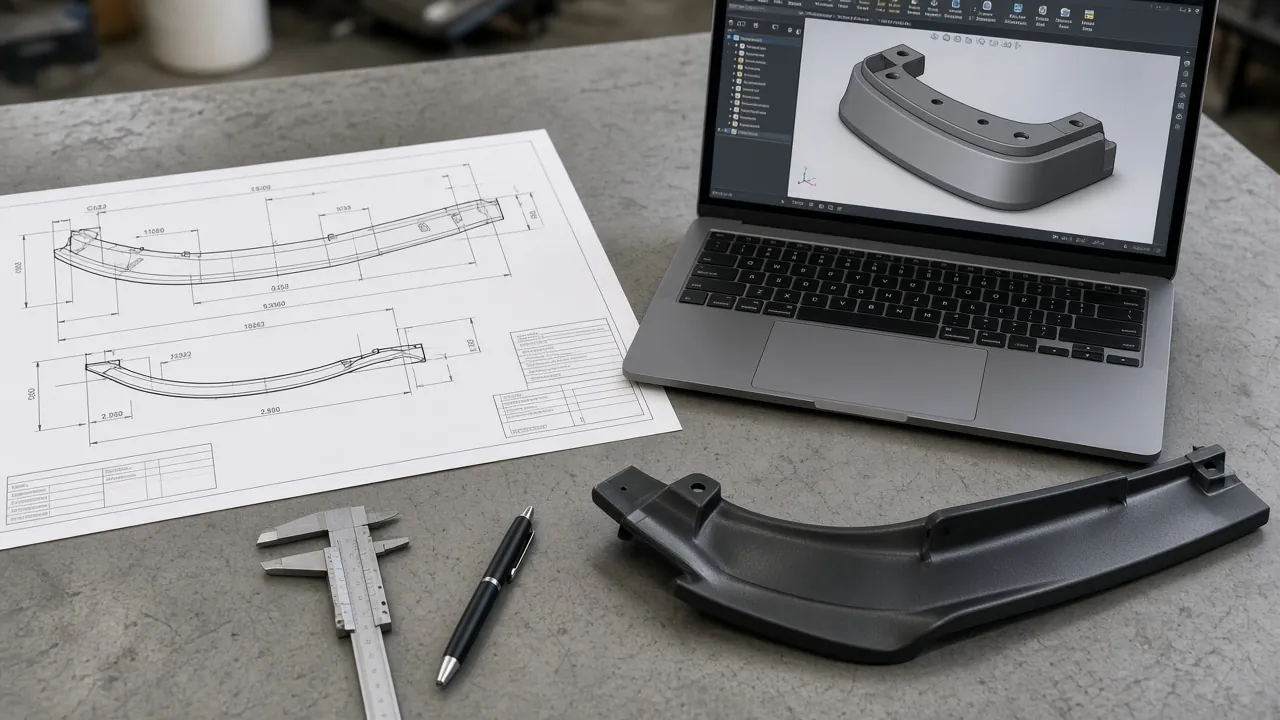
What to Send for a Piano Black Quote

Technical drawing, 3D CAD model and front lip sample with calipers
  • 3D CAD or a sample part
  • Gloss and DOI targets, or “piano black” or “gloss black”
  • Clearcoat requirement (standard or UV-cured)
  • Test standards and annual quantity
14 — FAQ

FAQ

What is a piano black finish?

Piano black is a deep, mirror-like high-gloss black finish made with a black color coat and a thick clearcoat. Our target is ≥95 GU at 60°.

What is the difference between piano black and gloss black?

Piano black has a higher gloss and sharper reflections. Our targets are ≥95 GU for piano black and ≥90 GU for gloss black at 60°.

Why does piano black trim scratch easily?

A mirror surface shows every fine scratch. A harder clearcoat, such as a UV-cured clear, improves scratch resistance.

Can PP parts be finished in piano black?

Yes, after surface preparation and a PP/TPO adhesion primer.

How is gloss measured?

With a gloss meter at 20°, 60° or 85°. We use 60° as standard and 20° (DOI) for high-gloss parts.

What is the minimum order quantity?

We offer low MOQ on selected items. The quantity is confirmed in your quote.

Get a Piano Black Quote

Send your drawing or a sample and the gloss target. We will reply with DFM comments and a quote.