Painting & Surface Finishing for Automotive Plastic Parts
Plastic surface finishing and in-house painting of automotive plastic parts: gloss black, body color, matte and clearcoat finishes on bumpers, spoilers, lips, grilles and trim. Yirox runs two paint lines with a 3C2B system, clean-room booths and measured color, gloss, film thickness and adhesion, next to our own injection molding and chrome plating.
2 in-house lines: L1 rotary automatic line with 24 stations; L2 overhead conveyor line with 4 manual touch-up stations
Paint system
3C2B (three coats, two bakes); UV clearcoat optional
Curing
Pre-bake 60 °C × 10 min, topcoat bake 80 °C × 30 min
Clean rooms
2 spray booths at Class 100,000 (ISO 8); flash-off and oven at Class 10,000 (ISO 7)
Film thickness
Total 35–50 μm (base 10–15, color 12–18, clear 15–20 μm)
Color tolerance
ΔE*ab ≤1.0; critical parts ≤0.8
Adhesion
Cross-hatch grade 0–1
Other finishes
Molded-in color and texture; chrome plating in-house
Order size
Low MOQ on selected items; confirmed in your quote
02 — Explainer
What Is Surface Finishing for Plastic Parts?
Surface finishing is everything done to a molded plastic part to give it its final look and protection. For automotive exterior parts that usually means one of three routes: a finish made in the mold (texture and color), a painted finish, or a plated finish such as chrome. Good plastic surface finishing covers both how the mold surface is textured and how the part is painted after molding.
The finish affects more than looks. It protects the part from sunlight and weather, hides small marks from molding, and decides whether the part matches the car body or the rest of a product range. Because the finish depends on the material and the mold, it should be chosen before tooling starts, not after.
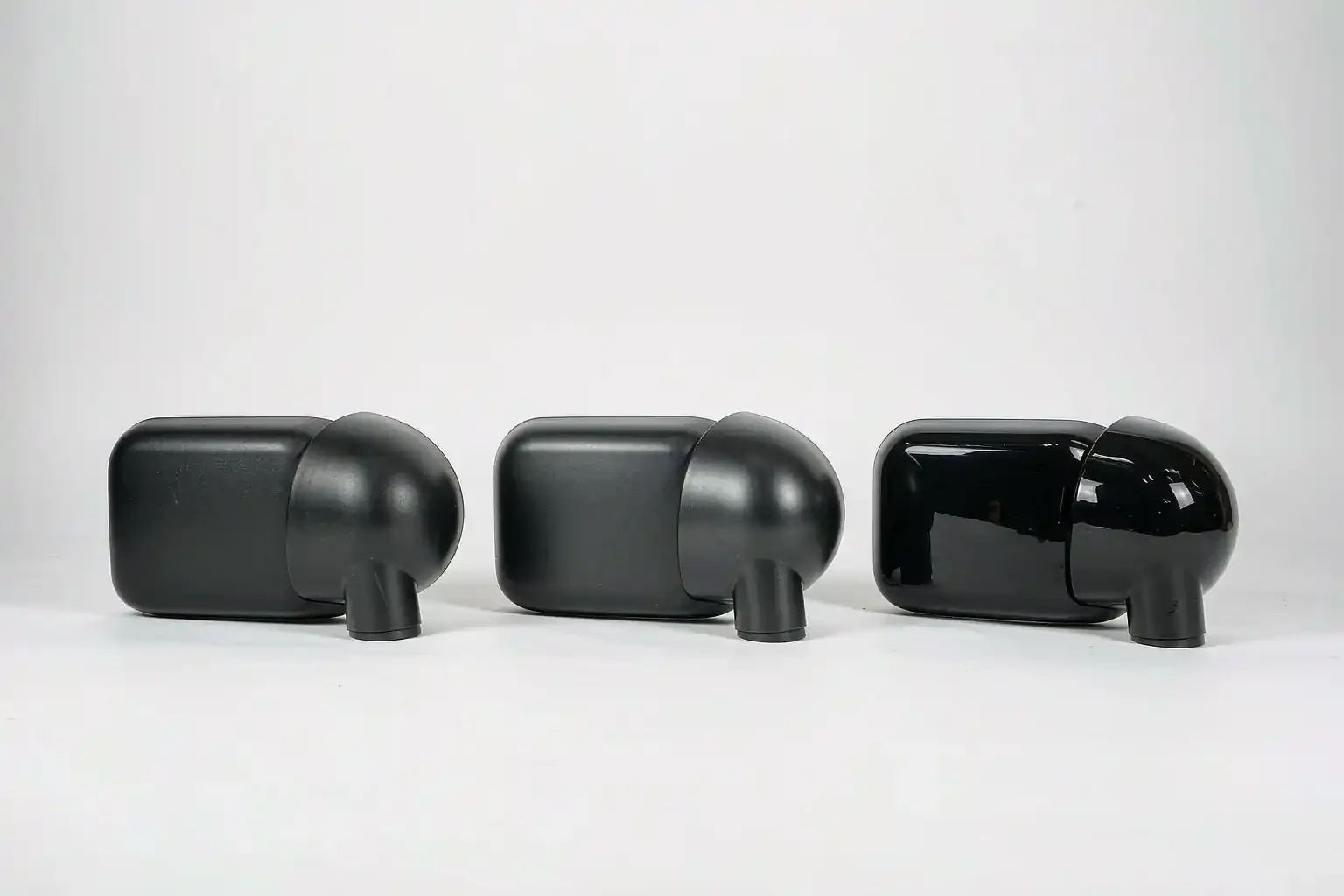
ABS exterior trim in gloss black, matte black and carbon pattern finishes
03 — Explainer
Types of Plastic Surface Finishes
There are many types of plastic finishes. These are the ones used most on exterior parts.
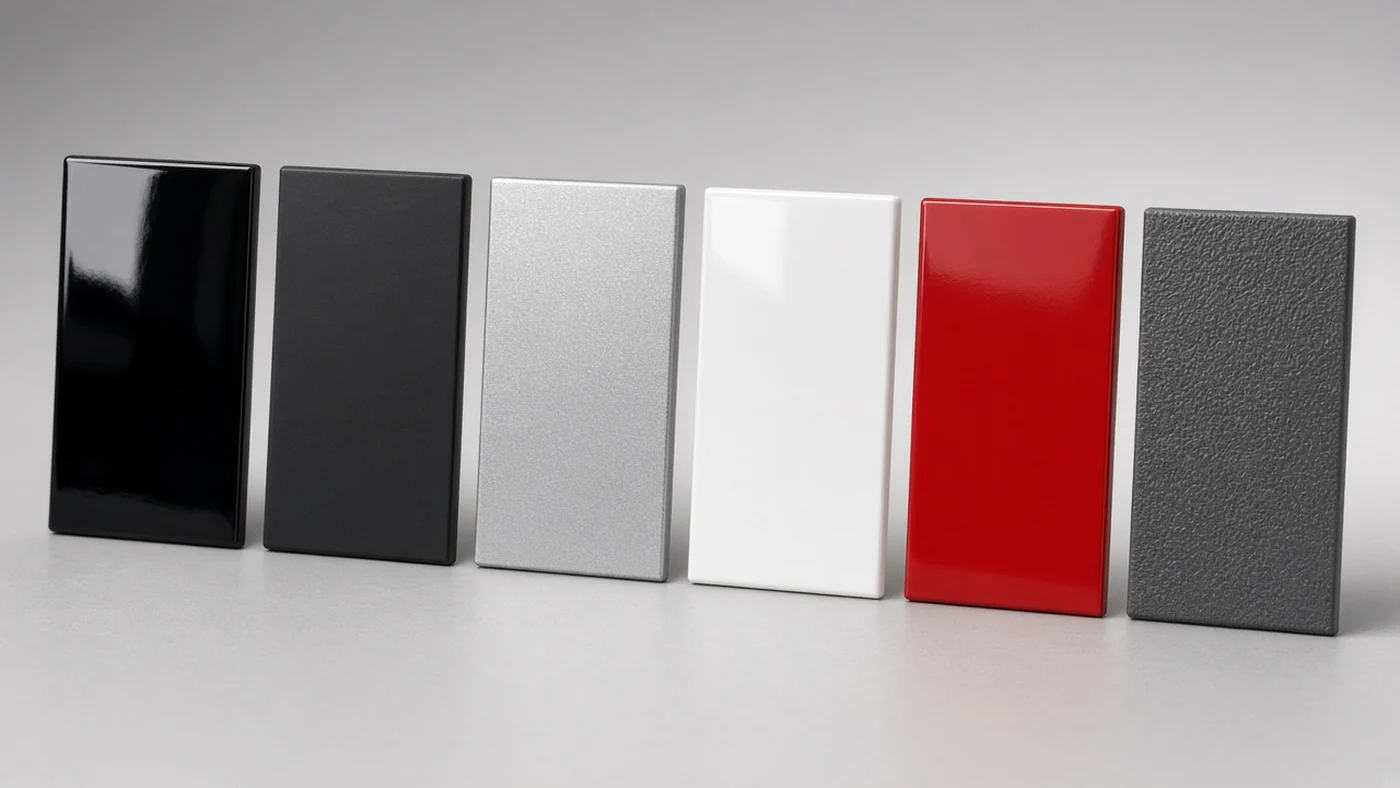
Painted plastic sample panels in gloss black, matte black, silver, white, red and textured finishes
Molded-in texture
A grain or pattern is etched or machined into the mold steel and copied onto every part. Common on trim, fender flares and lower bumper parts left unpainted. Mold texture standards such as Mold-Tech style grains are often used to specify it.
Polished (high gloss) mold finish
The mold is polished so parts come out shiny. Used under paint or plating, or on unpainted gloss parts. SPI finish grades are often used to describe polish levels.
Piano black (gloss black) paint
A deep, mirror-like black achieved with black base and clearcoat. Popular for grilles, spoilers, mirror caps and trim.
Body color paint
The part is painted to match the vehicle paint code or your color standard, then clearcoated.
Matte and satin finishes
Low-gloss paint or clearcoat for a modern look. Gloss level is measured to keep parts consistent.
Buyers and engineers often describe mold finishes with industry standards. SPI (from the Plastics Industry Association) grades polished and textured finishes: A grades are high polish made with diamond compound, B grades are semi-gloss abrasive finishes, C grades are stone finishes and D grades are blasted textures. VDI 3400 is a German standard for spark-eroded (EDM) textures, numbered by roughness.
We can work to SPI, VDI or a texture you specify, and we confirm the finish and draft angle in the DFM report. A textured surface needs more draft than a polished one, because texture grips the mold steel when the part is ejected.
05 — Explainer
Mold Texture Options for Unpainted Parts
Many trim parts are never painted. Their look comes entirely from the mold texture and the resin color, so choosing the texture is as important as choosing a paint color.
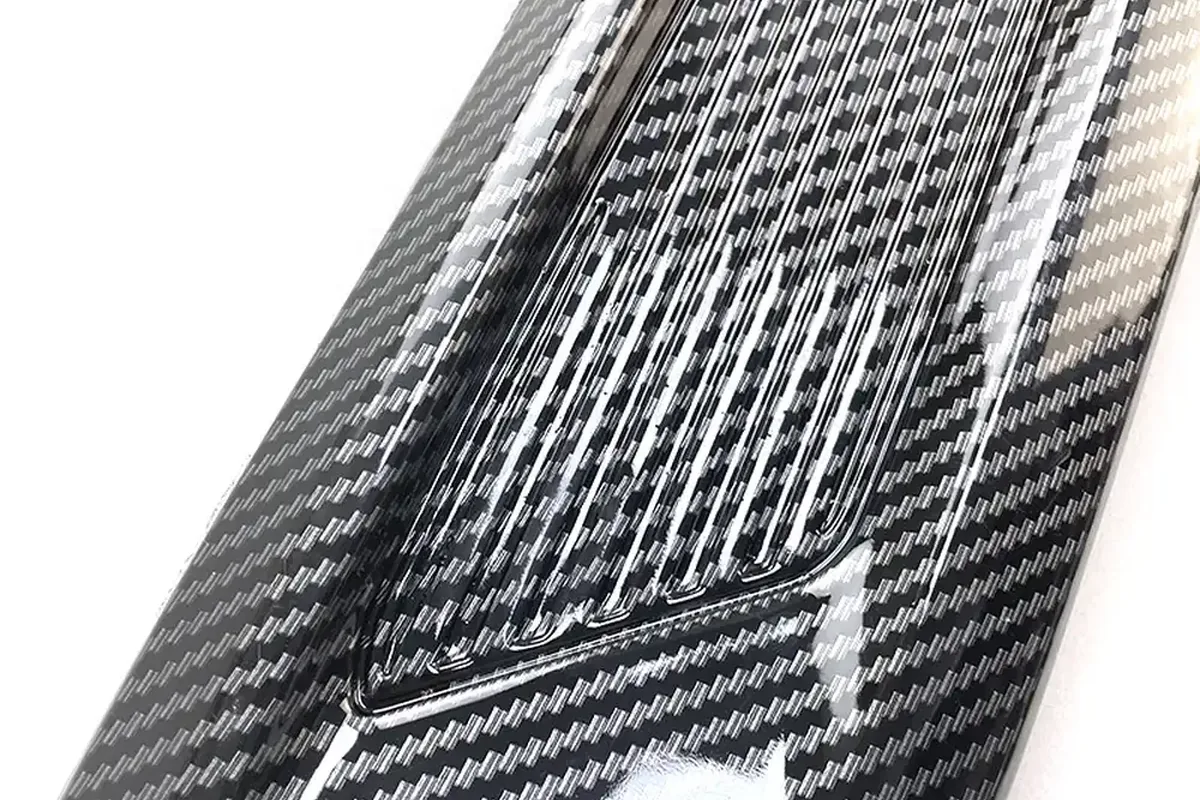
Close-up of a carbon pattern finish on a molded exterior part
Fine grain
A light, even texture that reduces glare and hides fingerprints. It needs less draft than a deep grain.
Leather or coarse grain
A deeper pattern often used on lower trim and fender flares. It hides scratches well but needs extra draft so parts release cleanly.
Geometric and technical textures
Patterns such as honeycomb or carbon-look designs machined or etched into the steel. Common on grille inserts and styling trim.
Matte blasted finish
A blasted surface such as SPI-D grades. Even matte look at low cost, good for hidden or semi-visible parts.
Texture samples or texture plates help you compare before the mold is finished. Tell us the texture standard or send a reference part, and we will confirm the draft and the steel finish in DFM.
06 — Explainer
How Automotive Plastic Painting Works
Painting plastic car parts is different from painting metal. Plastics have low surface energy, they flex and they cannot be baked at high temperature. A good process controls every stage.
01
Pre-treatment
Parts are cleaned to remove release agents, dust and oils. PP and TPO parts need surface treatment so paint can bond.
02
Base coat
A first coat gives adhesion and evens out the surface. Base coat is 10–15 μm in our 3C2B system.
03
Color coat
The color layer, 12–18 μm, is sprayed in a clean-room booth, then the part is pre-baked at 60 °C for 10 minutes.
04
Clearcoat
A clear top layer, 15–20 μm, gives gloss and weather protection. UV-cured clearcoat is available on request.
05
Final bake
The topcoat is baked at 80 °C for 30 minutes, a temperature suitable for plastic parts.
06
Inspection
Color, gloss, film thickness and adhesion are measured, and every part is checked visually.
07 — Explainer
What Is 3C2B Painting?
3C2B means three coats and two bakes. Three layers are applied (base, color and clear) with a bake after the color coat and a final bake after the clearcoat. Compared with simpler one or two coat systems, 3C2B gives better depth of color, higher gloss and stronger weather resistance, which is why it is common on visible exterior parts.
Total film thickness on our 3C2B system is 35–50 μm. Too thin and the color may be uneven or wear through; too thick and the paint can run, crack or lose adhesion. We measure it with a coating thickness gauge on every batch.
Need a paint color matched?Send your color code or sample and we will confirm the paint system and color checks.
08 — Explainer
Piano Black Finish: Why It Is Hard to Get Right
Piano black is one of the most requested finishes for spoilers, grilles and mirror caps, and one of the most demanding. A deep black gloss works like a mirror, so it shows flaws that a matte or textured finish would hide.
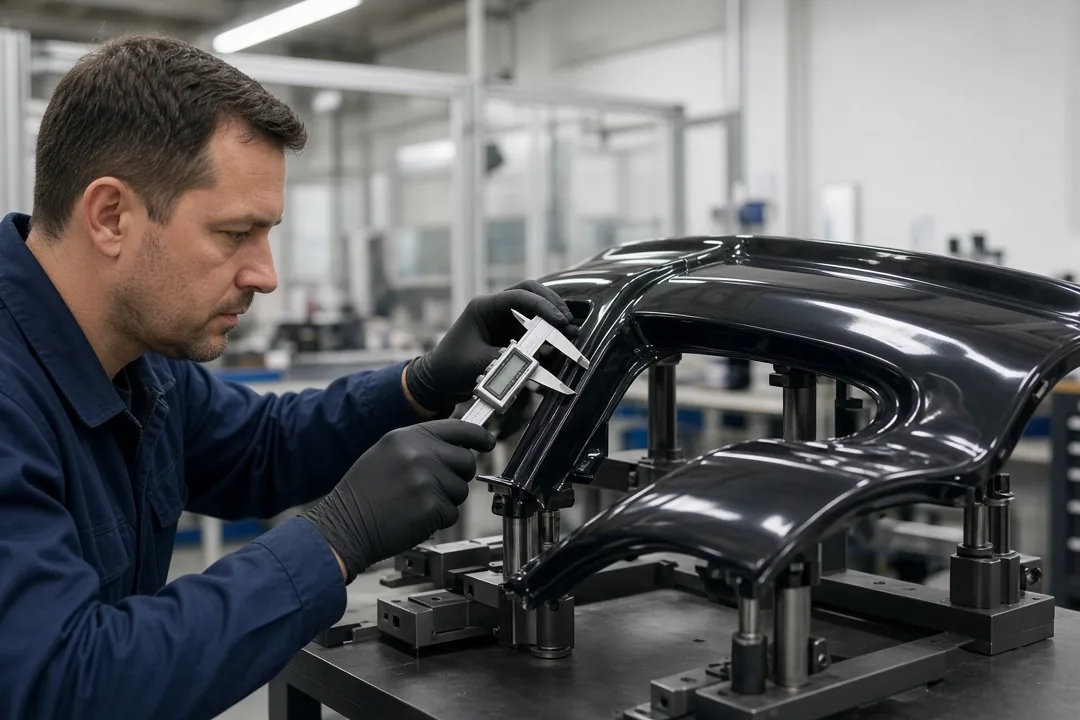
Inspector measuring a gloss black exterior part on a checking fixture
The base part must be free of sink marks, flow lines and weld lines on visible faces. That starts with part and mold design: even walls, gates on hidden faces and a polished mold. In painting, dust is the main enemy, which is why our spray booths run as Class 100,000 (ISO 8) clean rooms and our flash-off and oven areas as Class 10,000 (ISO 7).
A clear topcoat of 15–20 μm then gives the depth and protection the finish needs.
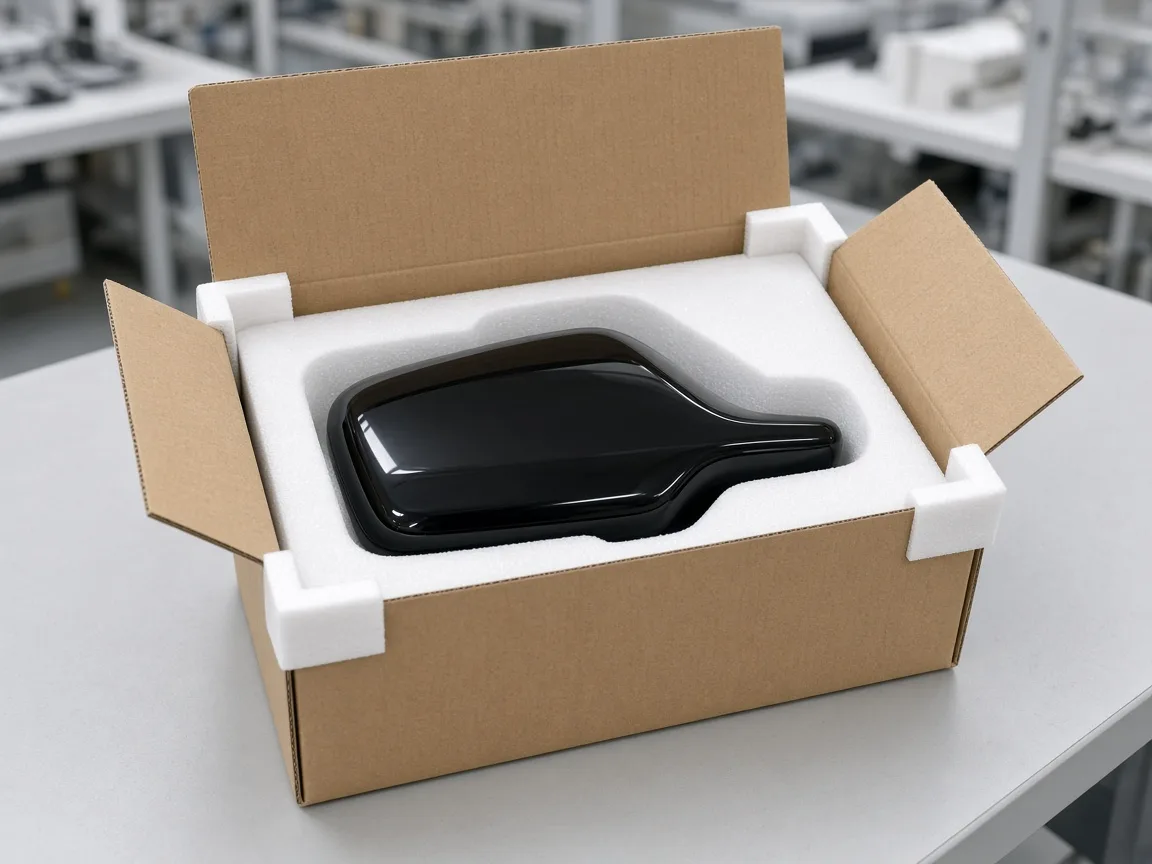
After painting, piano black parts are checked under good light against the master sample and gloss is measured at 20°, the angle used for high-gloss surfaces. Packing protects the finish so it arrives without scratches.
09 — Explainer
Common Paint Defects and How We Prevent Them
Defect
What it looks like
Prevention
Dirt and dust inclusions
Small bumps in the paint
Clean-room booths and oven, part cleaning
Orange peel
Wavy, textured gloss
Spray settings and film thickness control
Runs and sags
Paint drips on vertical faces
Film thickness within 35–50 μm total
Poor adhesion
Paint lifts or peels
Pretreatment for PP and TPO, cross-hatch checks
Color mismatch
Shade differs from standard
Spectrophotometer checks, ΔE*ab ≤1.0
Thin coverage on edges
Light edges or corners
Robot paths and manual touch-up on L2
Sink marks showing through
Dents visible under gloss
Even walls and packing settings in molding
10 — Explainer
Matching the Finish to the Material
Each plastic behaves differently under paint. We choose the pretreatment and coating to suit the resin.
Material
Paint behavior
Our approach
ABS
Paints easily, good adhesion
Standard pretreatment and 3C2B paint
PP and modified PP
Low surface energy, paint does not bond without help
Surface treatment and adhesion base coat before color
TPO
Flexible, low surface energy
Surface treatment and flexible-friendly coating
ASA
Good UV resistance
Often left in molded color; can be painted
PC and PC/ABS
Tough, can be sensitive to solvents
Coating chosen for compatibility
11 — Explainer
Design Tips for Painted Plastic Parts
Paint shows every flaw underneath it. These guidelines help painted parts look right first time.
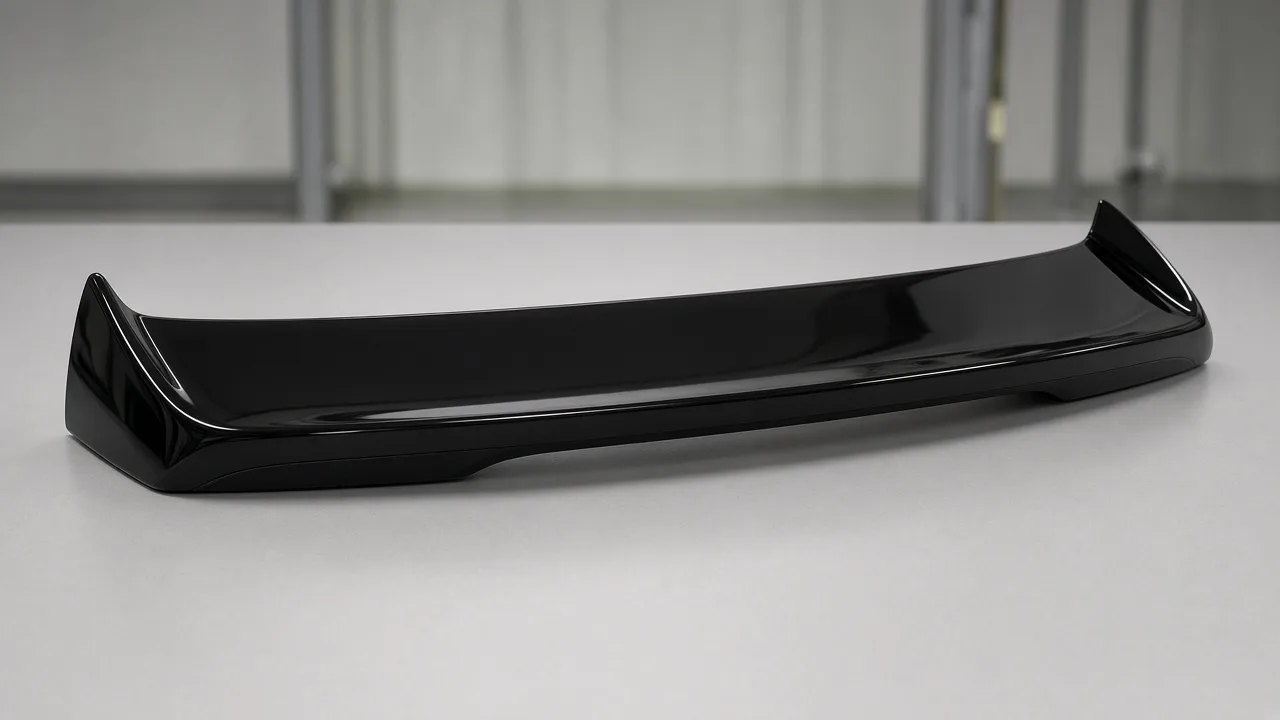
Gloss black injection-molded rear spoiler
Keep wall thickness even to avoid sink marks under gloss paint
Put gates, ejector marks and weld lines on hidden faces
Avoid sharp inside corners where paint can pool
Add hanging or fixture points that sit on hidden faces
Specify which faces are class A (visible) on your drawing
Agree a color standard or master sample before production
12 — Explainer
Pros and Cons of Painting vs Molded-in Finish
Finish
Advantages
Limitations
Painted
Any color, high gloss, body color match, UV protection from clearcoat
Extra process cost, needs clean surfaces
Molded-in color and texture
Lowest cost, no paint to chip
Limited colors, lower gloss, may fade without UV-stable resin
Chrome plated
Bright metal look
Needs plating-grade ABS and plating-friendly design
13 — Service
Painting Large Exterior Parts
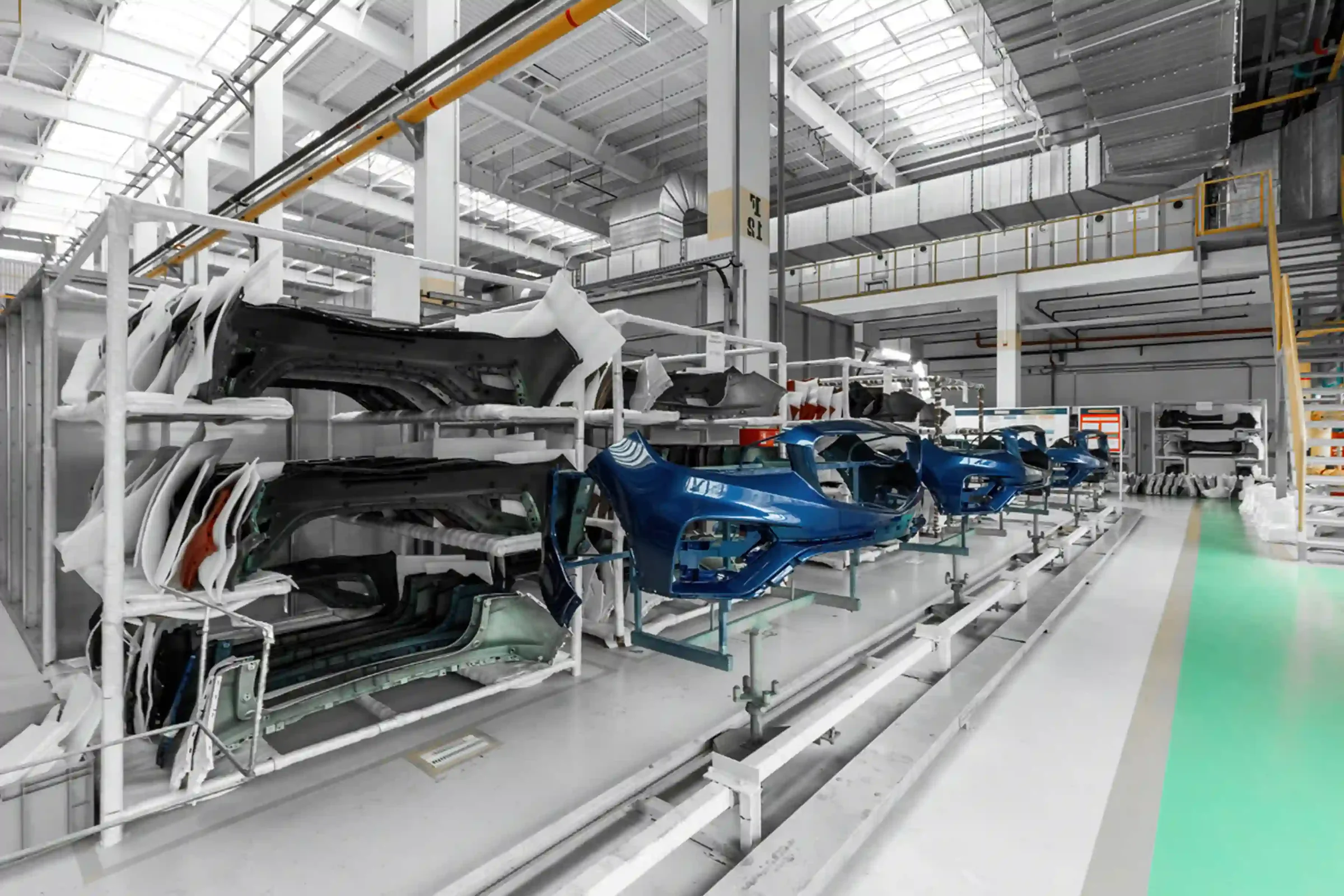
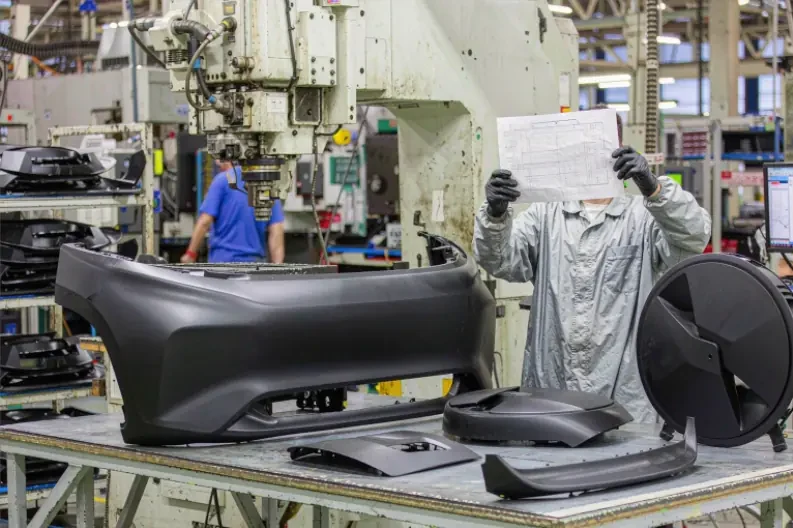
Bumper covers, spoilers and side skirts are long and curved, so a consistent finish across the whole part needs good fixturing and spray paths. Large parts run on our L2 overhead conveyor line, where parts hang on fixtures and pass through spray, flash-off and oven areas. The four manual touch-up stations on L2 let painters reach recesses and edges that automatic spraying cannot cover evenly.
Bumpers and exterior parts on the production line in the Yirox factory in Wuxi
Because painting is in the same factory as molding, we can feed back paint problems to the molding team quickly, for example when a weld line or flow mark shows through the gloss.
14 — Service
Parts We Paint
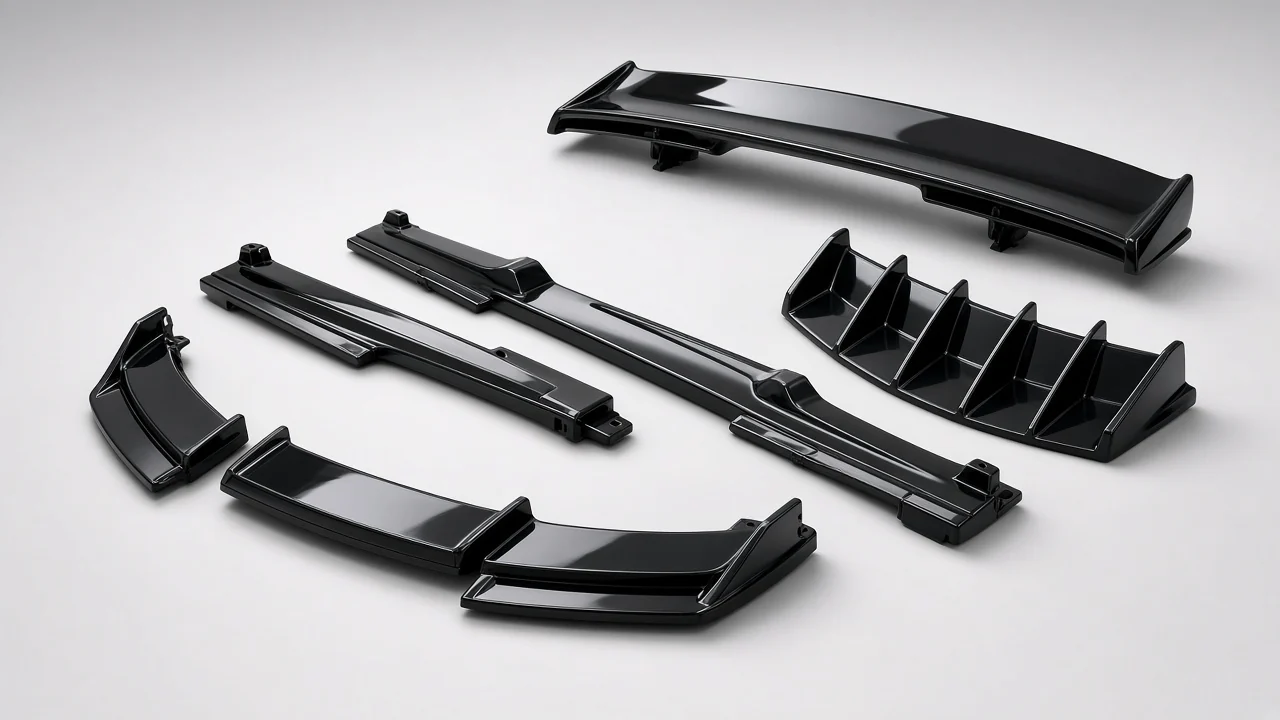
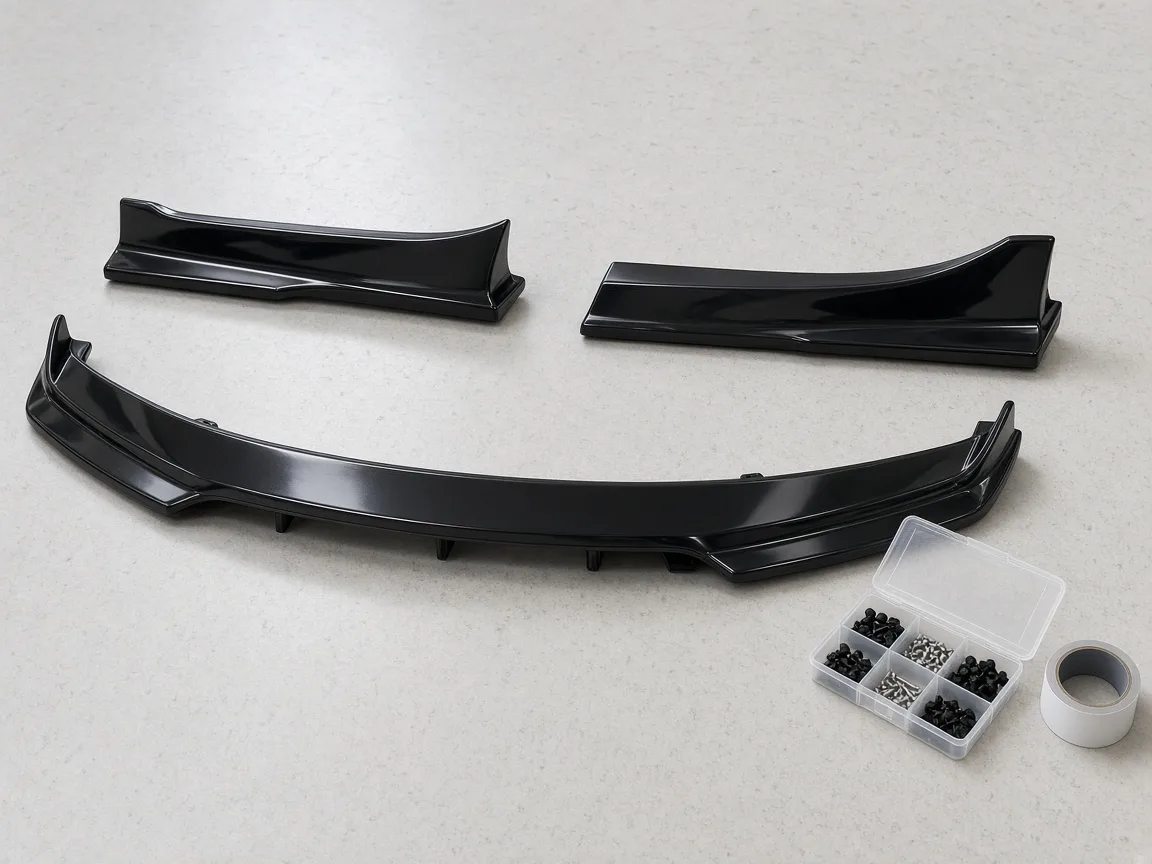
Gloss black front lip, spoiler, side skirts and rear diffuser
Bumper covers and bumper trim
Body color or black, painted on the overhead conveyor line.
Rear spoilers
Gloss black, body color or matte, including large rear spoilers.
Front lips and side skirts
Gloss black and body color finishes for styling kits.
Finished black plastic bumpers and body kit parts on storage racks
Finish chosen in DFM
Material, texture and paint system agreed before tooling.
Color standard
We work to your paint code, color chip or master sample.
Measured results
Color, gloss, film thickness and adhesion recorded.
Clean-room painting
ISO 8 booths and ISO 7 flash-off and oven.
One factory
Molding, painting and packing in the same plant, so parts are not shipped between suppliers.
Protective packing
Painted faces protected for export. See packaging.
16 — Service
Our Painting Workflow
01
Finish brief
You send the color code, chip or sample, gloss level and the faces that must be class A.
02
Color matching
We prepare paint samples and measure them against your standard with our spectrophotometer.
03
Trial painting
Sample parts are painted on the production line and checked for color, gloss and adhesion.
04
Approval
You approve a master sample, which becomes the reference for production.
05
Production
Parts are painted on L1 or L2 with batch checks and records.
06
Packing
Painted parts are wrapped and packed to protect the surface.
17 — Service
What to Send for a Painting Quote
We offer low MOQ on selected items. Exact quantities depend on the part and color and are confirmed in your quote.
Part CAD or sample, with the visible faces marked
Paint code, color chip or master sample
Gloss level (high gloss, satin or matte)
Any test standards for adhesion, weathering or salt spray
Annual quantity and order size
Have your part and color ready?Send them with the quantity and we will quote painting with the part.
18 — Capability
Our Paint Lines
The rotary automatic line suits repeat parts in larger batches. The overhead conveyor line handles large or complex parts such as bumper covers and spoilers, with manual touch-up stations for areas a spray gun cannot reach in one pass.
Line
Type
Details
L1
Rotary automatic line
24 stations
L2
Overhead conveyor line
Includes 4 manual touch-up stations
Spray booths
Clean room
2 booths, Class 100,000 (ISO 8)
Flash-off and oven
Clean room
Class 10,000 (ISO 7)
Curing
Two bakes
60 °C × 10 min pre-bake; 80 °C × 30 min topcoat
Paint system
3C2B
UV clearcoat optional
19 — Capability
Paint Specifications
Layer
Film thickness
Base coat
10–15 μm
Color coat
12–18 μm
Clearcoat
15–20 μm
Total
35–50 μm
Check
Standard
Color difference
ΔE*ab ≤1.0; critical parts ≤0.8
Adhesion (cross-hatch)
Grade 0–1
20 — Capability
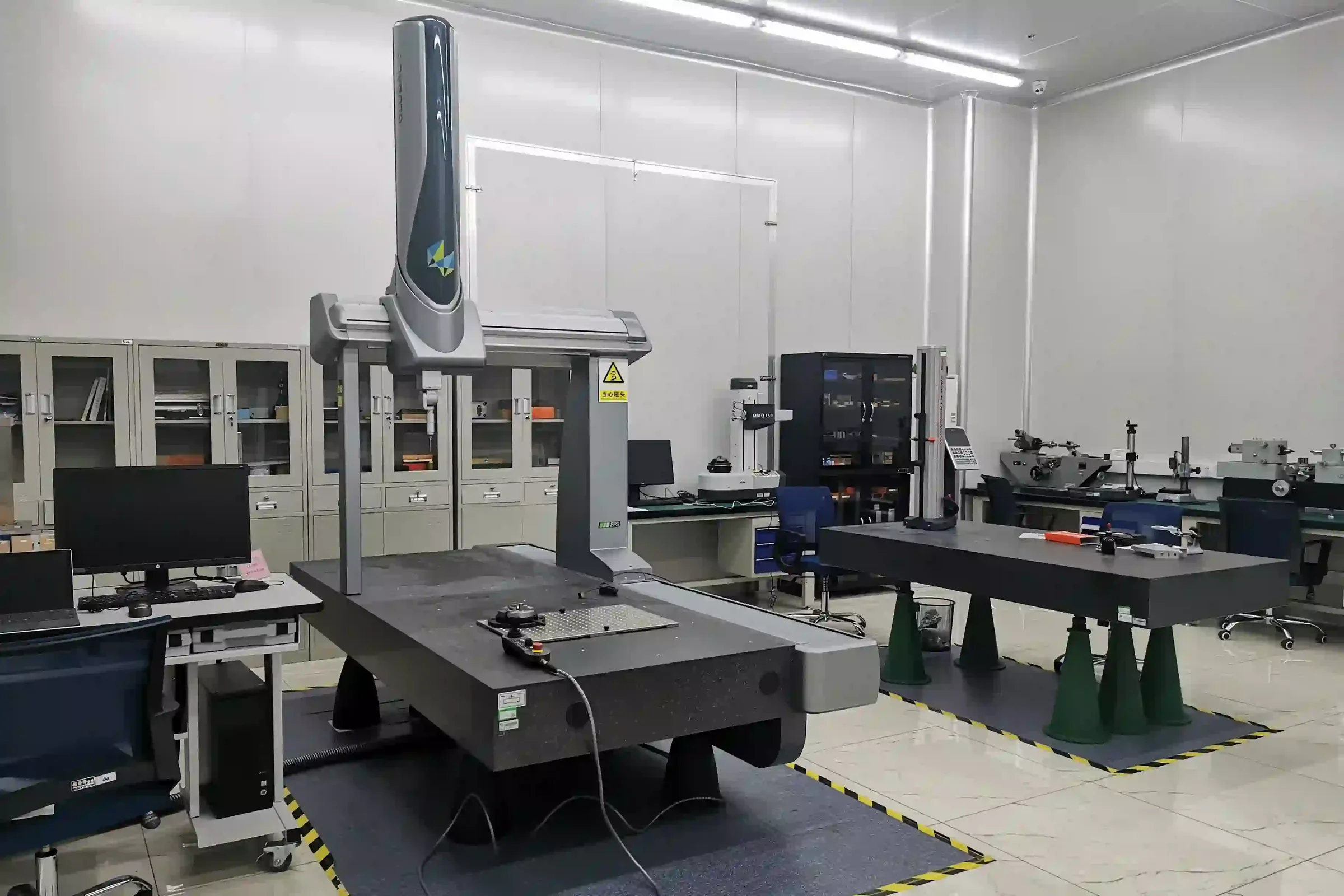
How We Check Painted Parts
Inspector recording test results in the Yirox quality control lab
Color
X-Rite Ci64 spectrophotometer, d/8° geometry, SCI and SCE, with ΔE repeatability of 0.03 or better.
Gloss
BYK micro-TRI-gloss meter at 20°, 60° and 85°, repeatability ±0.2 GU.
Film thickness
BYK 8500 coating thickness gauge, magnetic and eddy current, 0–1,500 μm, ±(3% + 1 μm).
Adhesion
Cross-hatch test in-house. Outsourced adhesion tests to ISO 2409 / ASTM D3359 and pull-off to ASTM D4541 when required.
Weathering and corrosion
Outsourced to SGS and CTI (CNAS-accredited labs): QUV 500/1,000 h, xenon 2,500 kJ/m², humidity to ISO 6270-2.
Visual inspection
Every part is checked for runs, dirt, orange peel and thin areas against the master sample.
See our quality inspection page for the full list of instruments and tests.
Automotive Plastic Painting Matched to How You Sell
A color mismatch can send a painted part straight back. Our automotive plastic painting runs on in-house 3C2B lines held to ΔE*ab ≤1.0. Each program below shows how that consistency reaches your customer.
Quality and purchasing teams on color, gloss and batch-to-batch consistency.
“What changed for us was receiving a colour plaque and the ΔE reading with each batch. Our incoming inspection stopped being an argument.”
Quality Manager
“Gloss black parts are unforgiving. Small differences become obvious when they’re installed next to each other. We wanted more than a visual check, and the colour inspection records gave our quality team something objective to work with.”
Names and companies withheld at the customer’s request.
22 — FAQ
FAQ
What are the different types of plastic finishes?
The main types are molded-in finishes (texture or polish made in the mold), painted finishes (gloss, matte or body color) and plated finishes such as chrome. Each suits different parts, materials and budgets.
What is SPI-D2 surface finish?
SPI-D2 is a textured mold finish made by dry blasting the mold steel with fine oxide media. It gives a dull, even matte surface that hides small marks and fingerprints, and needs more draft than a polished surface.
Can you paint PP and TPO parts?
Yes. PP and TPO need surface treatment and an adhesion base coat before color, because paint does not bond well to them on its own. We include this in the process.
How do you match body color?
We work to your paint code, a color chip or a master sample. Paint samples are measured with a spectrophotometer and must be within ΔE*ab 1.0, or 0.8 on critical parts.
What is piano black finish?
Piano black is a deep, high-gloss black finish made with black base and clearcoat. It is used on grilles, spoilers, mirror caps and trim. It needs a sink-free surface because gloss shows every flaw.
Do you offer UV clearcoat?
Yes. UV clearcoat is available as an option on our 3C2B system.
Do you paint parts you did not mold?
Our paint lines mainly finish parts molded in our own factory, because surface quality starts in the mold. For other parts, send us details and we will tell you whether painting them is practical.
What is the difference between gloss black paint and black molded-in color?
Gloss black paint uses a black color coat and clearcoat for a deep, high-gloss finish with UV protection. Black molded-in color is the resin itself; it costs less but has lower gloss and needs a UV-stable resin such as ASA for outdoor use.
Can you provide weathering test reports?
Yes. Weathering tests such as QUV and xenon are done by SGS or CTI, CNAS-accredited labs, and reports are supplied with your program.
Get a Painting Quote
Send your part, color code or sample. We will reply with a finish recommendation and a quote.