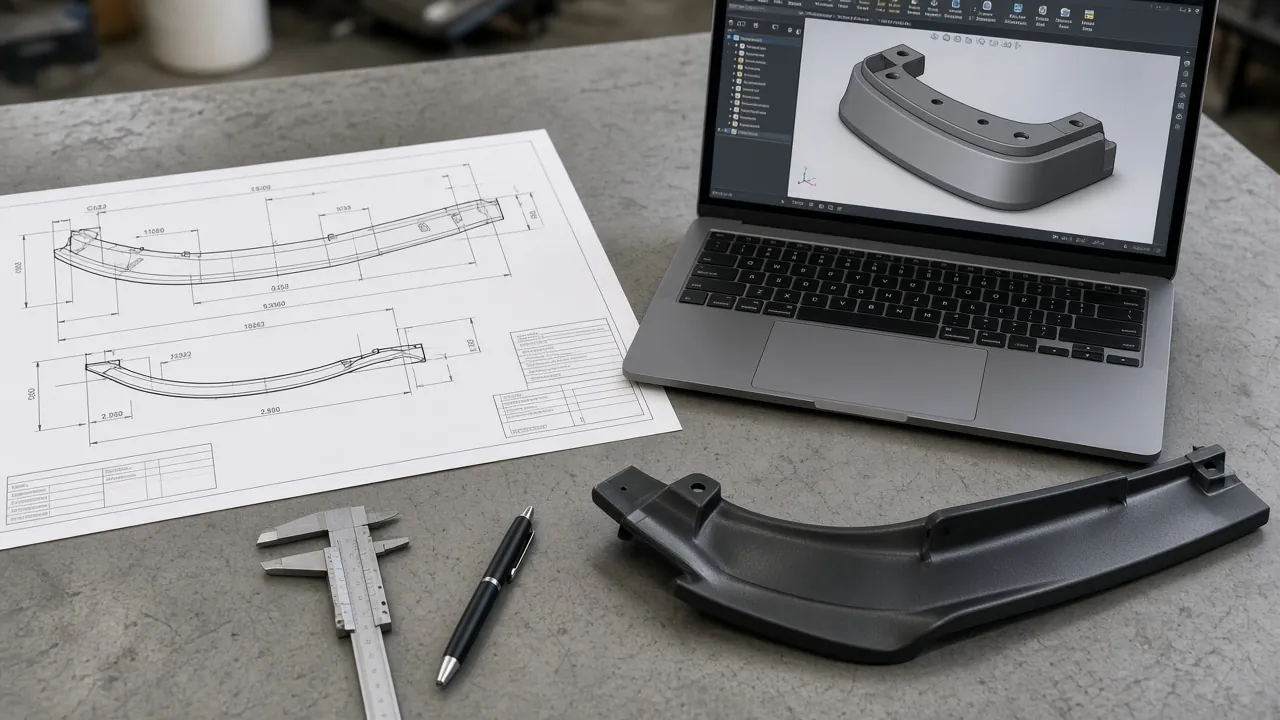
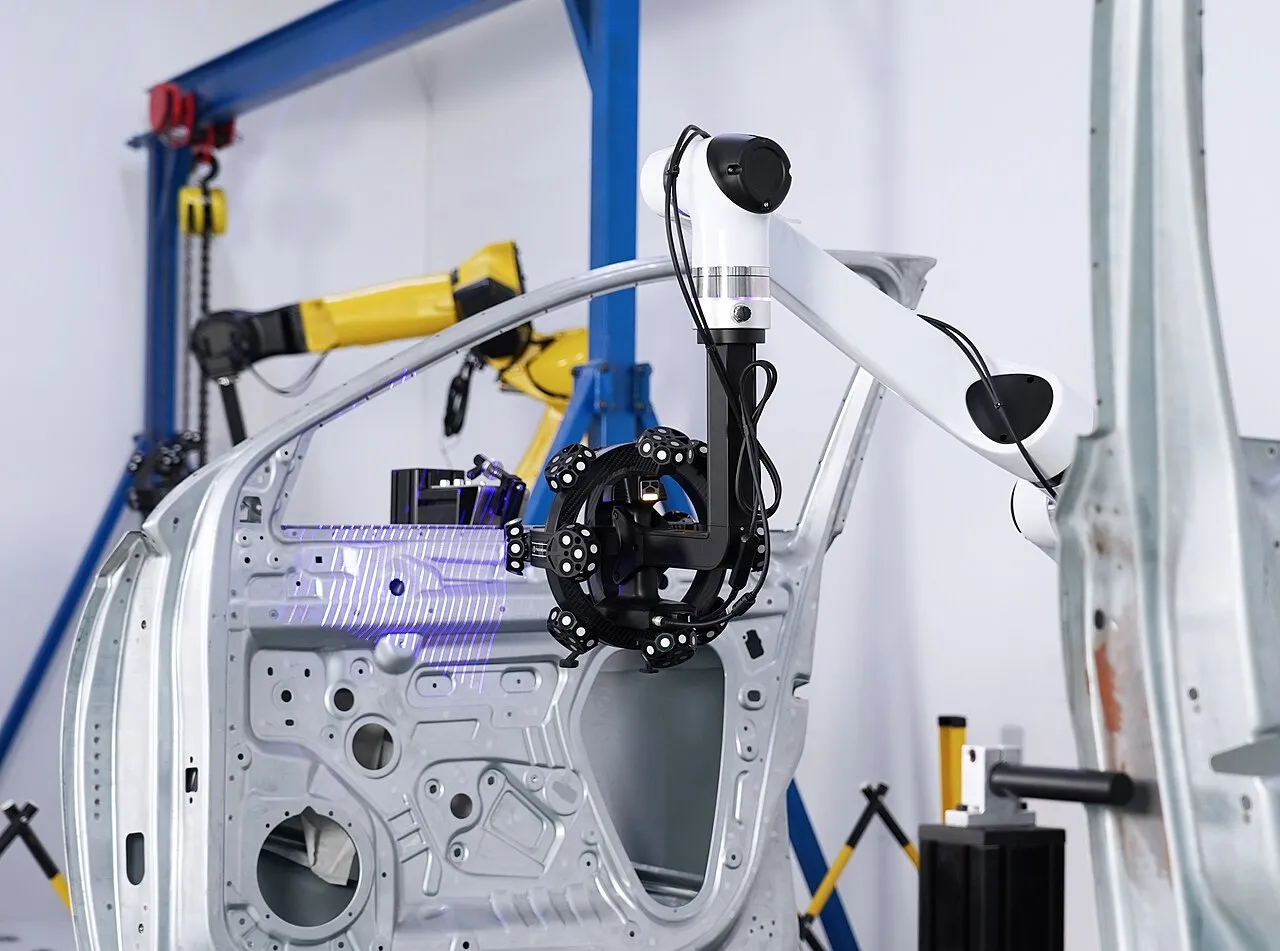
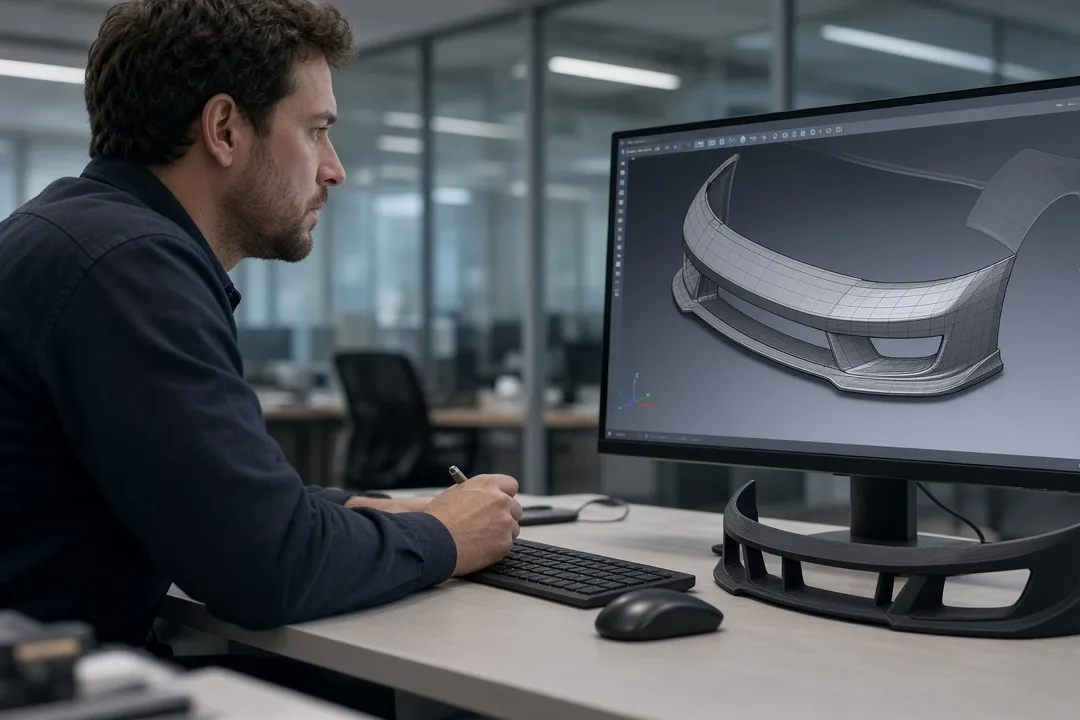
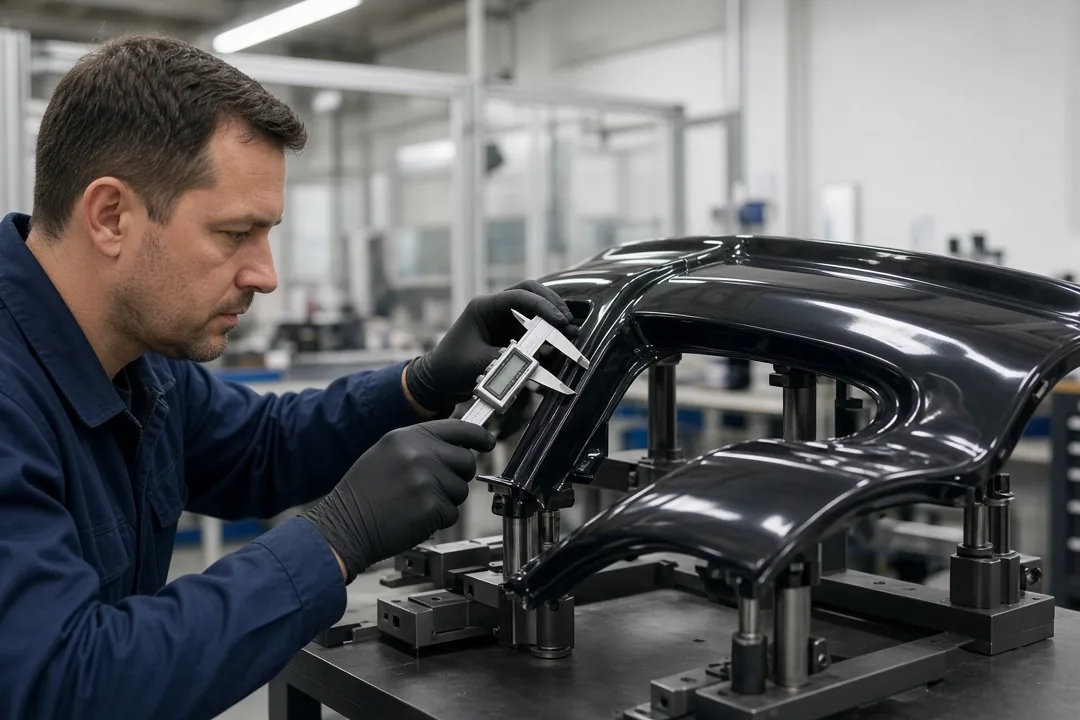
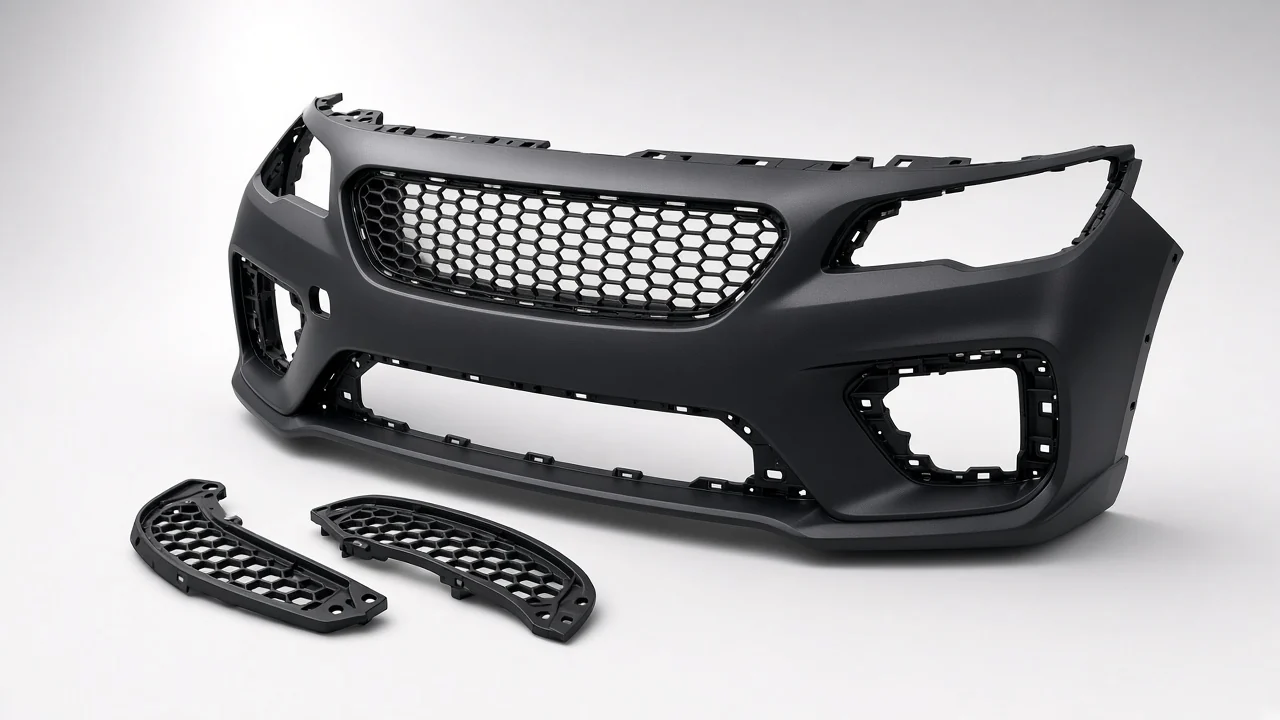
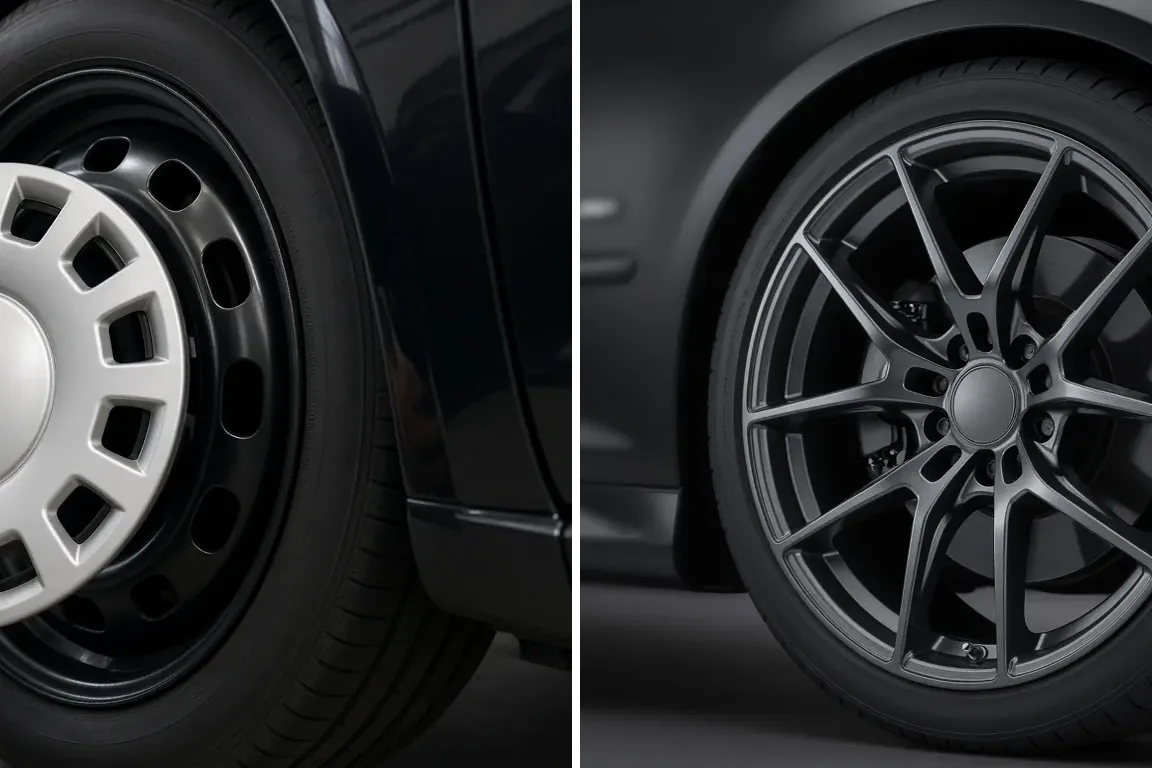
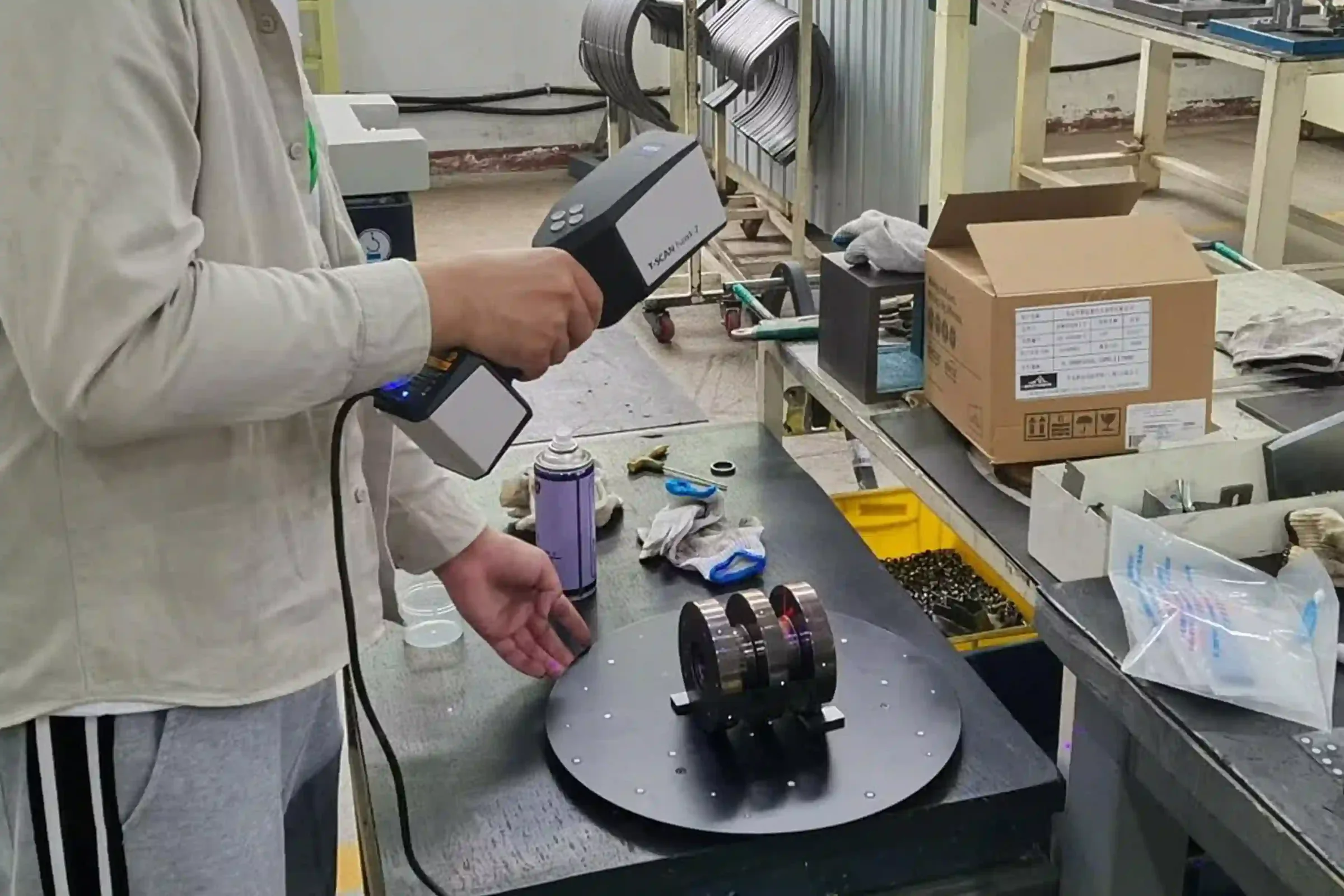
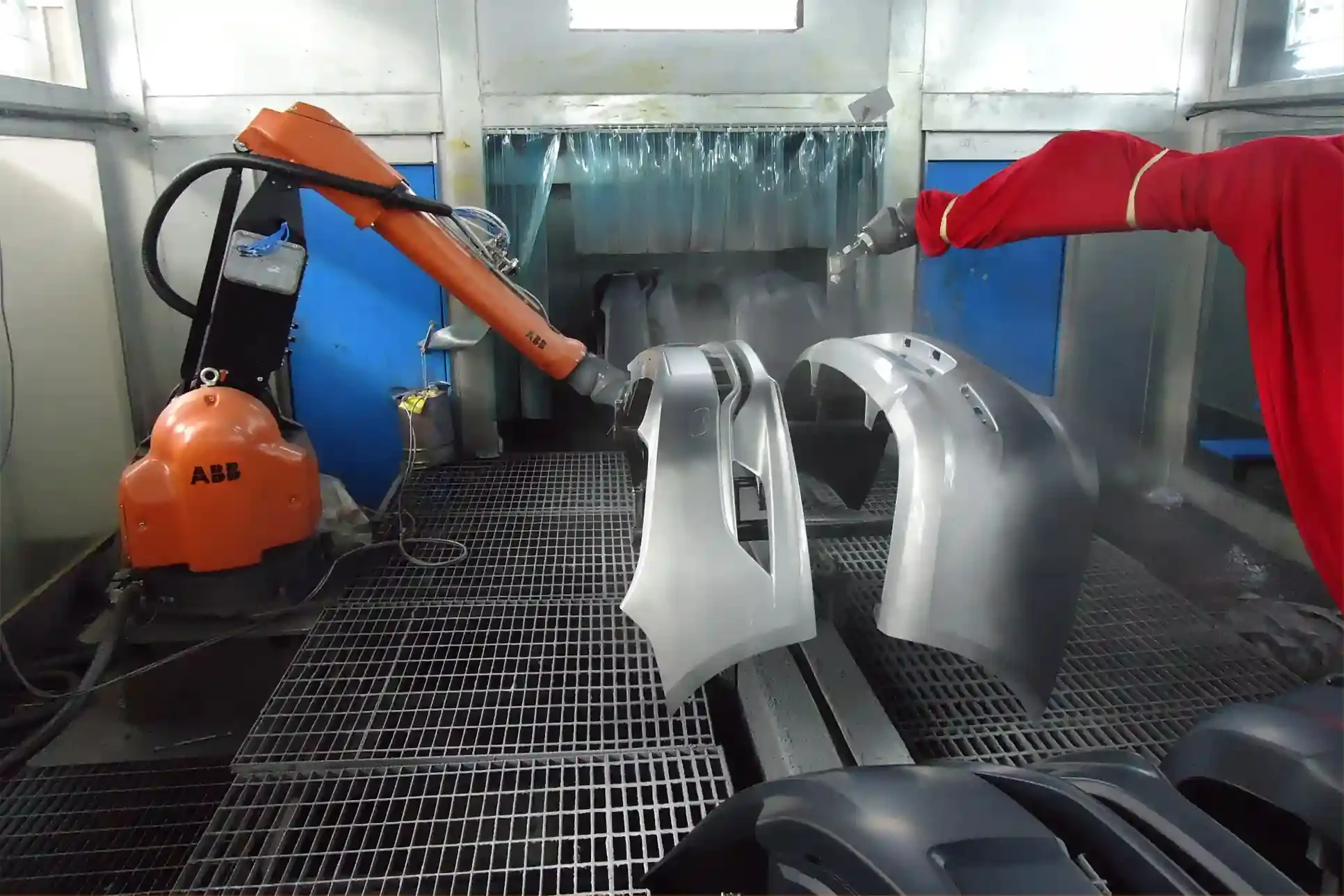
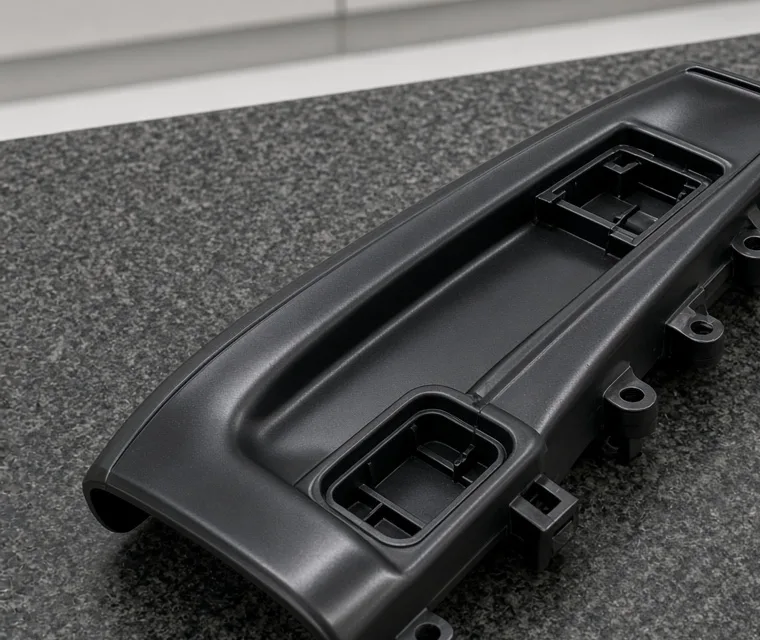
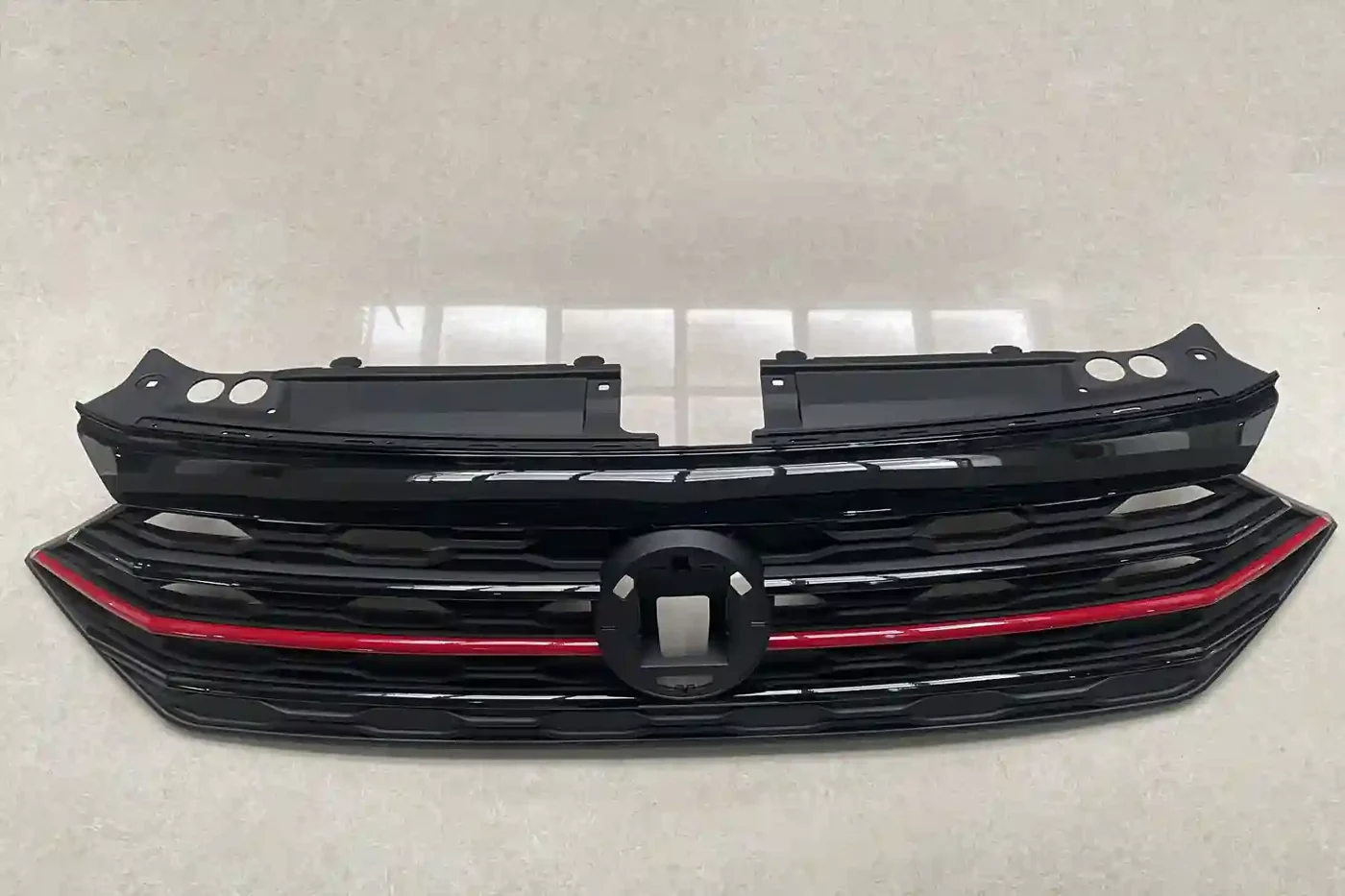
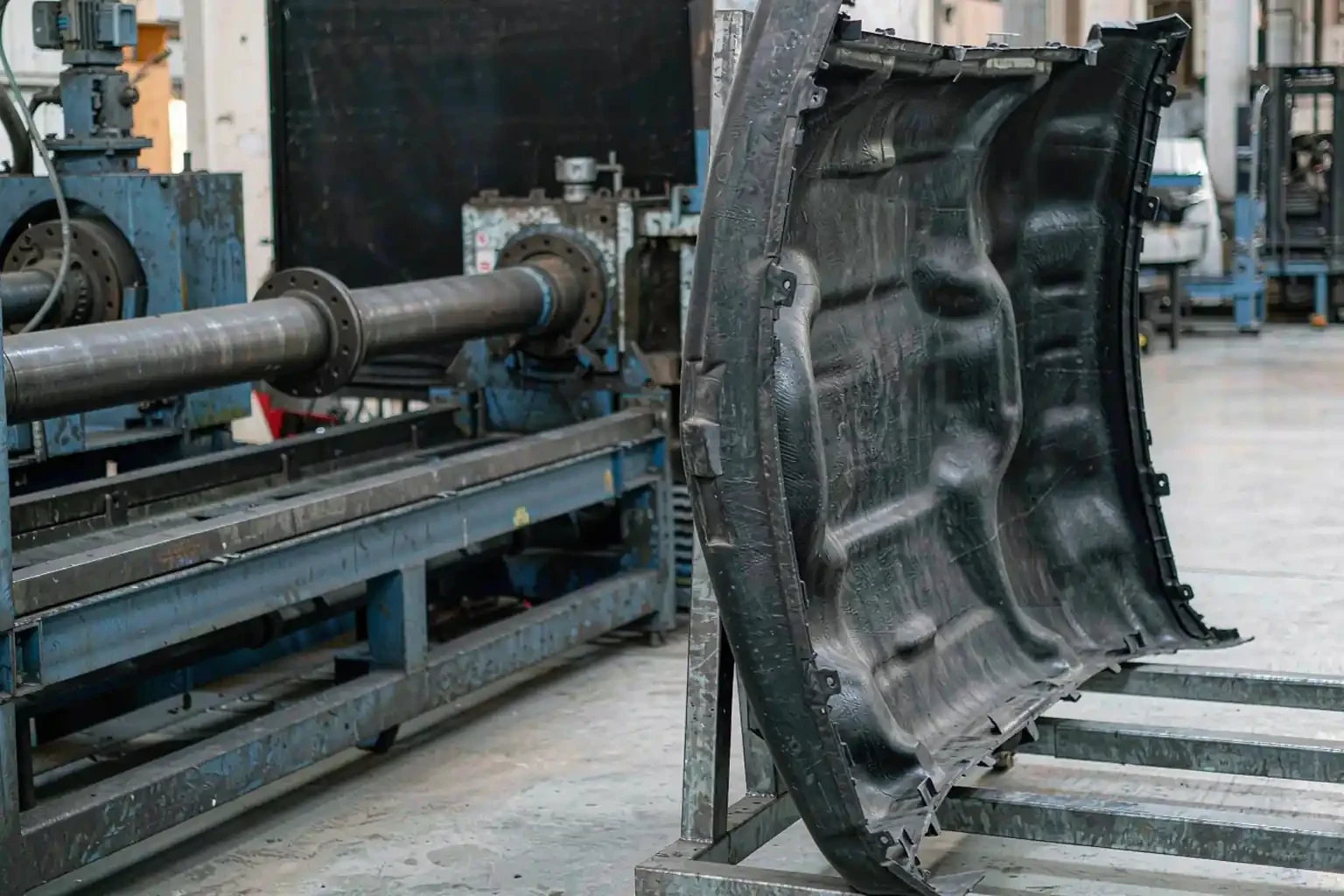
A part made for one vehicle has to match that vehicle exactly: its mounting points, its clips, its curves and the version sold in your market. Yirox develops vehicle-specific exterior parts and custom wheel center caps from your drawings, samples or original parts, using measurement, 3D scanning, test fitting and sealed samples before production begins.
You want spoilers, lips, trim or mud flaps for a popular model and need them to fit without modification. We develop each part around the vehicle, not around a generic template. Solutions for aftermarket brands →
When an original or aftermarket part is no longer available, we can work from a sample to recreate it, including center caps and trim pieces that customers still need. Solutions for distributors and importers →
Wheel suppliers and tire service chains often need center caps in a specific size, clip style or logo. We develop caps from drawings or samples for steel and alloy wheels. Solutions for tire, truck and EV channels →
Fitment problems usually start with missing vehicle information. Before design begins, we confirm the details that change the part.

The same model name can cover several generations, facelifts and trims. We confirm the exact model years and the market where the vehicle is sold, because a part for one market may not fit the version sold in another.
Bumpers, lips and grilles often differ by region, trim level or option package, for example to fit a different license plate area, sensor layout or bumper shape. We confirm which variant you sell and keep each variant as a separate fitment route.
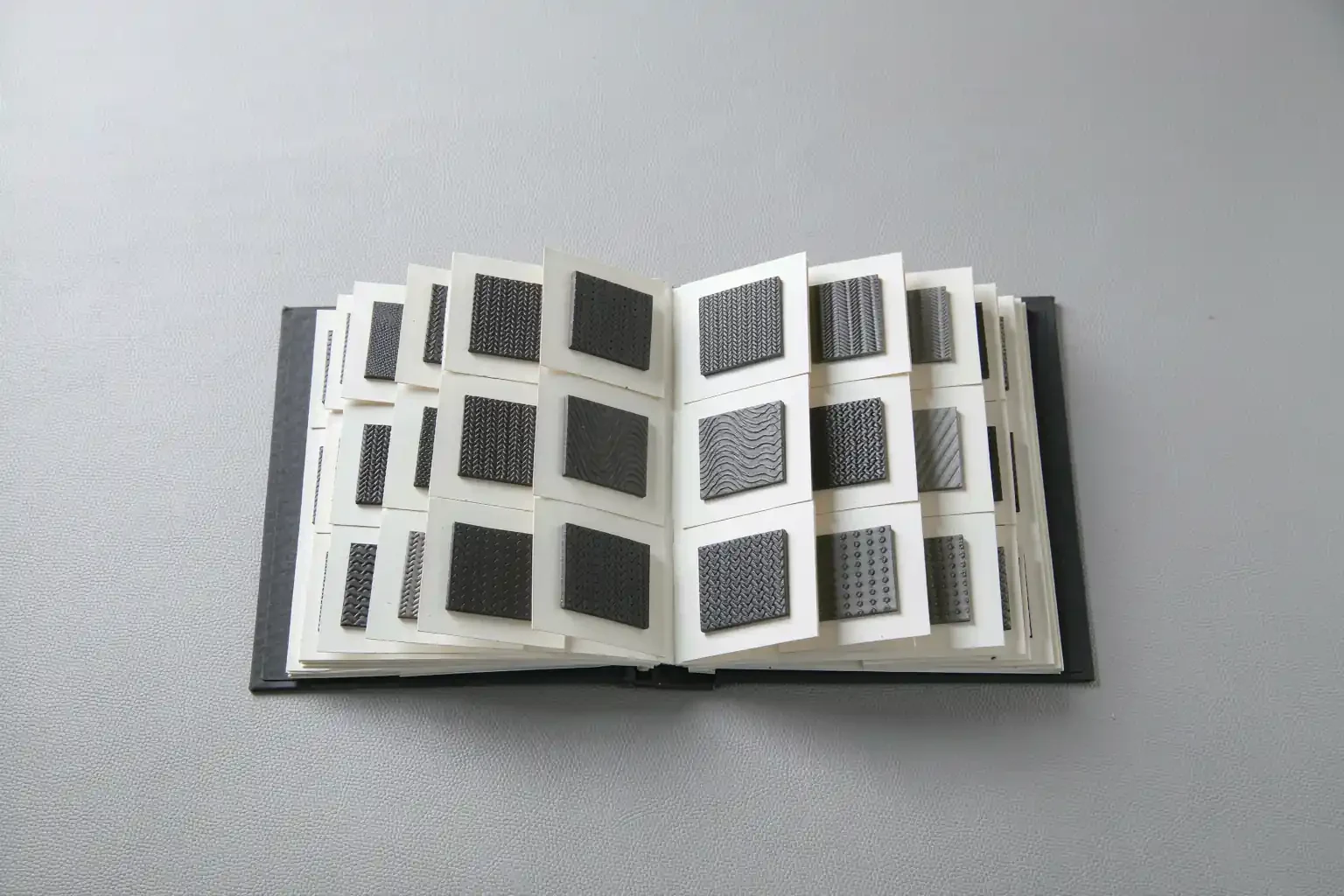
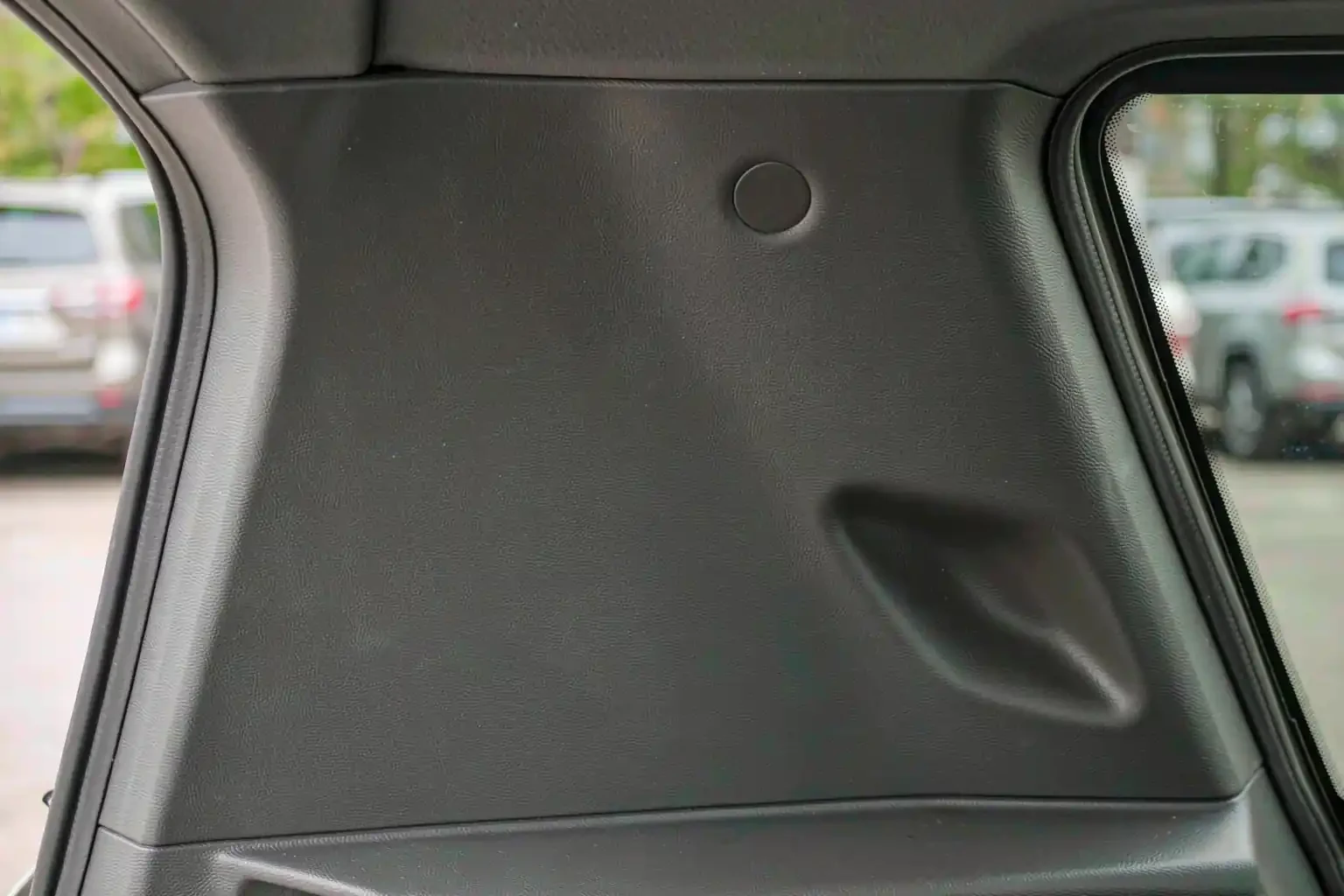
We record where the part attaches, its overall dimensions and any appearance differences between versions, such as texture, finish or styling lines, so the new part matches the car and the original look.
You do not need a full CAD package to start. Any of the following is enough for a first review:

The most reliable reference. We measure and 3D scan it.
We check it against the vehicle information you give us.
Useful for early feasibility, then confirmed with a sample.
For parts that must follow the body, measuring on the vehicle gives the best data.
We can use it to understand the target, then develop a design for your brand.
Tell us the target market and expected quantity too, because they affect the tooling route and documents.
Ready to send your part or vehicle details?Share the vehicle model, photos or a sample. We will reply with the development path and the questions that affect fitment.
Vehicle-specific development turns an original part, vehicle or drawing into a production part that fits one exact model, in five steps: measure, design, test-fit, tool and approve the sample.
We measure the original part or vehicle and use 3D scanning to capture its geometry, including surfaces that are hard to measure by hand. The scan data becomes the base for the design.
Our engineers build the part model around the scan or your drawing and review it for manufacturability: wall thickness, draft, clip design and the cosmetic faces. You receive a DFM report before tooling.
A prototype or trial sample is fitted on the vehicle or against the original part. We check gaps, flushness, clip engagement and how the part lines up with surrounding panels.
Findings from the test fit go back into the design and, if needed, the tool. Each revision is recorded so you can see what changed.
Once fit and appearance are approved, the sample is sealed as the reference for production and kept on file for checking later batches.
Want a timeline for your part?Tell us the part and quantity and we will map scan, tooling and sample approval for your project.
3D scanning turns an original part or a vehicle surface into measurable data. We use the scan to check curves, mounting positions and gaps against the new design before steel is cut, which reduces the risk of a mold that needs major changes after the first trial. Scanning does not replace a test fit; it makes the first test fit more likely to pass.

We scan vehicles and sample parts with a Shining3D EinScan HX handheld scanner (blue laser plus infrared). Accuracy is 0.04 mm, and large parts or body areas are stitched at 0.1 mm per metre. STEP and IGES models are rebuilt from the scan; they are not the vehicle maker’s original CAD.
| Deliverable | Format | Used for |
|---|---|---|
| Mesh | STL / PLY | Fit studies and 3D printing |
| Point cloud | ASC | Raw scan data for your engineers |
| Reverse-engineered model | STEP / IGES | Part design and tooling |
| Deviation color map | PDF / PNG (±0.5 / ±1.0 mm scales) | Comparing a sample or first article with the scan |
| Inspection report | Recording the checked points |
More detail on our 3D scanning and reverse engineering page.

A vehicle part touches other parts: the bumper, the body, a fender or a trim strip. We study these interfaces on the original part so the new part sits at the correct height, gap and angle.
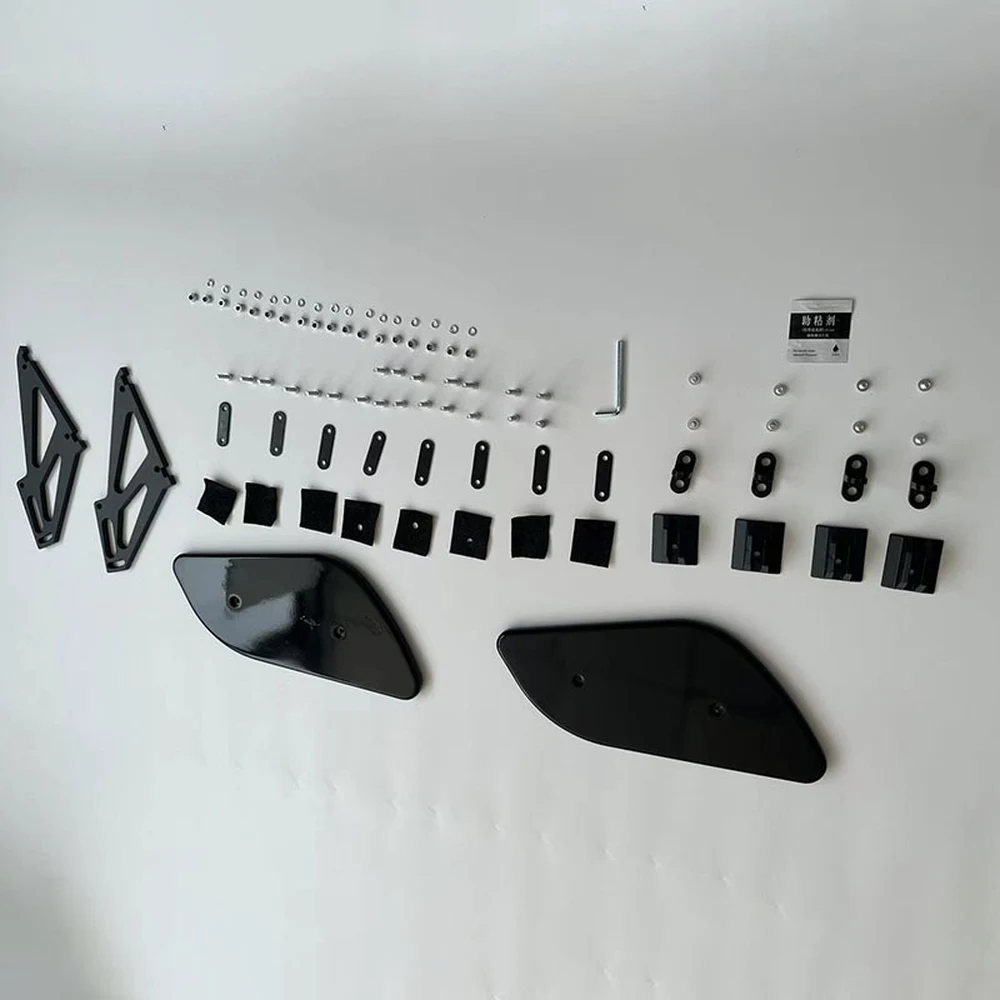
Clips, screws and tape must line up with the holes and surfaces already on the vehicle. We locate each mounting point from the scan and the original part, and design clips that hold firmly without damaging paint or the part itself during installation.
A prototype that fits well does not guarantee that every production part will. Production parts come from a steel tool, shrink as they cool and vary slightly from shot to shot. That is why we confirm fit again on trial samples from the production tool, not only on the first prototype.
Small variations add up. The tolerance on the part, the clip, the vehicle panel and the mounting hole combine into the final gap. We review the stack-up on critical areas and set tolerances so the part still fits when each component is at the edge of its range.
When the vehicle maker changes a facelift, a clip or a mounting point, the part may need to change too. We keep the approved design and sample under revision control, so a change to one version does not affect another.
A part built for one facelift or market does not fit another. We confirm the model years and market version first.
Small errors in surface shape show as uneven gaps against the body. 3D scanning and CMM checks on critical points keep the surface on target.
Clips in the wrong place or with the wrong flexibility fail during installation. We locate them from the original part and test them on samples.
Spoilers and skirts can bow after molding. Gate position, cooling and material choice are reviewed during DFM to keep them straight.
Fit must hold across production, not only on one sample. We check trial samples from the production tool before sign-off.
Not every product in a range needs its own tooling. The right choice depends on how many vehicles you want to cover and how exact the fit must be.
| Factor | Universal part | Vehicle-specific part |
|---|---|---|
| Fit | Fits many vehicles with some adjustment | Matches one make, model, year and market |
| Installation | Often adhesive tape or trimming | Uses original mounting points or clips where possible |
| Tooling | One mold can serve a wide market | Usually a dedicated mold per fitment |
| Listing and returns | Broad listing, more fitment questions | Clear fitment data, fewer wrong-fit returns |
| Best for | Entry-level ranges and fast launches | Brands that compete on fit and finish |
Simple trims, small spoilers and many mud flap designs can be offered as universal parts. If your customers accept trimming or tape mounting, a universal design keeps tooling simple and lets one SKU cover more vehicles.
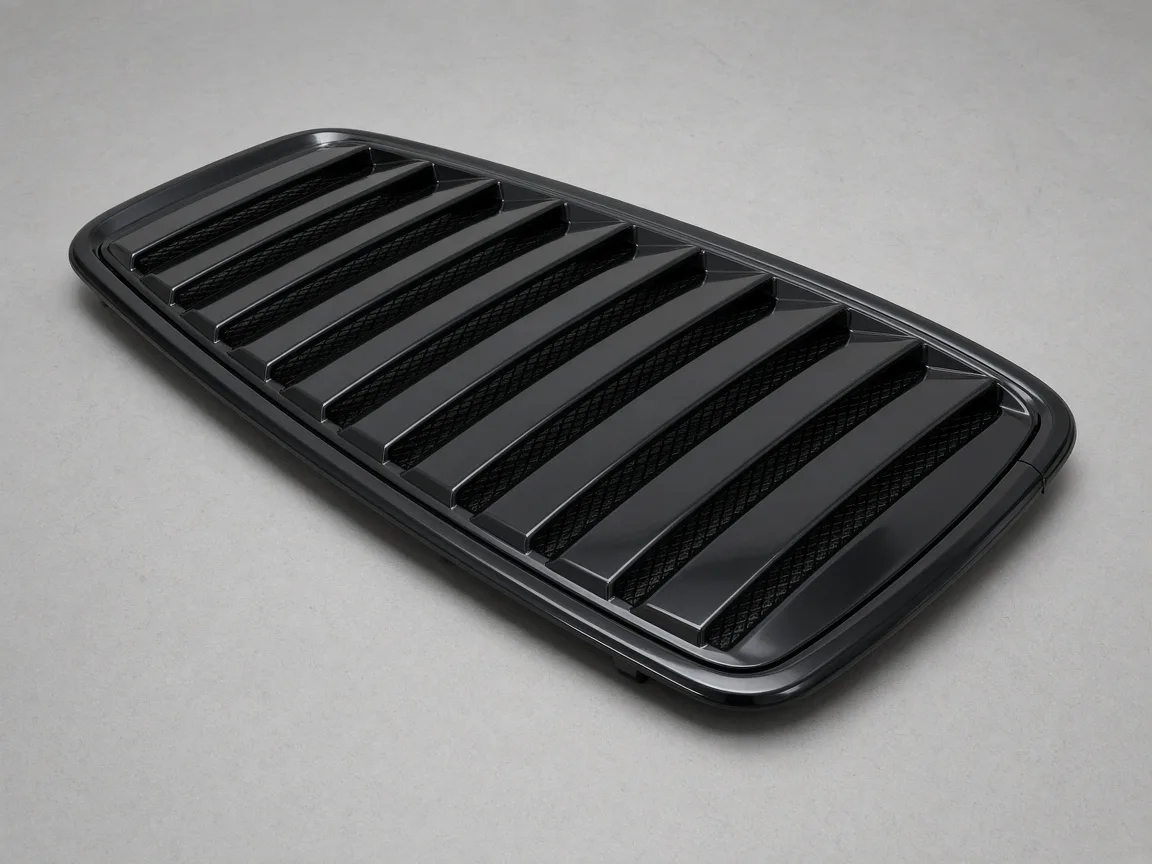
Front lips, rear diffusers, bumper covers, grilles, model-specific wheel covers and center caps usually need a dedicated fitment. These parts sit against body lines or mounting features, so small differences show immediately once installed.
Material depends on where the part sits and how it must behave. ABS suits rigid, painted parts such as spoilers and trim. PP and TPO suit flexible parts such as mud flaps and bumper covers. ASA suits exterior trim left in its molded color.
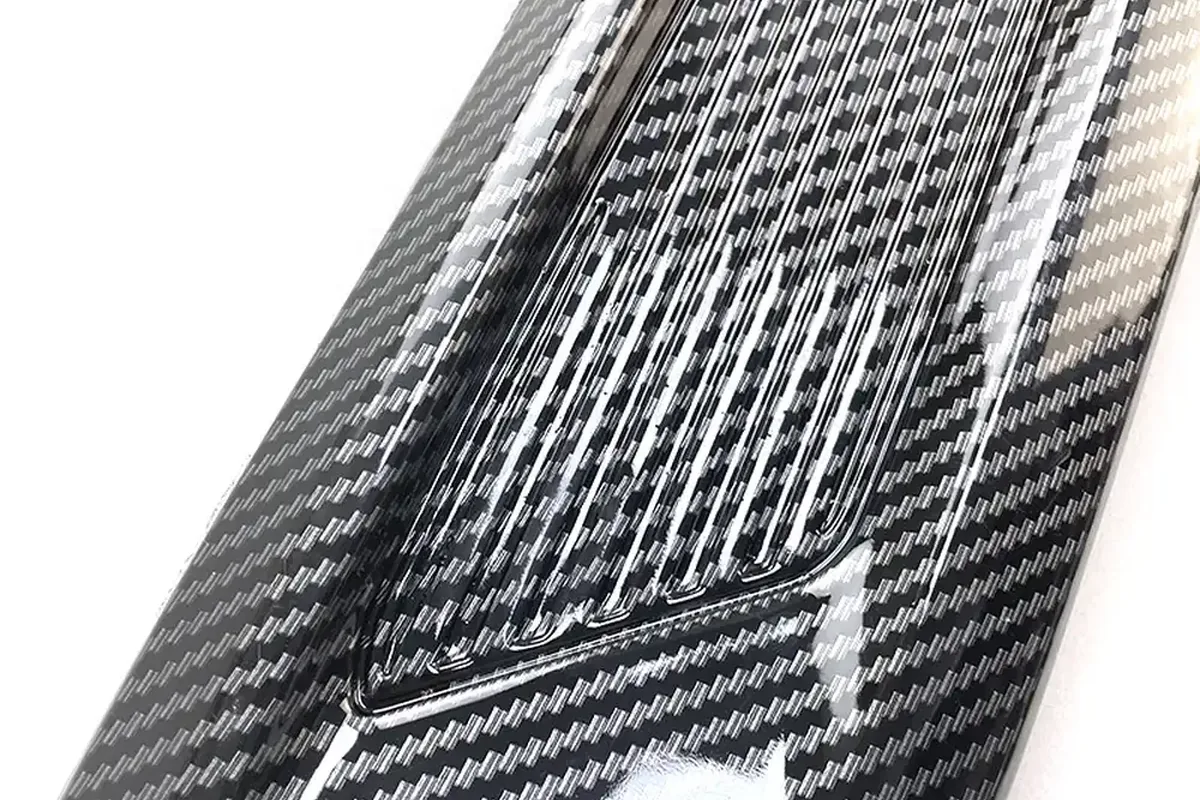
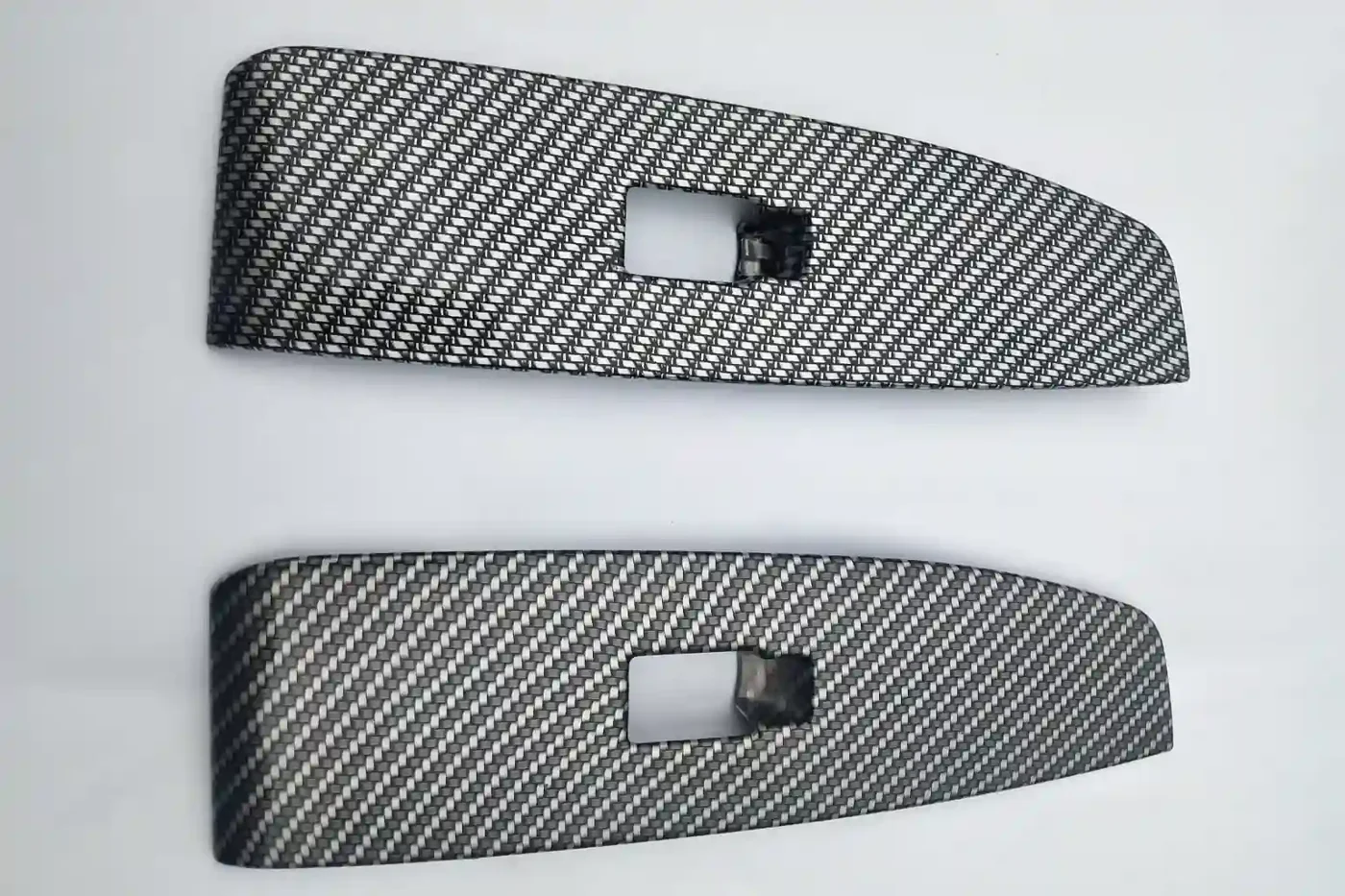
Finishes include gloss black, carbon pattern and primer, plus molded-in black for trim. For real carbon fiber or fiberglass spoilers we work through partner factories. Read carbon fiber vs ABS vs fiberglass spoilers for the trade-offs. The finish for each vehicle-specific part is approved on the fitment sample, and weathering test reports are available for exterior parts.

Most vehicle-specific parts need a new injection mold or a modification of an existing one.
Whether a part needs a new injection mold or a modification of an existing one is decided during the fitment and DFM review.
Mold ownership is agreed per project and confirmed before tooling.
Lead time depends on product and scale.
See tooling and sampling for how we build and approve tools.
A part that fits but is hard to install still creates returns.

During test fitting we note the tools needed for the installation.
We record the installation order step by step.
Any step that could damage paint or clips is flagged.
These notes become the base for the installation guide, which can carry your brand through our private label and packaging service.
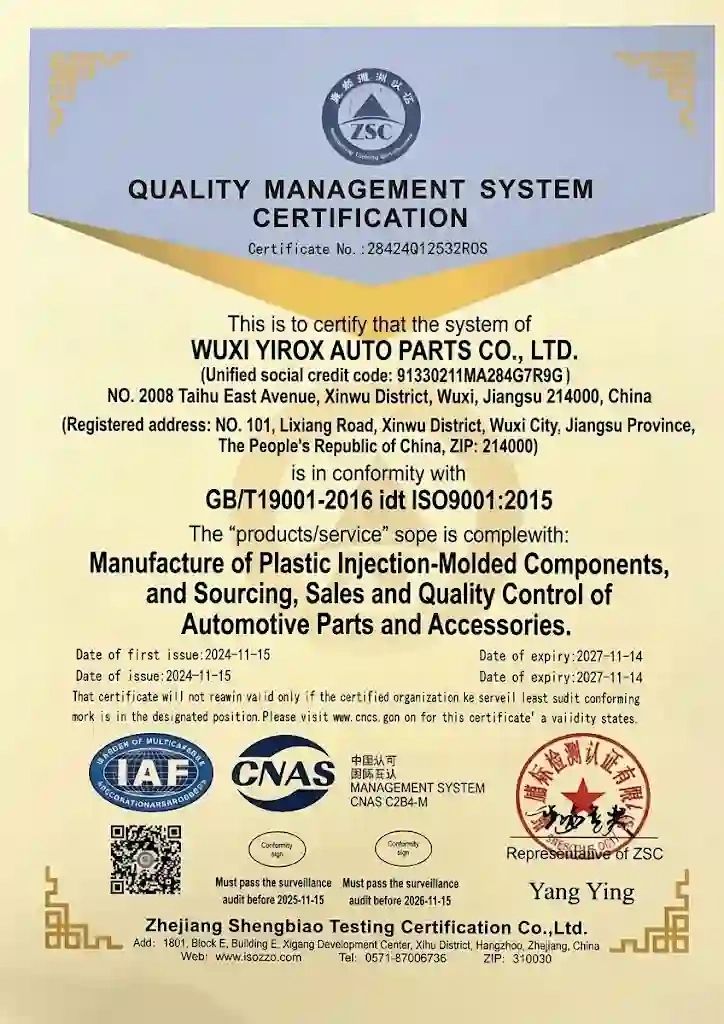
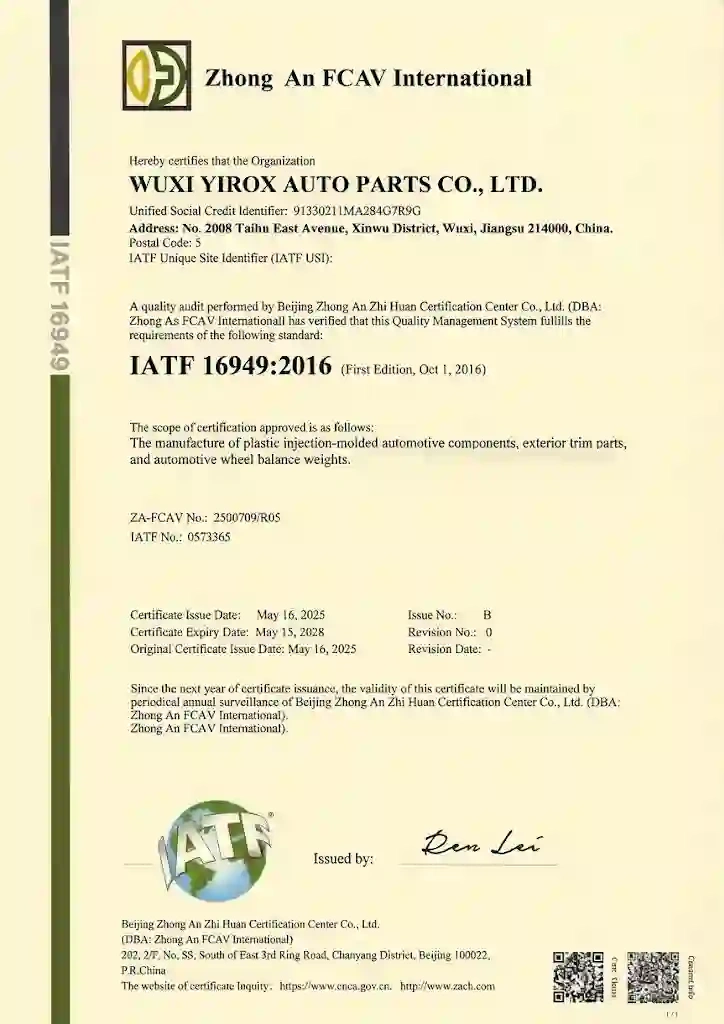
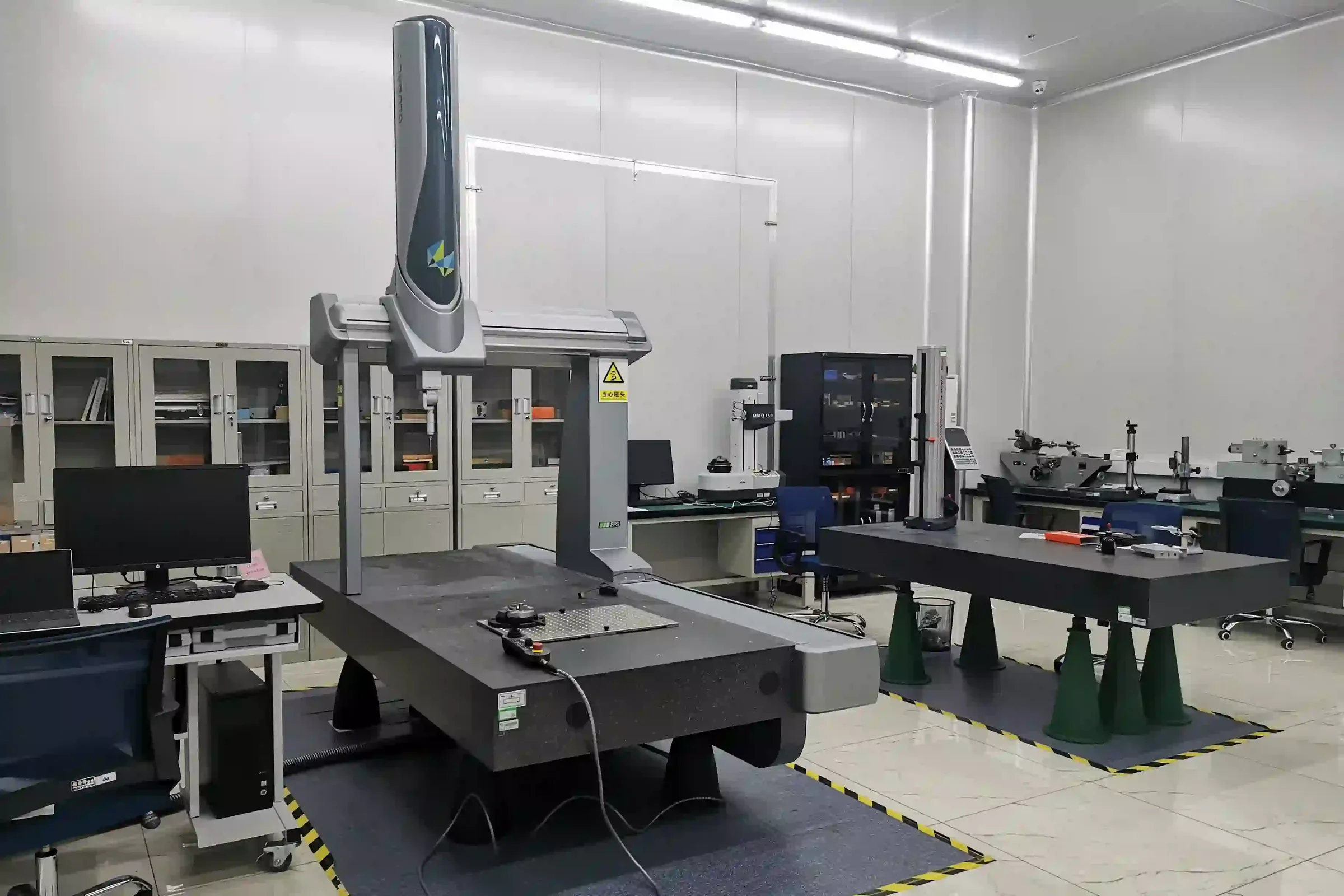
Vehicle-specific parts are checked against the approved sample with first article inspection (FAI) and CMM measurement on critical points. Our quality system is certified to ISO 9001 and IATF 16949. On request, we can provide PPAP documentation up to Level 3, weathering test reports and recycled-content statements. See certifications and compliance.

First articles are measured on two in-house coordinate measuring machines and compared with your drawing or the scan data before approval.
| Machine | Measuring range | Accuracy (MPEe) |
|---|---|---|
| Hexagon Global S 09.15.08 with HP-S-X1 scanning probe | 900 × 1500 × 800 mm | ≤1.9 + L/300 μm |
| Serein Croma 06.08.06 | 600 × 800 × 600 mm | ≤2.4 + L/300 μm |
3D scanning, design, tooling and molding happen in our own factory in Wuxi, so data from the vehicle goes straight into the tool and fit problems are corrected by the same team.
Since 2010 we have concentrated on exterior parts and wheel center caps, where fit and appearance are judged by eye on every car.
Every revision, trial and approved sample is recorded. With ISO 9001 and IATF 16949 certification and PPAP up to Level 3, your quality team gets documents it can review.
We can sign an NDA before you share vehicle data, drawings or samples, and your design stays yours to sell.
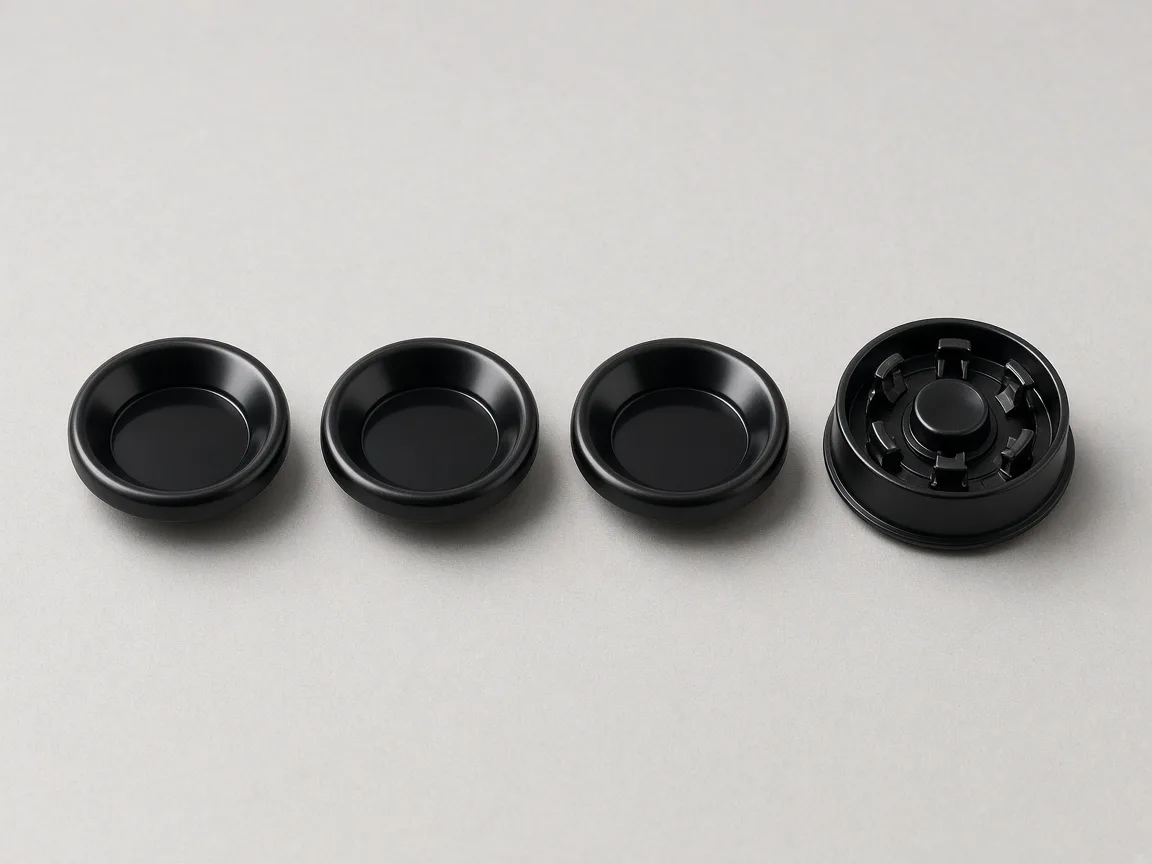
Wheel center caps are one of our core injection-molded products. We develop custom center caps and OEM-style center caps for steel and alloy wheels, matched to the wheel bore, clip or retention style and the look you need.

Send a drawing, a cap or the wheel, and we measure the bore and retention points.
Add your logo to the cap through printing or a molded-in design.
Gloss black, carbon pattern and primer finishes, or molded-in black.
Caps are checked for fit and removal so they stay in place and can be refitted after tire service.
We also make steel wheels, so caps and wheels can be developed together. See our wheel covers and hubcaps, wheel center caps guide and wheels and tire accessories. To confirm wheel fitment, see how to measure bolt pattern.
A first quote covers the development route, the tooling route and the sample plan. To prepare it we look at the part size and shape, how many variants you need, the material and finish, whether an existing tool can be modified, and the documents your market requires.
Lead time depends on product and scale and is stated in the quote. Mold ownership is agreed per project and written into the quote, so there are no surprises when tooling starts.
Use this list before you send a brief. Each item removes a common cause of delay or rework.
Engineers and brand owners on how their projects moved from a scan or sample to an approved part.
“Two model years looked almost identical in the catalog, but the mounting points weren’t the same. Yirox caught that during the fitment review. It was a small detail that could have turned into a lot of returns for us.”
“We sent over an original bumper trim piece because the measurements in our old drawings were incomplete. Their team used the sample to help sort out the missing details. The process was much more practical than trying to explain everything through photos.”
“Truck accessories can be tricky when bed lengths and configurations vary by market. I appreciated that they asked us to confirm the exact vehicle details before proceeding. It showed they understood why fitment matters to our customers.”
Names and companies withheld at the customer’s request.
Yes. We confirm the make, model, model years and market version, then measure and 3D scan the original part or vehicle before design.
Yes. Send a cap, the wheel or a drawing and we will measure the bore and retention points and develop a matching cap.
Yes. Logos can be printed or molded into the cap, depending on the design and finish.
We treat each regional or trim variant as a separate fitment route and confirm it on a sample before production.
Prototype fit is checked on the first sample. Production fit is checked on parts from the production tool, which can differ slightly because of shrinkage and process variation. We confirm both.
It depends on product and scale. We confirm the timeline after reviewing the vehicle, the part and the tooling route.
Yes. We use 3D scanning together with manual measurement to capture original parts and vehicle surfaces.
Yes. PPAP documentation is available up to Level 3, along with weathering test reports and recycled-content statements on request.
Mold ownership is agreed per project before tooling starts.
Usually yes for parts that sit against body lines or use original mounting points, such as front lips, diffusers, grilles and center caps. Some trims and mud flaps can be designed as universal parts that cover several vehicles with one mold.
Photos and key dimensions are enough for an early feasibility review. Before tooling, we confirm the design with an original part, a 3D file or access to a vehicle so the fit can be checked.
A DFM report on the part model, covering wall thickness, draft, clip design and the cosmetic faces.
A prototype or trial sample is fitted on the vehicle or against the original part, and we check gaps, flushness and clip engagement.
Tell us the vehicle, the part and your market. Send photos, a drawing or a sample to start.