




A spoiler sits on the car’s body and disrupts the airflow to cut rear lift; a wing stands up on supports and works like an upside-down airplane wing to press the car down. That is the core of spoiler vs wing. Lip, trunk, ducktail and roof spoilers are spoilers; pedestal, GT and swan-neck designs are wings.
Scope: this guide compares the shapes and what each one does. For a basic definition and universal fitment checks, see What Is a Rear Spoiler? For carbon fiber, ABS and fiberglass, see our spoiler materials comparison.
What is the difference between a spoiler and a wing?
The quickest test is to look underneath. If air can flow under the part, it is a wing. If the part sits flush on the body, it is a spoiler. The shape follows from that. A spoiler is a lip or dam at the end of the body. A wing is a separate airfoil held up in clean air on stands or brackets.
The two also work in different ways. A spoiler changes how air leaves the body, so it reduces lift that the body shape creates. A wing makes its own downforce from the pressure difference between its top and bottom surfaces. Retail names blur the line. Many listings say “spoiler wing” for a trunk spoiler with a raised tip. Judge the part by how it is built, not by its name.
| Feature | Spoiler | Wing |
|---|---|---|
| Position | On the trunk edge, hatch or roof, touching the body | Raised above the trunk or deck on stands or brackets |
| Gap underneath | No | Yes, and the underside does important work |
| How it works | Trips the airflow at the trailing edge to reduce lift | Upside-down airfoil; pressure difference creates downforce |
| Effect on drag | Small; a well-shaped spoiler can even lower it | Usually adds drag as downforce goes up |
| Typical use | Daily drivers, factory styling, hatchbacks and SUVs | Track cars, performance builds, show cars |
| Usual mounting | Automotive tape, clips or a few small bolts | Bolts through the trunk lid, often with reinforcement plates |
| Look | Subtle, follows the body lines | Bold; clearly visible from the side |
What does a spoiler do?
A spoiler “spoils” the smooth airflow over the rear of the car so that less lift builds up at the back. A car body seen from the side is a bit like a wing: rounded on top and flatter underneath. At speed, that shape can create lift at the rear axle, which takes load off the rear tires.
A small lip or upswept edge at the end of the trunk raises the air pressure on the rear deck just ahead of it. It also fixes the point where the airflow leaves the body. Both effects push back against lift. Porsche’s own account of the 911 Carrera RS 2.7 shows how big the effect can be. In the wind tunnel, the car’s rear lift coefficient was 0.29. A rough first spoiler on the engine lid cut it by two-thirds, to 0.08, after two days of testing 1. That spoiler became the famous ducktail.
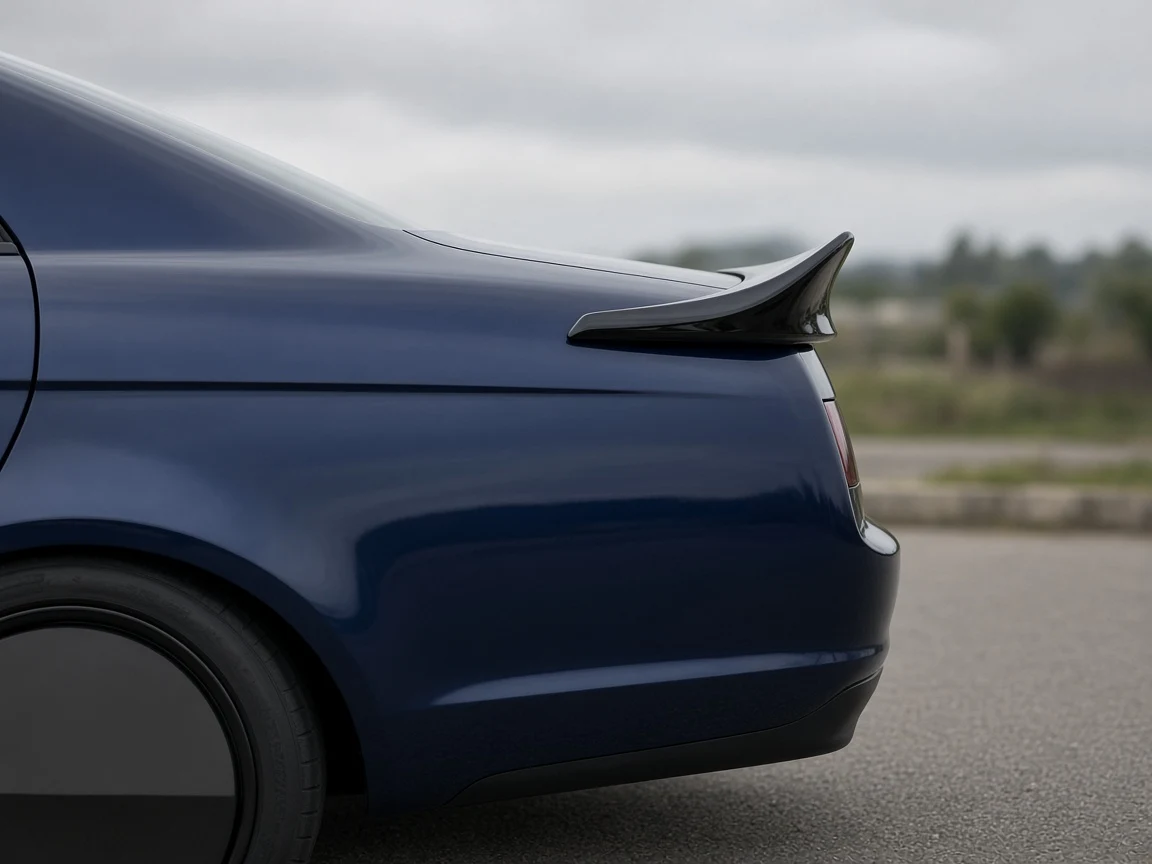
Some carmakers make the spoiler move. On the Porsche 718 Spyder, a rear spoiler rises automatically at 120 km/h (75 mph) instead of using a fixed wing 2. This is the key trait of a spoiler: it works with the body, not on its own. The same lip on a different body shape can do more, less or almost nothing.
What does a wing do?
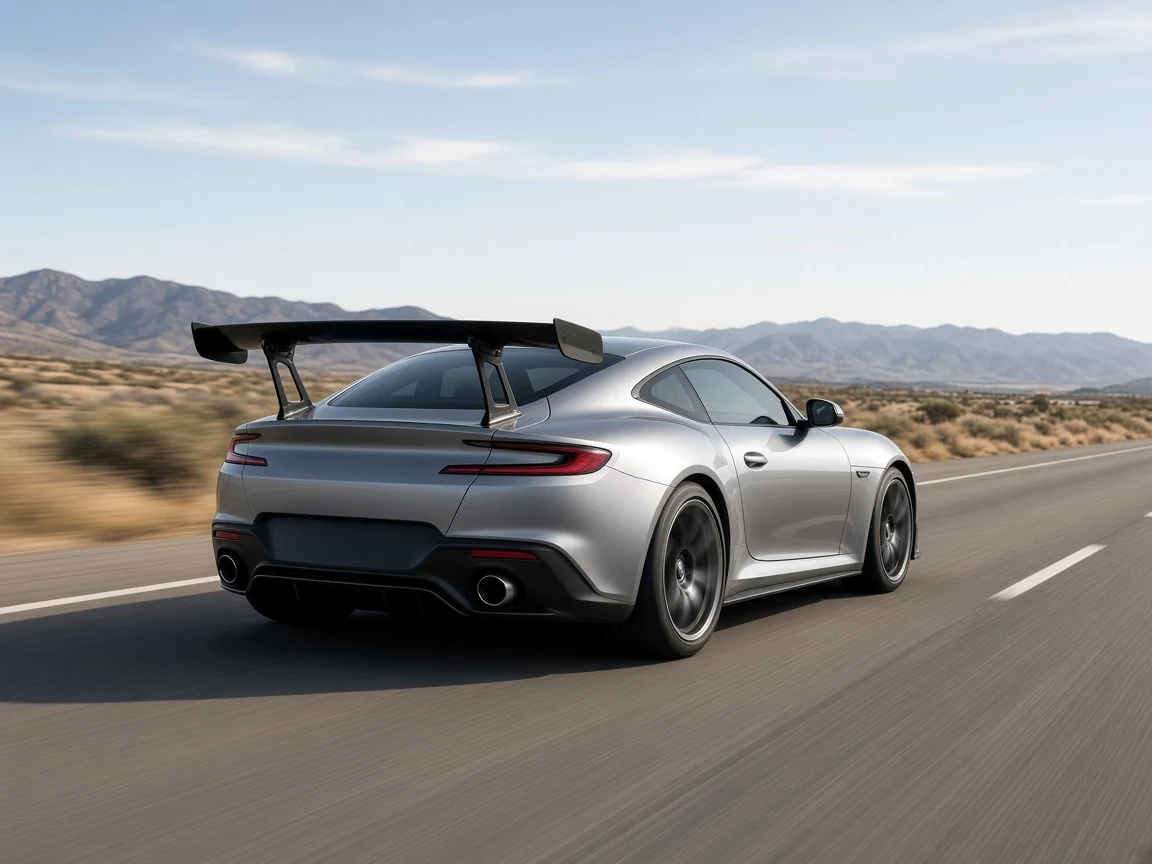
A rear wing is an airfoil mounted upside down, so it makes downforce instead of lift. Air flowing under the curved lower surface speeds up and its pressure drops. The higher pressure on top then pushes the wing, and the car, down. NASA’s lift equation shows the force depends on the airfoil’s lift coefficient, the air density, the wing area and the square of the speed 3.
Because the wing works on its own, its design details matter. Porsche says the fixed rear wing on the 718 Cayman GT4 gives about 20 percent more downforce than the previous GT4, or an extra 12 kg at 200 km/h (124 mph) 2. On the 911 GT3 (992), Porsche moved to a swan-neck wing, held by two aluminum brackets from above. That leaves the underside, which Porsche calls the more sensitive surface, free of supports. Its angle can be set in four positions 4.
A wing needs clean air to work. It is mounted high so that it sits above the slow, turbulent air behind the roof. That is why wings look tall, and why a low “wing” that sits in the wake of the rear glass does little beyond looks.
At what speed does a spoiler or wing start to matter?
Aerodynamic force rises with the square of speed, so halving the speed leaves only one quarter of the force. This follows directly from the lift equation, where speed appears as V squared 3. A part that adds a useful load on a racetrack adds very little in town.
The table below is a worked example. It takes Porsche’s figure of 12 kg of extra rear downforce at 200 km/h for the 718 Cayman GT4 wing 2, and scales it by speed. It assumes the coefficient stays the same, so treat it as an estimate.
| Speed | Share of the force at 200 km/h | Estimated extra downforce (example) |
|---|---|---|
| 50 km/h (31 mph) | 6.3% | about 0.8 kg |
| 80 km/h (50 mph) | 16% | about 1.9 kg |
| 100 km/h (62 mph) | 25% | about 3.0 kg |
| 130 km/h (81 mph) | 42% | about 5.1 kg |
| 160 km/h (99 mph) | 64% | about 7.7 kg |
| 200 km/h (124 mph) | 100% | 12 kg (Porsche figure) |
Two lessons follow. First, at legal road speeds most add-on spoilers and wings are mainly about looks, with small stability gains at highway speed. Second, a wing that is tested and set up for a car can matter a lot on track, because the force grows quickly at higher speeds. A buyer who expects lap-time gains needs engineering data for the exact car, not a general claim.
What are the main spoiler and wing types?
There are four common spoiler types and three common wing types. They range from an almost invisible lip to a tall GT wing, and each fits a different body style and buyer.

Lip spoiler
A lip spoiler is a slim strip along the trailing edge of the trunk lid. It adds a sharp edge where the airflow leaves the body. It is the most subtle option and the easiest to fit, often with pre-applied tape. Flexible universal lips are sold by length and trimmed to fit. “Lip spoiler” can also mean a front lip under the bumper. That part manages air going under the car and belongs with body kits and aero parts.
Trunk spoiler
A trunk spoiler is a molded piece that sits on the trunk lid and rises higher than a lip. Many are vehicle-specific, shaped to the lid’s curve, and are called “blade” or “DC-style” spoilers in listings. A trunk spoiler is still a spoiler as long as it sits on the lid without a gap underneath.
Ducktail spoiler
A ducktail, or duckbill, spoiler is an upswept tail that blends into the trunk or engine lid. Its name comes from the 911 Carrera RS 2.7 of 1972 1. It is the classic spoiler shape: no gap, a strong kick-up, and an effect that depends on the body behind it. Modern ducktails range from small bolt-on caps to full replacement lids.
Roof spoiler (hatch or tailgate spoiler)
A roof spoiler sits at the top edge of the rear glass on hatchbacks, SUVs, wagons and some sedans. On cars with a vertical tailgate, the roof edge is where the airflow leaves the body, so this is the natural place for a spoiler. Pickups use a similar part on the cab roof edge.
Pedestal wing
A pedestal wing stands on two posts above the trunk lid. The gap underneath is what makes it a wing. Many street “pedestal spoilers” are styled wings with low posts. They look sporty but sit in disturbed air, so they make only a small amount of downforce.
GT wing
A GT wing is a larger, higher wing with end plates on each side. End plates limit air spilling around the wing tips. Race-style GT wings often allow the angle of attack to be changed. Larger wings need stronger mounts, because the load on the trunk lid grows with speed.
Swan-neck wing
A swan-neck wing hangs from curved brackets that attach to its top surface. This keeps the more important underside clean 4. It is found on track-focused cars and race cars. Swan-neck mounts are more complex to make and fit, so they are less common in universal aftermarket ranges.
Which type suits which car?
Start with the body style, then match the type to how the car is used. The table below is our own selection guide. It combines the body shape, where the airflow leaves the car and the usual mounting method.
| Body style or use | Best-matched types | Why | Watch for |
|---|---|---|---|
| Sedan, daily driver | Lip or trunk spoiler | Follows the trunk edge; tape mounting; no drilling | Trunk curve and width must match |
| Sedan, sporty look | Ducktail or low pedestal wing | Stronger profile without a full race wing | Rear-view sightline through the rear glass |
| Hatchback, SUV, wagon | Roof (hatch) spoiler | The airflow leaves the body at the roof edge | Tailgate opening, rear wiper and camera clearance |
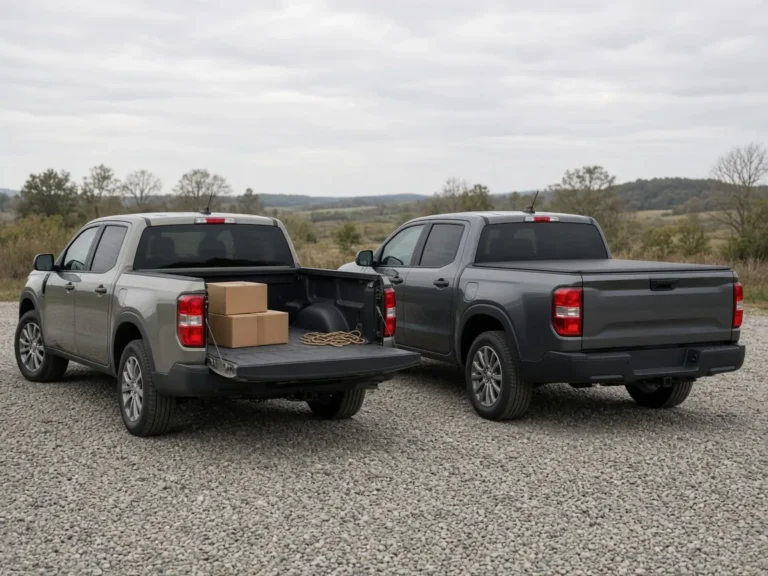
| Pickup | Cab roof spoiler | Styling at the cab edge; the bed sits behind it | Rack, sliding window and cab contour |
| Track days, performance builds | GT or swan-neck wing | Real downforce when designed for the car | Mount strength, balance with front aero, local rules |
| Show or stance builds | GT wing, styled pedestal wing | Visual impact | Trunk lid load and owner expectations about function |
One more check: front and rear balance. A large rear wing with no front aero can shift grip toward the rear axle at high speed. Carmakers tune both ends together. Porsche notes that the GT4’s revised front section reduces front-axle lift “thus maintaining aerodynamic balance” 2.
Gloss black, carbon pattern or primer: which finish?
The finish decides how a spoiler looks on the car and how much work it needs before fitting. Material choice is a separate question, covered in our carbon fiber vs ABS vs fiberglass guide. For molded ABS spoilers and wings, these are the common finishes:
- Gloss black. Painted piano-black finish. It suits most body colors and matches blacked-out trim. It shows swirl marks, so pack each part with surface film.
- Carbon pattern. A carbon-look surface, often made by water-transfer printing over ABS. It is not real carbon fiber, and listings should say so clearly.
- Primer or unpainted. A part that is ready to be painted in the car’s body color. It needs a body shop and adds cost, but gives a factory look. Ask whether a part is primed or raw plastic, because raw parts need extra prep.
- Matte black is also common on lips and trunk spoilers for a quieter look.
For a retail range, gloss black usually carries the most volume. Carbon pattern serves the sporty look at a lower price than real carbon, and unpainted parts serve body shops that paint to match.
The finish also decides how much work is left for the installer. A primed spoiler still needs paint matching, while a painted or molded-in color part can go straight on the car. Our comparison of primed, painted and molded-in color parts explains which option fits which sales channel.
How are spoilers and wings mounted?
Spoilers are usually taped or clipped on; wings are usually bolted through the trunk lid. The mounting method follows the load. A lip or trunk spoiler carries little load, so a good automotive acrylic foam tape on a clean, prepared surface is common. A wing carries more load, so it needs bolts, often with backing plates under the lid skin.
- Test-fit the part on the car before removing any tape liner. Check the contour, the gap and the center line.
- Clean and degrease the bonding area. Follow the tape maker’s instructions for temperature and pressure.
- For bolted wings, mark and drill the holes from a template. Seal the holes so water cannot enter the trunk.
- Open and close the trunk or tailgate several times. Check that the part clears the roof, glass and wiper.
- Recheck the fit after the first drive and after the first car wash.
A heavier part can also change how the trunk lid behaves. Gas struts or torsion bars sized for the factory lid may struggle to hold a lid with a large wing. Detailed fitment checks for universal spoilers are in our rear spoiler fitment section.
What are the risks and exceptions?
The main risks are legal limits on sharp edges, poor bonding, and parts that promise more than they do. Check these before you buy or stock a design.
- External projection rules. In markets that use UN Regulation No. 26 for type approval, protruding parts of the outer body must not have an edge radius under 2.5 mm. Parts that protrude less than 5 mm are exempt, but their edges must be blunted. Soft parts of 60 Shore A or less are also treated differently. Parts higher than 2 m are outside the rule 5. Tall wings with thin end plates and sharp corners deserve a close look.
- Local inspection rules. Rules for aftermarket wings differ by country and by state. Some inspection regimes check width, height or sharp edges. Ask the customer’s market before you promise a part is road-legal.
- Insurance. Some insurers treat body modifications as something to declare. Owners should check their policy.
- Bonding failure. Tape fails on dirty, cold or curved surfaces it does not fully touch. A part that looks fine in the store can lift at the ends after a few weeks.
- Function claims. A universal wing has not been tested on every car. Avoid claiming downforce or speed gains without data for the exact vehicle.
- Rear visibility. Tall wings and pedestal designs can cut across the rear-view sightline on some sedans.
Tall wings and long trunk spoilers carry more load at the mounting points than a slim lip, so material stiffness and impact strength matter more there. If you are comparing materials for larger aero parts, our guide to PC and PC/ABS for exterior parts explains where the blend outperforms standard ABS.
What should retailers check before stocking spoilers and wings?
Build the range around body styles and finishes, not just around popular names. A typical mix is a few universal lips and roof spoilers for broad coverage, vehicle-specific trunk spoilers for the best-selling models in your market, and a small number of wings for enthusiasts.
Before ordering, send the supplier a clear spec and ask for samples. Use this checklist:
- Type and position: lip, trunk, ducktail, roof, pedestal or GT wing
- Vehicle list with model years, body style and market, or the universal size range
- Length and width, and the trunk or roof contour it should follow
- Material, for example ABS, and the finish codes: gloss black, carbon pattern, primer or unpainted, matte black
- Mounting method and what is in the box: tape, bolts, brackets, backing plates, end caps
- Instructions in the languages of your market
- Packaging for long parts: surface film, corner protection and carton size
- Labels with part number, finish and fitment on each carton
When samples arrive, check them on a real car. For molded exterior parts, typical incoming checks are color and gloss, sink marks, the position of mounting holes and the fit gap on the car. Factories in this category usually mold ABS or similar plastics, trim and finish the parts, paint or apply the pattern, then test-fit them. Agree on a reference sample so later batches can be compared with it.
How we put this together
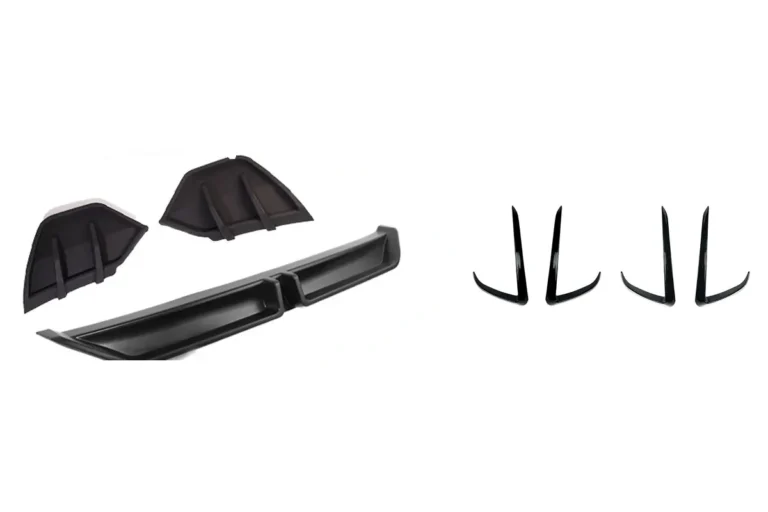
Performance figures come from carmaker sources (Porsche) and NASA’s lift equation. The speed table is our own calculation: it scales Porsche’s 12 kg at 200 km/h by the square of the speed ratio and assumes a constant coefficient, so it is an estimate, not a measurement. The type and body-style tables are our own summary. Product photos in the type chart are from Yirox product listings. The legal notes are from the text of UN Regulation No. 26.
Conclusion
The spoiler vs wing question comes down to one detail: whether air can flow underneath. A spoiler sits on the body and reduces lift by changing how air leaves the car. Lip, trunk, ducktail and roof spoilers all work this way, and they suit daily drivers, hatchbacks, SUVs and pickups. A wing stands in clean air and makes its own downforce. Pedestal, GT and swan-neck wings belong on performance builds and track cars, where speeds are high enough for the force to matter.
Because aerodynamic force grows with the square of speed, most add-on parts on road cars are mainly a styling choice. That makes fit, finish and mounting the real buying criteria. Choose the type by body style, the finish by the look and the paint work involved, and the mounting by the load the part will carry.
Next step
List the body styles and models your customers drive, then pick one or two spoiler types and finishes for each. Yirox, with its own injection molding factory in Wuxi, supplies lip spoilers, trunk and roof spoilers and rear wings in gloss black, carbon pattern or unpainted for paint-matching. Browse the spoilers and wings range, for example the flexible trunk lip spoiler or the universal GT wing, or send your vehicle list through the Sourcing Advisor.
Frequently asked questions
Which is better, a wing or a spoiler?
Neither is better in general. A spoiler suits daily driving because it reduces lift with little drag and a subtle look. A wing suits track use, where its downforce helps at high speed.
Does a spoiler make a car faster?
Not in a straight line. A spoiler can reduce rear lift and improve stability at highway speeds and above, but at normal road speeds the effect is small.
What is a ducktail spoiler?
A ducktail is an upswept rear spoiler that blends into the trunk or engine lid with no gap underneath. The name comes from the 1972 Porsche 911 Carrera RS 2.7.
What does a lip spoiler do?
A rear lip spoiler adds a sharp edge to the trunk lid where the airflow leaves the car, which slightly reduces lift. Most buyers choose it for a subtle sporty look.
Is a trunk spoiler the same as a wing?
No. A trunk spoiler sits on the trunk lid with no gap underneath. A wing stands on posts or brackets so that air flows under it.
Are spoilers and wings legal on road cars?
Usually yes, but rules depend on the market. In UN Regulation No. 26 markets, protruding edges generally need a radius of at least 2.5 mm, and local inspection rules can add limits.
References
[1] Porsche Newsroom. “The ducktail of the 911 Carrera RS 2.7.” 2022. Rear lift coefficient 0.29 reduced to 0.08 in wind-tunnel testing; patent filing 1972.
[2] Porsche Newsroom. “718 Spyder and 718 Cayman GT4: Aerodynamics.” Rear wing downforce figures, automatic rear spoiler at 120 km/h, front-axle lift and balance.
[3] NASA Glenn Research Center. “The Lift Equation.” Lift depends on the lift coefficient, air density, area and the square of velocity.
[4] Porsche Newsroom. “Porsche 911 GT3: Technical fine-tuning for enhanced performance.” 2021. Swan-neck rear wing mounting and adjustable angle of attack.
[5] EUR-Lex. “UN Regulation No. 26: Uniform provisions concerning the approval of vehicles with regard to their external projections.” Official Journal of the EU, 2010. Paragraphs 5.1 to 5.5.