



PPAP (Production Part Approval Process) is the automotive method a supplier uses to prove that parts made on real production tooling, at production rate, meet every drawing and specification requirement. The package ends in a signed Part Submission Warrant. This guide explains the 18 elements, the five levels and how aftermarket buyers can scope a PPAP sensibly.
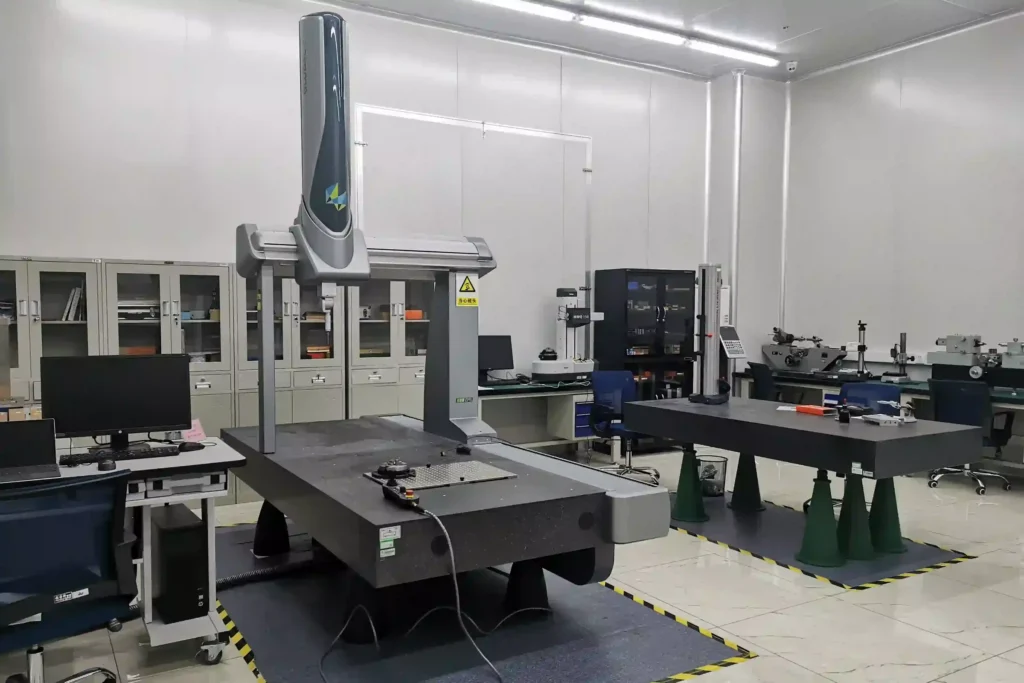
Scope: this article explains PPAP as defined in the AIAG PPAP Fourth Edition and shows how brands, importers and distributors of aftermarket exterior parts can decide what to request. It is not a substitute for the manual or for your customer’s specific requirements. For how we inspect and document parts ourselves, see our quality inspection and CMM page.
What does PPAP actually prove?
PPAP answers two questions at once. First, does the supplier understand every requirement in the design record and specifications? Second, can the production process meet those requirements consistently, at the quoted production rate, and not only on a few hand-picked samples? The AIAG manual describes PPAP as the industry standard for this, with the aim of showing that the parts made during an actual production run meet the design record 1.
That second question is what makes PPAP different from a sample approval. A good-looking sample proves that the part can be made once. A PPAP shows how it was made, with which tooling, which material lot, which gauges and which controls. It also shows what the supplier will check on every future lot. For a buyer, that is the real value: the package becomes the reference that every reorder is compared against.
PPAP does not prove that a product will sell, that a design is good, or that a part will survive ten summers in Arizona. It proves conformance to the requirements you wrote down. If a requirement is missing from the drawing or the purchase order, PPAP will not catch it. That is why the scoping step later in this article matters more than the paperwork itself.
Where does PPAP come from, and who requires it?
PPAP was first published by the Automotive Industry Action Group (AIAG) in February 1993, developed with the three US vehicle makers of the time: Chrysler, Ford and General Motors. The current Fourth Edition was issued in March 2006 and replaced the Third Edition from June 1, 2006, unless a customer specifies otherwise 2. It sits beside the other AIAG “core tools”: APQP, the control plan, FMEA, MSA and SPC 1.
IATF 16949, the automotive quality management standard, requires certified suppliers to run a product and manufacturing approval process that conforms to the requirements defined by their customers 5. Each vehicle maker then publishes customer-specific requirements (CSRs) that say how it wants PPAP done. Ford, for example, publishes its own PPAP specifics for use with the AIAG Fourth Edition, including how process capability must be calculated 4, and GM does the same in its IATF 16949 CSRs 5.
German vehicle makers mostly use a different but related procedure: the VDA Volume 2 “Production Process and Product Approval” (PPA, or PPF in German). The 7th edition of VDA 2 takes a risk-based approach to decide which deliverables are needed 6. If your customer is a European OEM program, ask which one applies before anyone starts filling in forms.
Outside OEM programs, PPAP is not a legal requirement. Aftermarket brands, importers and retailers ask for it because it is the most widely understood way to lock down a production process. Many use only part of it, and that is fine, as long as the parts they choose match the risks of the product.
What are the benefits of PPAP, and what does it cost?
For a buyer, the main benefit is a frozen, documented reference process. The supplier keeps the full PPAP record on file for as long as the part is active, plus one calendar year 8, so every reorder can be compared with the same process flow, control plan and master sample. The PSW also puts a named person’s signature behind the statement that the parts were made at the normal production rate with the normal process 7.
- Problems surface before the first shipment. Fit, finish and capability issues show up in the production run and the dimensional report, not after the parts reach your warehouse.
- A shared language. The 18 elements and five levels come from one AIAG manual 1, so suppliers in different countries can answer the same request in the same way.
- Change control. Once a part is approved, changes to material, tooling or plant call for a new submission, so process changes become visible instead of silent (see the triggers below).
- For the supplier, a signed customer disposition on the PSW records exactly what was approved, which limits later disputes.
The cost is time and effort. A full package needs a significant production run, capability studies, gauge studies and lab tests before shipment, and someone on the buyer’s side still has to review it against the drawing. That is why the level should match the risk of the part, as the scoping table later in this article shows.
What are the 18 PPAP elements?
The Fourth Edition lists 18 elements. Not every element applies to every part, and the submission level decides which ones are sent to the customer and which stay on file at the supplier. The list below follows the order used in the manual and in customer handbooks such as Prestolite’s 3, with a plain note on what each one means for a molded or painted exterior part.
| # | Element | What it means for an exterior plastic part |
|---|---|---|
| 1 | Design records | The drawing and 3D data the part is built to, with the revision level |
| 2 | Authorized engineering change documents | Any approved change not yet shown on the drawing |
| 3 | Customer engineering approval | Proof the customer’s engineers accepted the part, if they require it |
| 4 | Design FMEA | Design risk analysis, needed only if the supplier owns the design |
| 5 | Process flow diagram | Every step from resin drying to molding, painting, inspection and packing |
| 6 | Process FMEA | What can go wrong at each step and how it is prevented or detected |
| 7 | Control plan | What is checked, with which method, how often and what happens on a failure |
| 8 | Measurement system analysis (MSA) | Gauge R&R and similar studies showing the gauges can be trusted |
| 9 | Dimensional results | Measured values for every characteristic on the ballooned drawing |
| 10 | Material and performance test results | Resin certificates, paint adhesion, weathering or other tests on the drawing |
| 11 | Initial process studies | Capability (Ppk) data for the special characteristics |
| 12 | Qualified laboratory documentation | Scope and accreditation of the labs that ran the tests |
| 13 | Appearance approval report (AAR) | Color, gloss and grain sign-off for visible parts |
| 14 | Sample production parts | Parts from the same production run as the data |
| 15 | Master sample | A signed reference part kept for future comparison |
| 16 | Checking aids | Fixtures and gauges used to check the part, with their own calibration |
| 17 | Customer-specific requirements | Proof of compliance with anything extra the customer asked for |
| 18 | Part Submission Warrant (PSW) | The signed summary that ties the whole package together |
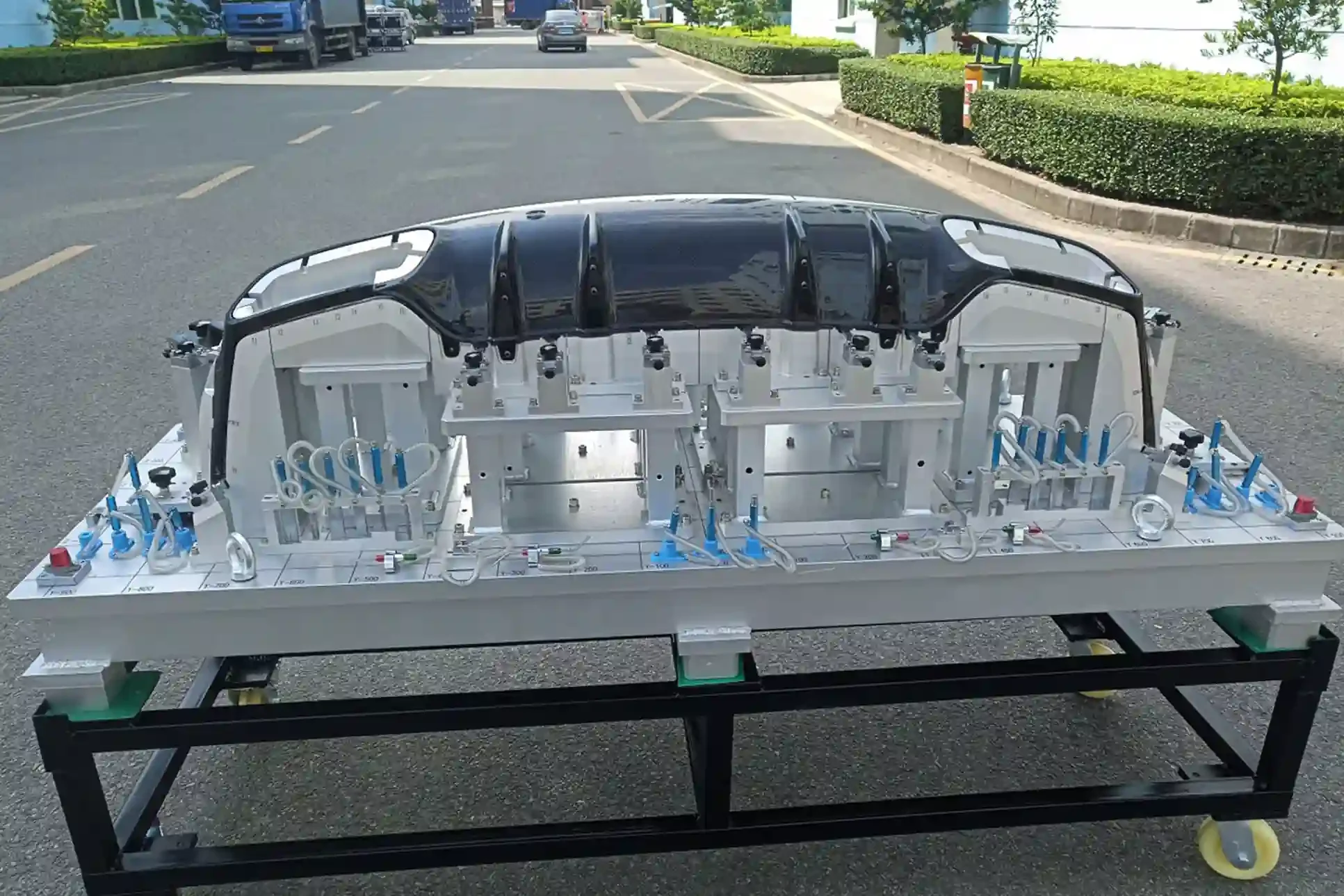
For exterior trim, body kit parts and covers, four elements usually carry most of the risk: the dimensional results (fit to the car), the appearance approval report (color and gloss match), the material and performance test results (paint adhesion, weathering, plating corrosion) and the checking aids. A checking fixture holds the part the way the car holds it, so fit problems show up before shipment rather than at the installer’s bay. For bumper parts, first confirm whether the part is the bumper cover or the bumper beam, because they need different checks.
What is the Part Submission Warrant (PSW)?
The Part Submission Warrant is the one-page form that closes a PPAP. The supplier fills in the part number, drawing revision, the reason for submission, the submission level and the results, then a responsible person signs it. NASA’s PPAP tutorial sums up its key point: the manufacturer declares that the parts used for the PPAP were made at the normal production rate, with no special runs, and that production parts will be made with the same process 7.
The PSW is required at every level 3. At Level 1 it may be the only document the customer receives. That makes the signature on it meaningful. If a supplier will not sign a PSW, or wants to add vague exceptions, ask why before you approve anything.
The PSW also has a box for the customer’s disposition. A PPAP is only “approved” when the customer says so. A warrant sent by the supplier is a submission, not an approval. Keep that distinction in your own records, because it decides which revision you can hold future lots to.
What are the five PPAP levels?
The submission level tells the supplier what to send. It does not change what the supplier must do: the supplier keeps the full set of PPAP records on file regardless of the submission level, and only the submitted portion changes 8. Level 3 is the default when a customer does not say otherwise 3.
| Level | Sent to the customer | Typical use (from customer handbooks) |
|---|---|---|
| 1 | PSW only (plus AAR for designated appearance items) | Catalog or commodity parts, re-certification of parts already approved |
| 2 | PSW with product samples and limited supporting data | Simple changes that do not affect form, fit or function |
| 3 | PSW with product samples and complete supporting data | New parts, new suppliers, changes that affect fit or performance |
| 4 | PSW and other requirements defined by the customer | Special cases agreed in advance |
| 5 | PSW with samples and complete data reviewed at the supplier’s site | On-site review requested by the customer |
We explain the levels in more detail, and which ones we support, on our quality inspection page. The practical point for a buyer is simple: choose the level by risk, not by habit. A full Level 3 for a simple clip-on accessory can cost more time than the part is worth, while a Level 1 for a new bumper fascia leaves you blind.
Element by level: what is submitted and what stays on file. Prestolite’s supplier handbook prints the AIAG retention and submission matrix in full 3. S means submit to the customer and keep a copy; R means keep on file and make available on request; * means keep on file and submit on request.
| Element | Level 1 | Level 2 | Level 3 | Level 4 | Level 5 |
|---|---|---|---|---|---|
| 1. Design record | R | S | S | * | R |
| 2. Engineering change documents | R | S | S | * | R |
| 3. Customer engineering approval | R | R | S | * | R |
| 4–8. DFMEA, process flow, PFMEA, control plan, MSA | R | R | S | * | R |
| 9. Dimensional results | R | S | S | * | R |
| 10. Material and performance test results | R | S | S | * | R |
| 11. Initial process studies | R | R | S | * | R |
| 12. Qualified laboratory documentation | R | S | S | * | R |
| 13. Appearance approval report | S | S | S | * | R |
| 14. Sample production parts | R | S | S | * | R |
| 15. Master sample | R | R | R | * | R |
| 16. Checking aids | R | R | R | * | R |
| 17. Customer-specific requirement records | R | R | S | * | R |
| 18. Part Submission Warrant | S | S | S | S | R |
Two rows surprise many buyers. Even at Level 3, the master sample and checking aids stay at the supplier, so if you want them reviewed, plan a visit or ask for photos and a fixture report. And at Level 5 nothing is mailed: the review happens at the supplier’s site.
What is a significant production run?
The data in elements 9, 10 and 11 must come from a “significant production run.” The Fourth Edition defines it as one to eight hours of production, with a total of at least 300 consecutive parts unless the customer specifies otherwise. The run must happen at the production site, at the production rate, using production tooling, gauging, process, materials and operators 2.
The same section adds a rule that matters a lot for molded parts: parts from each unique production process must be measured. That includes each cavity of a multi-cavity mold. If a mirror cap tool has two cavities, you need data from both. A report that measures five parts “from the tool” without saying which cavity they came from is incomplete. For how we build and run production molds, see our automotive plastic injection molding capabilities.
For low-volume aftermarket parts, 300 consecutive parts may be more than a first order. In that case, agree a smaller run in writing. The manual allows the customer to specify a different quantity, and putting the agreed number on the purchase order avoids an argument later.
What capability numbers should you expect?
Initial process studies use the Ppk index for characteristics that are stable. The widely used acceptance bands are: above 1.67 meets the criteria, 1.33 to 1.67 may be acceptable with customer review, and below 1.33 does not meet the criteria and needs corrective action and containment 8. Customer-specific requirements can tighten this. Ford, for example, sets how the data set is built, with at least 25 subgroups and 125 measurements 4.
When is a new PPAP submission required?
A PPAP is not a one-time event. A new submission is normally required before the first production shipment of a new part, and again after changes that could affect the part. Typical triggers in customer handbooks include:
- A new part, or a part moved to a new supplier.
- A change to the drawing, specification or material.
- New, modified, replacement or refurbished tooling, including a new mold or a new cavity.
- A move of production to a different plant or a new production line.
- A change of sub-supplier for material or a service such as painting or plating.
- Restarting production after the tooling has been inactive for a long period.
The exact list and the required level for each change come from the customer. GM and Ford both define their own notification and resubmission rules in their CSRs 45. For an aftermarket buyer, the useful habit is to write a short change notification clause into the supply agreement: the supplier must tell you before changing material, tool, plant or finish sub-supplier, and must ask for your approval of the new samples.
PPAP records must also be kept. Under the manual, records are kept for as long as the part is active, plus one calendar year 8. Ask the supplier how and where they store them, and keep your own copy of the approved submission.
PPAP vs APQP vs FAI vs ISIR: what is the difference?
These terms get mixed up in RFQs, so it helps to put them side by side.
| Term | What it covers | When it is used |
|---|---|---|
| APQP (advanced product quality planning) | The AIAG framework of procedures and techniques for developing a product and its process 3; the control plan in a PPAP follows its format | From concept through launch; PPAP is the approval evidence at the end |
| FAI (first article inspection) | A full dimensional check of the first parts against the drawing | After a new tool or a change, before production approval |
| ISIR (initial sample inspection report) | The initial sample report used in VDA-based systems and by many European buyers | Part of the VDA 2 PPA procedure |
| PPAP | Dimensional results plus process, material, capability and appearance evidence, closed by a PSW | Before first production shipment and after significant changes |
An FAI shows that the first parts are right. A PPAP shows that the process will keep making them right. In practice, FAI results usually become element 9 of the PPAP. If you only need to confirm that a new tool makes a correct part, an FAI report is often enough. If you need to hold a supplier to a process over years of reorders, you need the control plan, the process flow and the capability data as well.
How should aftermarket buyers scope a PPAP?
Most aftermarket exterior parts are not safety parts, and the buyer is often not the OEM. That gives you room to choose. The table below maps common product situations to the elements that do most of the work. Use it to open the conversation with your supplier, then adjust it to the risk of the part.
| Situation | Suggested level | Elements to insist on | Why |
|---|---|---|---|
| New exterior part on a new mold (spoiler, diffuser, bumper trim) | Level 3 | Dimensional results per cavity, AAR, material and paint tests, control plan, checking aid | Fit and finish risks are highest on a new tool |
| Same part, new color or finish | Level 2 | AAR, paint adhesion and any weathering test on the drawing, samples | The geometry is approved; the risk is in the finish |
| Clip-on cover or simple accessory from an existing tool | Level 1 or FAI only | PSW, AAR if visible, sample parts | Low risk; full data costs more than it protects |
| Part moved to a new plant or a new mold | Level 3 | Full dimensional results, capability data, updated process flow and control plan | A new process must be proven again |
| Chrome plated part | Level 3, or Level 2 for a carry-over part | Plating test results (for example CASS), AAR, dimensional results | Corrosion and appearance failures show up late |
| Private label program with repeat orders | Level 3 once, then Level 1 at re-certification | Master sample, control plan, batch traceability | Keeps every reorder tied to the approved reference |
Three habits make any of these work better. First, put the level and the element list on the purchase order, not just “PPAP required.” Second, make sure the drawing actually lists the tests you care about; if it does not say weathering or adhesion, element 10 will be empty. Third, agree the report format at the start. We do not publish sample PPAP reports because they contain customer data, so the format is agreed with each customer before the first articles are made.
If you are still choosing between suppliers, PPAP is also a good screening question. Ask a candidate to walk you through a control plan for a part like yours. A supplier with a working quality system can do this in a few minutes. For more on how a molded part goes from tool to shipment, see our guide to automotive injection molding.

What are the red flags in a PPAP package?
A thick PPAP binder can still hide problems. These are the issues we would look for first when reviewing a package for an exterior part:
- Dimensional results that are all exactly nominal. Real measurements vary. A table full of perfect values suggests the numbers were copied, not measured.
- No cavity identification. On a multi-cavity tool, each result should name the cavity.
- Capability data on fewer parts than agreed, or Ppk values with no raw data behind them.
- Test reports without a method. A weathering or salt spray result should name the standard, the cycle and the duration. “UV test passed” is not a result.
- Lab reports from labs with no stated accreditation. Element 12 exists for this reason.
- A control plan that does not match the process flow. Every step in the flow should have its controls in the plan.
- Drawing revision mismatches between the PSW, the dimensional report and the design record.
- Samples that look better than production. Compare the sample parts with the first production lot, not only with the drawing.
None of these require deep statistics to spot. They require someone to read the package against the drawing and the purchase order before signing the approval.
What should a buyer’s PPAP checklist include?
A PPAP checklist works best in three stages: before the purchase order, while reviewing the submission, and on every reorder. Each stage catches a different kind of problem.
| Stage | Check | Done? |
|---|---|---|
| Before the PO | Submission level and element list written on the PO | ☐ |
| Drawing revision frozen and shared, with the tests you need named on it | ☐ | |
| Customer-specific requirements, report format and language agreed | ☐ | |
| Production run quantity agreed, or the AIAG default of 300 consecutive parts 2 | ☐ | |
| Change notification clause in the supply agreement | ☐ | |
| Reviewing the submission | PSW signed, with the same drawing revision as the dimensional report | ☐ |
| Dimensional results show real measured values, by cavity | ☐ | |
| Test reports name the standard, cycle and duration, from a qualified lab | ☐ | |
| Control plan matches every step of the process flow | ☐ | |
| Appearance approval signed against your color and gloss master | ☐ | |
| Your disposition recorded on the PSW: approved, interim or rejected | ☐ | |
| Reorders and changes | Incoming lots compared with the master sample and the approved control plan | ☐ |
| Any change to material, tool, plant or finish sub-supplier triggers a new submission | ☐ | |
| Your copy of the approved package stored for the life of the part | ☐ |
For weathering and color tests named on the drawing, our guide to weathering tests for exterior car plastics explains what a complete report should state.
Conclusion
PPAP is a structured way to prove that a production process, not just a sample, meets your requirements. The package has 18 elements and closes with a signed Part Submission Warrant. The five levels decide how much of that evidence is sent to you, with Level 3 as the usual default.
For aftermarket buyers, the key is to scope it. Match the level to the risk of the part, list the elements you need on the purchase order, and make sure the drawing states the tests you care about. Then use the approved package as the reference for every reorder.
Next step
If you are planning a new exterior part and need PPAP, send us your drawing and the level your program needs. We work under an IATF 16949 certified quality system and supply PPAP up to Level 3; you can see what that covers on our certifications page and our OEM service page, or browse the auto exterior accessories we already make.
Frequently asked questions
What does PPAP stand for?
PPAP stands for Production Part Approval Process. It is the AIAG method for showing that parts made on production tooling, at production rate, meet the design record and specifications.
What is the default PPAP level?
Level 3 is the default when the customer does not specify one. It means the Part Submission Warrant, product samples and complete supporting data are sent to the customer.
How many parts are needed for a PPAP?
The AIAG manual calls for a significant production run of one to eight hours and at least 300 consecutive parts, unless the customer specifies a different quantity.
Is PPAP the same as first article inspection?
No. First article inspection is a full dimensional check of the first parts. PPAP includes those results plus process flow, PFMEA, control plan, MSA, capability data, test results and the signed warrant.
Do aftermarket parts need PPAP?
It is not a legal requirement for aftermarket parts. Many brands and importers still ask for it, often a scoped Level 1, 2 or 3, because it locks the approved production process for reorders.
How long must PPAP records be kept?
Under the AIAG manual, PPAP records are kept for as long as the part is active, plus one calendar year. Customer-specific requirements can set longer periods.
What is the difference between PPAP and APQP?
APQP is the AIAG framework for planning a product and its production process. PPAP is the approval step that proves the finished process makes conforming parts, closed by a signed Part Submission Warrant.
Which PPAP elements are submitted at Level 3?
At Level 3 the supplier submits the warrant, product samples and complete supporting data. Only the master sample and the checking aids stay on file at the supplier, available for review on request.
References
[1] AIAG. “PPAP-4: Production Part Approval Process.” Publication overview and the core tools set.
[2] AIAG. “Production Part Approval Process, Fourth Edition (preview pages).” Edition history and section 2.1, significant production run. ANSI Webstore.
[3] Prestolite Electric. “Supplier PPAP Handbook, North America, Rev D.” The 18 elements, submission levels and default Level 3.
[4] Ford Motor Company. “Ford Specifics for PPAP, for use with AIAG PPAP Fourth Edition.” January 2025. IATF Global Oversight.
[5] General Motors. “IATF 16949 GM Customer Specific Requirements.” March 2025. IATF Global Oversight.
[6] VDA QMC. “VDA Volume 2: Quality Assurance of Supplies, 7th edition.” Production Process and Product Approval (PPA).
[7] NASA NEPP. “PPAP Tutorial.” Electronics Technology Workshop, June 2023. Elements by level and the role of the PSW.
[8] Hyva. “Product Part Approval Procedure.” Supplier procedure aligned with AIAG PPAP: capability acceptance criteria and record retention.