



A truck bed rack is a frame of uprights and crossbars that carries long or bulky gear above the bed. Bed rails run along the top of the bed sides and add tie-down points. A bed organizer works on the bed floor to stop cargo sliding. Choose by where the load sits: above, along the sides, or on the floor.
Scope: this guide compares the three accessory families for pickups, explains what each can carry and how they combine. Floor protection is covered in truck bed mat vs bed liner, and choosing a cover is covered in how to choose a tonneau cover.
Truck bed rack vs bed rails vs bed organizer: what is the difference?
The difference is where each one puts the load: a rack lifts it above the bed, rails hold it along the bed sides, and an organizer controls it on the floor. They are not competing versions of one product. Many working trucks run two of them, and some run all three.
A quick way to think about it: if the item is longer than the bed or needs to ride on top (ladders, lumber, kayaks, a rooftop tent), you are looking at a rack. If you need more places to hook straps or want to protect the top edge of the bed, you are looking at rails. If the problem is small and medium items sliding into the tailgate every time you brake, you need an organizer.
| Question | Truck bed rack | Truck bed rails | Truck bed organizer |
|---|---|---|---|
| Where the load sits | Above the bed on crossbars | Along the bed sides, tied to the rail | On the bed floor, boxed in or blocked |
| Typical cargo | Ladders, lumber, pipe, kayaks, bikes, rooftop tents, recovery gear | Strapped loads of any size, tall items that stick out of the bed | Tool cases, coolers, groceries, totes, small parts |
| What it mounts to | Bed sides, stake pockets, factory track rails or cover rails | Stake pockets or factory track channels | The bed floor; some drawer systems bolt down |
| Where its limit comes from | Rack maker’s static, on-road and off-road ratings | Rail or cleat maker’s rating, plus the bed structure | The truck’s payload; drawers and slides also carry a maker’s rating |
| Bed floor space | Kept free under the rack | Not affected | Partly used by panels, drawers or bins |
| Works with a tonneau cover? | Only with a cover-compatible design | Track rails often do; tubular side rails usually conflict | Yes, if the cargo stays below the cover |
The rest of this guide takes each family in turn, then covers weight, securing, mounting and the combinations that work.
What does a truck bed rack carry, and which type fits?
A truck bed rack carries items that are too long, too tall or too awkward for the bed itself, while leaving the floor underneath free. It is usually four uprights, one at each corner of the bed, joined by two or more crossbars. Some racks add side panels with mounting slots for accessories.
The common types differ mainly in height:
- Bed bars (low profile): two crossbars a few inches above the bed rails. They suit bikes, a kayak, cargo baskets or a light tent, and they are the easiest type to pair with a cover.
- Mid-height overland racks: uprights that stop below the cab roof, often with side panels. They are popular for rooftop tents, recovery boards and fuel or water cans, and still let you reach into the bed from the sides.
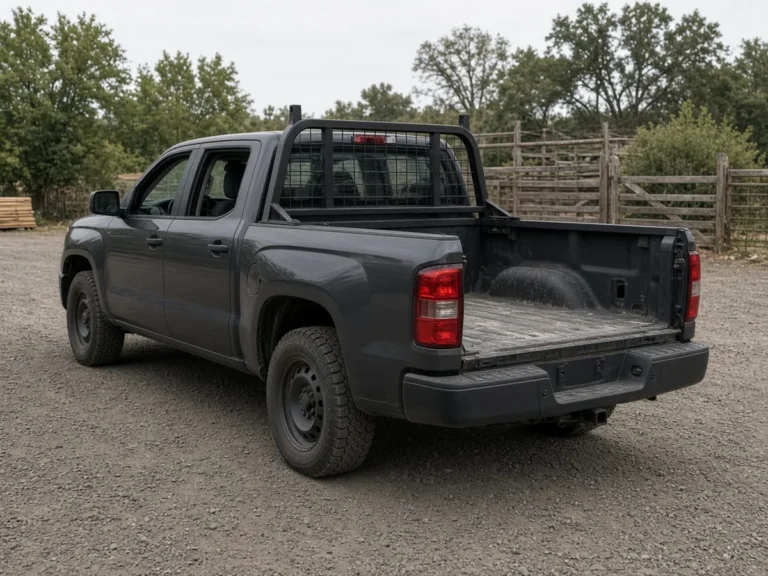
- Cab-height ladder or contractor racks: tall racks whose crossbars line up with, or extend over, the cab roof so long ladders, pipe and lumber can rest on the rack and the cab at once.
- Headache racks: a single frame behind the cab that guards the rear window and supports the front end of long loads. They are often paired with one rear crossbar or bed bar.
Material changes the weight you add to the truck before you load anything. Aluminum racks are lighter and do not rust, while steel racks are heavier and generally used where impacts and abuse are expected. Most racks are powder coated. The rack’s own weight matters because it counts against the rack rating and the truck’s payload, which the capacity section below works through.
Some rack listings group bike carrying with general racks, and a lot of searches for a truck bed rack are really searches for a bike solution. For bikes alone, low bed bars with fork or wheel mounts are usually enough; a full overland rack only makes sense if you also carry other gear on top.
What are truck bed rails, and what are they for?
“Bed rails” means three different things, so confirm which one a listing means before you buy. Strictly, the bed rail is the top edge of each bed side. Accessory sellers use the same words for products that mount on that edge.
- Tubular side rails: round or oval tubes, usually stainless, chrome-plated or powder-coated steel, that sit on posts in the stake pockets and run the length of the bed. They give you a continuous bar to hook straps onto and protect the top edge when loading over the side.
- Bed rail caps or protectors: plastic or rubber covers that snap or tape onto the top of the bed sides. They protect paint and do not add tie-down points.
- Track rails (T-slot, deck rail or utility track): aluminum channels on the inside of the bed sides or on top of them, with cleats that slide and lock wherever you need an anchor. Many newer pickups have them from the factory, and racks, dividers and covers can clamp into them.
The rectangular holes in the top of most bed sides are stake pockets. They were made for wooden stakes that held side boards, and today they are the most common no-drill mounting point for side rails, racks and anchors.
Track rails come with real limits. Toyota’s Tacoma owner’s manual says each deck-rail cleat must not be loaded beyond 220 lb (100 kg) or at an angle steeper than 45 degrees, that no rail should carry more than 440 lb (200 kg) of total tensile load, and that a side rail should hold no more than three accessories on the short bed or four on the long bed, spread evenly 2. A track cleat is an anchor for straps, not a lifting point or a rack foundation by default, so check the truck maker’s figures before you hang a rack or heavy box from it.
Owners on truck forums describe tubular side rails as mostly a styling choice today, but useful for tying down tall loads that will not fit under a folding cover. That is a fair summary: buy them when you strap things often or want the look, not as a cargo-carrying platform.
What does a truck bed organizer do?
A truck bed organizer keeps loads from sliding and gives each item a place on the bed floor. It is the answer when the bed is big enough but everything ends up piled against the tailgate. The main options, from simplest to most built-in, are:
- Cargo bars and bed dividers: an adjustable bar or panel that fences cargo into the front of the bed. Cheap and quick, but it only stops movement in one direction.
- Nets and totes: cargo nets, crates and lidded totes for groceries and loose items. Owners often combine them with a divider.
- Modular organizer mats and cargo blocks: interlocking panels that cover the floor, with blocks that lock into the panels around each item. They stop movement in every direction and also protect the floor.
- Drawer systems: lockable drawers under a flat deck. They keep tools secure and dry under a cover or cap, but they add a lot of weight and raise the floor height.
- Bed slides: a sliding tray that rolls out over the lowered tailgate so you do not have to climb in. Each slide has its own maker’s load rating.

Security and weather are where organizers differ most. Open bins and blocks keep things in place but leave them visible and exposed; drawers and lidded boxes lock, and a cover over the bed adds another layer. If theft or rain is the main worry, plan the organizer and the cover together, or read tonneau cover vs truck cap if you need tall enclosed space.
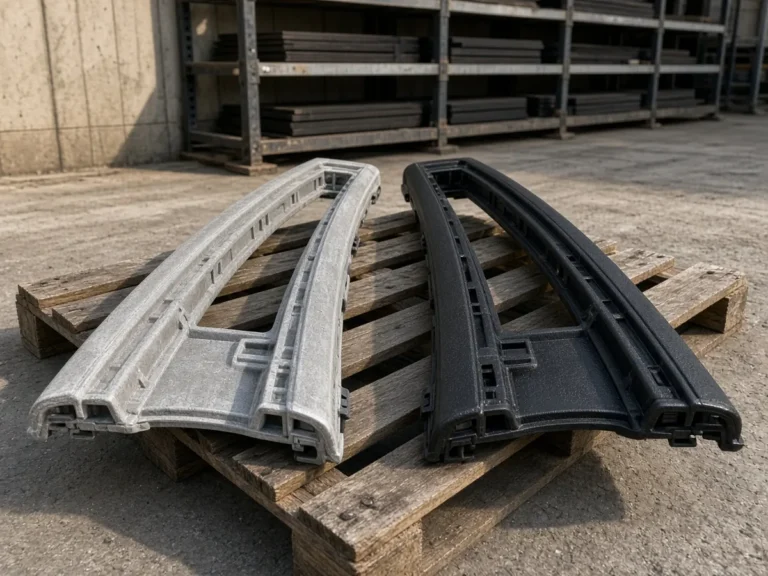
Molded organizer panels and blocks are typically injection molded from polymers such as PP or TPE, trimmed, and then fit-checked against the bed shape and wheel wells. Bed length and wheel-well spacing vary by model and cab, so a vehicle-specific kit, such as a modular cargo mat sized for the Ford Ranger bed, fits better than a cut-down universal one. If you only need floor protection, a plain mat or liner may be enough, as compared in our bed mat and bed liner guide.
How much weight can a rack, rails or organizer carry?
Each accessory has its own rating, but the truck’s payload is the ceiling for everything together. Read both before you load.
Start with the truck. Pickups up to 10,000 lb gross vehicle weight rating (GVWR) carry a Tire and Loading Information placard, normally on the driver’s B-pillar, that states “The combined weight of occupants and cargo should never exceed XXX” pounds 1. That figure is the payload you share between people, accessories and cargo. Toyota’s manual gives the method: take the placard figure, subtract the occupants, and what is left is the cargo and luggage capacity; it also warns against exceeding the axle and total vehicle weight ratings or loading unevenly 2.
Next, read the rack’s rating the right way. Rack makers usually publish three figures. A static rating applies when the truck is parked; an on-road (dynamic) rating applies while driving on pavement; an off-road rating is lower again. Yakima’s instructions for its OverHaul HD bed rack, for example, list 500 lb on-road, 300 lb off-road and 800 lb static, state that the 69 lb system weight is part of that load, and reduce the ratings by 40 percent when the crossbars are set less than 36 inches apart 3. Those details are typical of what to look for in any rack’s instructions: whether the rack weight is included, and which setup the rating assumes.
Here is how the numbers stack up on one example truck. Example figures, not a measured vehicle.
| Step | Item | Weight (lb) | Capacity left (lb) |
|---|---|---|---|
| 1 | Placard: combined occupants and cargo | — | 1,400 |
| 2 | Driver and one passenger (2 × 180) | 360 | 1,040 |
| 3 | Bed rack (its own weight) | 70 | 970 |
| 4 | Rooftop tent on the rack | 150 | 820 |
| 5 | Drawer system on the bed floor | 200 | 620 |
| 6 | Tools, water and camp gear in the bed | up to 620 | 0 |
Now check the rack separately. Rack plus tent is 220 lb, inside a 500 lb on-road or 300 lb off-road rating. Add 100 lb of fuel cans and recovery gear to the rack and the total becomes 320 lb: still fine on pavement, but over the off-road figure, and over the reduced figure if the crossbars sit closer than the minimum spread. The truck can have payload left and the rack can still be overloaded, or the other way round, so both checks matter.
Rails and organizers follow the same logic. Track cleats have per-cleat and per-rail limits from the truck maker 2. Organizer panels and blocks rarely have a “rating” because the floor carries the load, so the limit is simply the truck’s payload, while drawers and bed slides carry their own maker’s figures.
How do you secure cargo to racks, rails and organizers?
Use enough straps rated for the load, anchor them to rated points, and keep the pull close to horizontal. The federal cargo securement rules in 49 CFR Part 393 are written for commercial motor vehicles, so they may not legally apply to a personal half-ton pickup, but they are the clearest engineering benchmark available.
Those rules size tiedowns so they stay within their working load limit (WLL) under 0.435 g of forward braking, 0.5 g rearward and 0.25 g sideways 4. The aggregate WLL of all tiedowns on an item must be at least half the item’s weight; a strap that runs from one side of the vehicle, over the cargo and to the other side counts at its full WLL, while a strap from a vehicle anchor straight to the cargo counts at half 4. So a 300 lb toolbox, as an example, needs at least 150 lb of aggregate WLL, and two over-the-top straps rated 100 lb each would meet it on paper.
The same rules set a minimum number of tiedowns. An item that is not blocked against the bulkhead needs one tiedown if it is 5 ft or shorter and 1,100 lb or lighter, two if it is longer than 5 ft up to 10 ft, and one more for every extra 10 ft or part of it 4. A 12 ft ladder on a rack would therefore get three straps.
Practical points for each accessory:
- On a rack: strap long items to the crossbars at two or more points, and add a bow and stern line for boats. Check strap tension after the first few miles.
- On track rails: respect the cleat’s angle and weight limits and spread anchors along the rail 2.
- In an organizer: blocks hold items against braking and cornering, but strap anything tall that could tip over.
- Long loads: on commercial vehicles, a load that extends more than 4 ft beyond the rear must carry red or orange warning flags at least 18 in square 5; rules for private vehicles vary by state.
How do they mount, and do they work with a tonneau cover?
Most racks and rails mount in one of four ways, and the mounting method decides whether a tonneau cover can stay on the truck.
- Stake pocket: legs or posts drop into the pockets and clamp from below. No drilling, strong, and common to racks and side rails.
- Clamp-on: clamps grip the top lip of the bed sides. Fully reversible, but they occupy the same edge a cover usually seals against.
- Track mount: feet slide into factory track rails or into the T-slot rails of some retractable and hard covers. Clean and no-drill when the profiles match.
- Bolt-through: brackets bolt through the bed floor or sides. The most rigid, but permanent, and every new hole needs sealing.
Compatibility is the question owners ask most. The matrix below summarizes the common pairings; always confirm with both the rack and cover makers for your model year.
| Combination | Usually works? | What to check |
|---|---|---|
| Rack + soft roll-up or soft tri-fold cover | Rarely | Both clamp to the same bed edge; only racks with cover-specific brackets |
| Rack + hard folding cover | Sometimes, low bars only | Bracket height and width; panels must still fold over the feet |
| Rack + retractable cover with T-slot rails | Often | Matching rail profile and the rack maker’s cover kit; do not over-tighten |
| Headache rack + most covers | Often | Mounting brackets that clear the cover’s front rail |
| Tubular side rails + cover | Usually not | Rails sit where the cover clamps; check cover maker’s notes |
| Track rail cleats + cover | Yes | Cleats must not block the cover’s latches 2 |
| Organizer + any cover | Yes | Cargo and drawer height must stay below the closed cover |
| Organizer + bed mat or liner | Yes | Panels or blocks need a flat, grippy base |
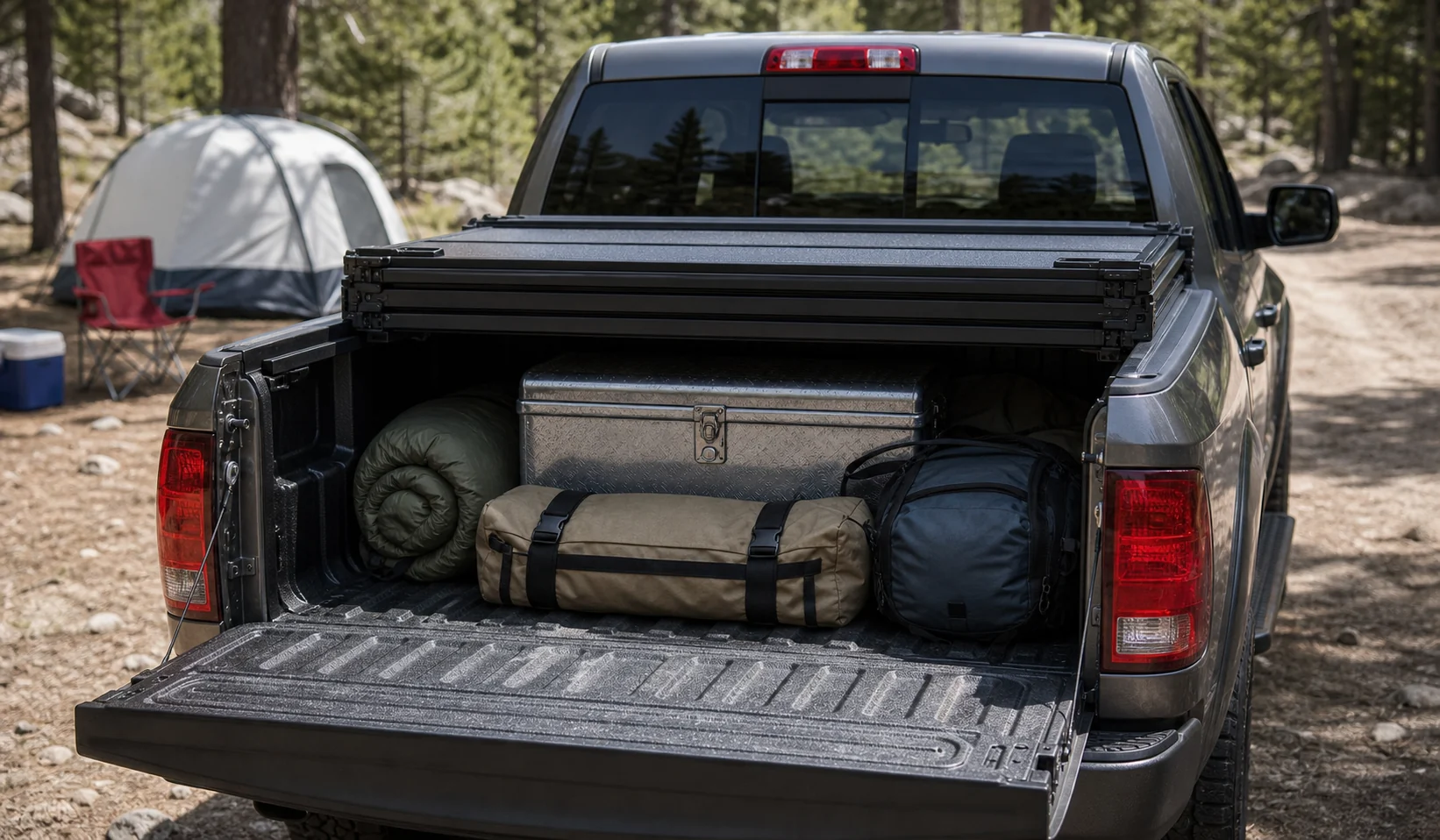
Rack makers sell separate kits for factory track rails and for covers with integrated tracks; Yakima’s instructions, for instance, point owners to truck-specific bed track kits and cover-specific tonneau kits 3. One owner on a forum reported bending a retractable cover’s aluminum rails by over-tightening a rack, so follow the torque values in the instructions. If you have not chosen a cover yet, our tonneau cover buying guide and the pickup tonneau cover range show the rail and clamp styles side by side.
Do racks and organizers affect fuel economy, height and bed access?
Racks cost fuel mainly through drag, especially with gear on top; organizers cost fuel mainly through weight. The U.S. Department of Energy reports that a large roof-top cargo box can cut fuel economy by about 2 to 8 percent in city driving, 6 to 17 percent on the highway and 10 to 25 percent at 65 to 75 mph, while a rear-mounted box or tray costs only 1 to 2 percent in town and 1 to 5 percent on the highway 6. Those tests used a small sedan and an SUV, not a pickup, so treat them as a direction rather than a truck figure: the higher and blunter the load above the cab line, the bigger the penalty.
Weight matters less but adds up. The same source estimates that an extra 100 lb cuts MPG by about 1 percent, with a bigger effect on lighter vehicles 6. A heavy drawer system that never comes out of the bed is a permanent version of that cost.
Height is the other everyday issue. A cab-height rack with a tent or kayak on top can make the truck too tall for some parking garages and drive-throughs, so measure the loaded height once and keep the number on a note in the cab. Access changes too: low bars leave the bed easy to reach, side panels on mid-height racks can block reaching in over the sides, and a drawer system raises the floor and reduces the height available under a cover.
How to choose: a quick decision checklist
Start from the job, not the product: write down what you carry most often, where it has to sit, and whether the bed must stay covered. Then work through these questions:
- Is the item longer than the bed or does it need to ride on top? Choose a rack: bed bars for bikes and boats, mid-height for tents and overland gear, cab-height for ladders and lumber.
- Do you mainly need more anchor points? Choose rails: track rails if your truck has the channel or you want movable cleats, tubular side rails for strapping tall loads and the look.
- Do small items slide around? Choose an organizer: a divider for groceries, modular panels and blocks for mixed loads, drawers for tools you want locked.
- Must a tonneau cover stay on? Check the compatibility matrix above before buying anything that clamps to the bed edge.
- Does the total stay inside payload? Add up people, accessories and cargo against the placard figure 1.
- Will the setup stay on all year? If not, favor no-drill stake-pocket, clamp or track mounts that remove in minutes.
Cost follows the same choices. The main cost drivers are height and adjustability, material, vehicle-specific brackets and how many accessories the system accepts. Simple dividers and bed bars sit at the low end; adjustable overland racks, drawer systems and bed slides at the high end.
Is a bed rack worth it? It is if you regularly carry long or bulky gear and want to keep the bed floor free. If your loads fit inside the bed, an organizer and a cover usually solve the problem for less money and less drag. Browse the truck accessories range to see how the families fit together on one truck.
Risks and exceptions to check first
Most problems come from mismatched rails, ignored ratings and permanent changes made in a hurry. Check these before you order or install:
- Model-year changes: bed rail profiles, track channels and stake pocket positions can change between generations of the same model. Order by model year, cab and bed length, not model name alone.
- Payload creep: a rack, drawers and a full camp load can use most of a midsize pickup’s payload before passengers get in 1.
- Off-road use: off-road rack ratings are lower than on-road ratings, and narrow crossbar spacing can reduce them further 3.
- Drilling: bolt-through mounts are strong but permanent. Seal every hole and keep a record for resale.
- Cover damage: over-tightened rack feet can bend cover rails, and cleats can stop a cover latching 2.
- Loose fasteners: rack makers ask owners to retighten hardware and inspect the rack periodically 3; vibration loosens clamps over time.
- Commercial use: if the truck is operated as a commercial motor vehicle, the securement and projecting-load rules apply in full 4 5.
What should B2B buyers put in a bed accessory RFQ?
A useful RFQ for racks, rails or organizers describes the truck, the load case and the documentation you need, not just a product name. Distributors and fleet buyers get fewer returns when these points are agreed before sampling:
- Vehicle list: make, model, generation, model years, cab style and bed length for every fitment, plus whether the bed has factory track rails, plastic rail caps or a liner.
- Cover pairing: which tonneau covers the accessory must work with, and whether cover-rail brackets are part of the kit.
- Ratings and how they were set: static, on-road and off-road loads, whether the accessory’s own weight is included, and the setup assumed, such as crossbar spread.
- Material and finish: aluminum or steel and tube or extrusion size for racks and rails; polymer type, texture and color for organizer panels; coating type for metal parts.
- Hardware and instructions: a full fastener list, torque values and a no-drill or drill statement for each fitment.
- Packaging: flat-pack carton size, kit completeness check and labeling by fitment so one SKU does not ship to the wrong truck.
- Samples: a try-fit on the actual bed before mass production, with photos of the fit at the wheel wells, stake pockets and tailgate.
For private-label or multi-fitment programs, ask the supplier to confirm drawings and the vehicle list in writing before tooling or sampling starts.
Conclusion
A truck bed rack, bed rails and a bed organizer solve three different hauling problems. The rack handles what is too long or too bulky for the bed and keeps the floor free. Rails, whether tubular side rails or factory track rails, add anchor points along the bed sides. The organizer keeps everyday loads from sliding across the floor. Once you know where your load needs to sit, the choice usually makes itself.
The details that decide success are the same for all three. Keep the whole setup inside the truck’s payload and each accessory’s own rating, secure loads with enough rated straps on rated anchors, and check how every part mounts before assuming it will live with a tonneau cover. Get those right and the three families combine into one setup that covers work days and weekends.
Next step
Measure your bed, note your cover type and rail profile, then compare options in our truck bed accessories category. Yirox molds modular truck bed organizer panels and cargo blocks in its own injection molding factory, and checks your vehicle list, bed dimensions and mounting details with you before sampling. Send your fitment list through sourcing solutions or our contact form.
Frequently asked questions
Is a truck bed rack worth it?
Yes, if you often carry ladders, lumber, boats, bikes or a rooftop tent and want the bed floor free underneath. If everything you haul fits inside the bed, an organizer and a cover are usually cheaper and add less drag.
Why is it called a headache rack?
A headache rack is the frame mounted behind the cab that guards the rear window from cargo sliding forward. The usual explanation for the name is the headache it prevents if a load comes through the glass. For how that cab-protection part differs from a load-carrying bed rack, see what a headache rack is.
What are the holes in truck bed rails for?
They are stake pockets, originally made to hold wooden stakes for side boards. Today they are the standard no-drill mounting point for side rails, racks and tie-down anchors.
Can you use a bed rack with a tonneau cover?
Yes, but only with matching designs, such as racks that mount into a retractable cover’s T-slot rails or low bars with cover-specific brackets. Most racks that clamp to the bed edge conflict with soft and tri-fold covers.
How much weight can my truck bed carry?
Look for the Tire and Loading Information placard on the driver’s door pillar; it states the maximum combined weight of occupants and cargo. Subtract the people riding along, and what is left is shared by accessories and cargo.
Is a bed slide the same as a bed organizer?
A bed slide is one kind of organizer: a tray that rolls out over the tailgate so you can reach the front of the bed. It carries its own maker’s load rating and takes up some bed height, unlike floor panels or dividers.
References
- 49 CFR § 571.110 — Federal Motor Vehicle Safety Standard No. 110, Tire selection and rims and motor home/recreation vehicle trailer load carrying capacity information, Electronic Code of Federal Regulations.
- Toyota Motor Corporation — 2016 Tacoma Owner’s Manual (OM04005U), sections “Capacity and distribution”, “Deck rails” and tie-down cleat precautions.
- Yakima — OverHaul HD installation instructions (Instruction #1035915D), load capacity and weight limits.
- 49 CFR Part 393 Subpart I — Protection Against Shifting and Falling Cargo (§§ 393.102, 393.106, 393.110), Electronic Code of Federal Regulations.
- 49 CFR § 393.87 — Warning flags on projecting loads, Electronic Code of Federal Regulations.
- U.S. Department of Energy and U.S. EPA — Driving More Efficiently, fueleconomy.gov.