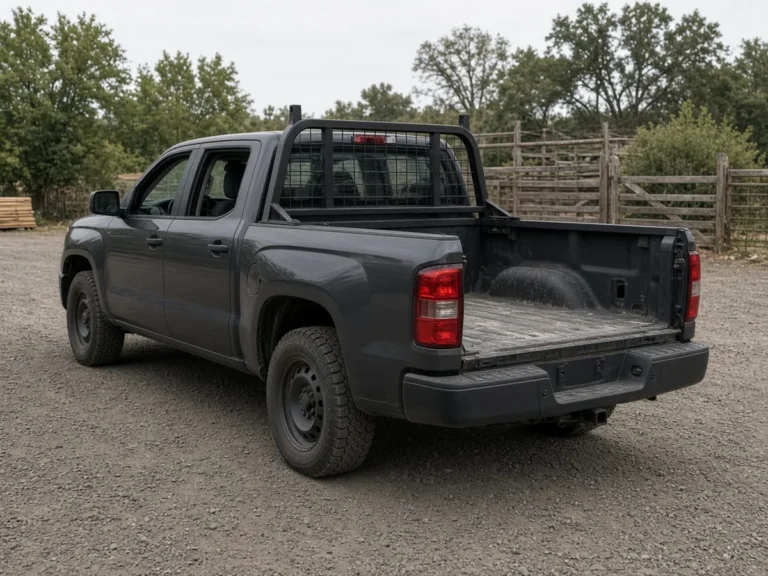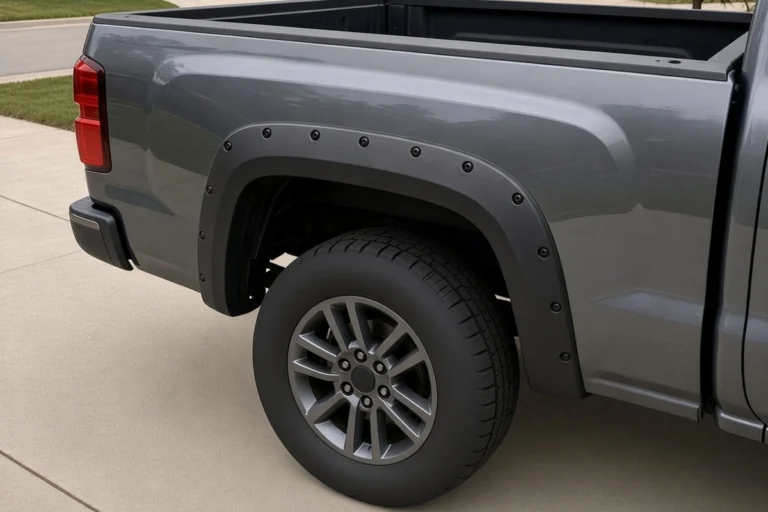




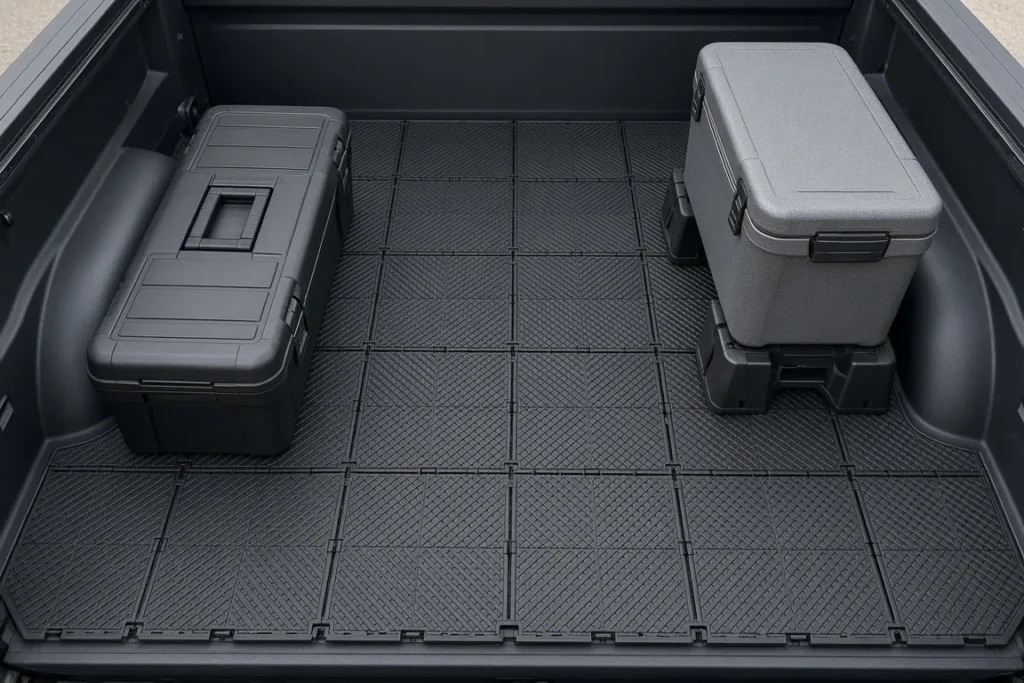
In the bed mat vs spray-in or drop-in liner choice, the difference is attachment and coverage. A truck bed mat is a removable pad that mainly covers the bed floor. A drop-in liner is a preformed shell that sits in the bed. A spray-in liner is a bonded coating that covers more of the bed and seals the metal.
Mats favor cleaning and day-to-day impact on the floor. Spray-ins favor rust sealing on the surfaces they cover. Drop-ins add sidewall coverage without a permanent coating.
Scope: this guide compares truck bed mats (rubber and TPE), drop-in plastic liners, spray-in and roll-on coatings, and carpet-style liners. Cabin floor mats and floor liners are a different product. Tonneau covers and other truck bed covers are out of scope here—see our truck bed cover overview if you need weather enclosure rather than bed-floor protection.
What is a truck bed mat vs a bed liner?
Search results mix five products that protect a pickup bed in different ways. The names sound similar, so buyers often compare the wrong pair. Start by sorting them into floating products that sit on the paint and bonded coatings that stick to the metal.
- Truck bed mat (rubber or TPE): a thick, removable pad that covers the bed floor. Many kits add a matching tailgate piece. Mats cushion drops, raise cargo grip, and lift out for rinsing. They do not cover the bedsides or wheel wells unless the design includes side panels.
- Drop-in bed liner: a molded plastic (or sometimes composite) shell that drops into the bed and often climbs the walls and wheel wells. It is still a floating product: water and grit can travel under it.
- Spray-in (spray-on) bed liner: a polyurethane or polyurea coating sprayed onto a prepared bed so it bonds into a textured skin over the floor, walls and wells.
- Roll-on / DIY kit liner: a thinner coating rolled or sprayed from a consumer kit. It can bond if prep is careful, but film thickness is usually lower than a professional spray job.
- Carpet or turf-style liner (including popular “bed rug” designs): a fabric-faced liner that is soft on knees and luggage. It is a poor match for gravel, mud, wet mulch or chemicals.
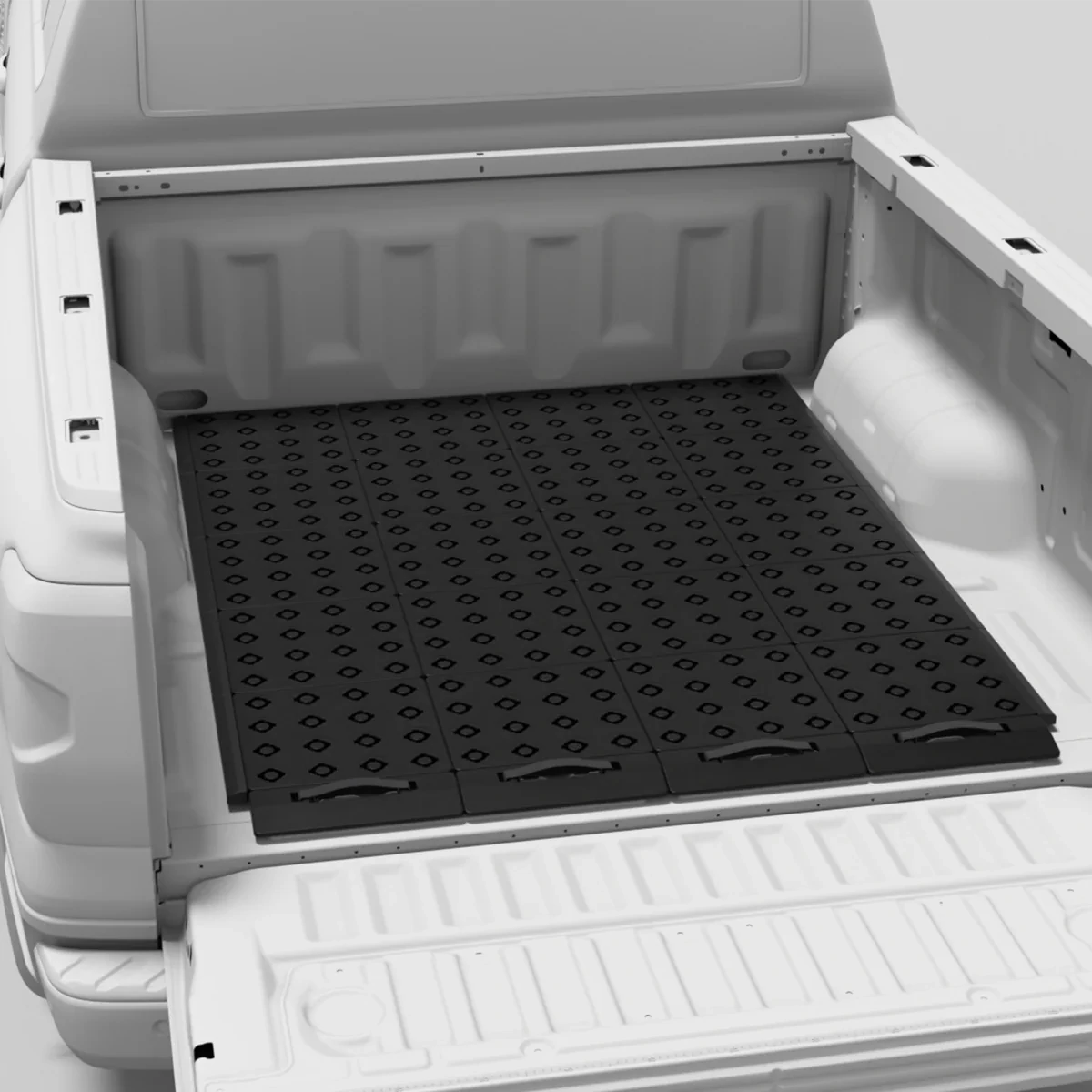
People Also Ask also shows “floor liner vs floor mat.” That question is usually about cabin floor protection, not the cargo bed. A cabin floor liner is a contoured tray for the footwells; a truck bed mat is for the open bed. Keep those shopping searches separate.
In short: if you want something you can pull out, wash and put back, you are shopping for a truck bed mat or related bed accessory. If you want the metal sealed against water and grit for years, you are shopping for a bonded liner—usually a professional spray-in.
How do bed mats and bed liners compare?
Use the table as a first filter. The rows that decide most purchases are coverage, rust sealing, removability and upfront cost. Exact prices vary by truck size and shop, so the cost row stays qualitative.
Two comparisons deserve extra weight. First, impact vs corrosion: a thick mat absorbs dropped tools and lumber better than a thin coating, but it does not seal scratched paint from road salt. A spray-in liner seals scratched areas it covers, which matters in wet and salted regions. Second, permanence: mats and drop-ins leave with the truck or the lease; a spray-in stays with the bed and is expensive to remove.
Retailer guides often quote mat kits in a roughly three-figure range and professional spray-ins several times higher for a full-size bed. Treat those as market ballparks, not quotes. Your bed length, rail coverage and local labor change the number.
Rubber vs TPE for bed mats: which material fits?
Once you decide on a removable mat, the next fork is material. Most heavy-duty mats are either vulcanized rubber compounds or TPE (thermoplastic elastomer) compounds. Both can feel “rubber-like” in the hand; the differences show up in cold weather, odor, recycling path and how a factory specs the part.
Automotive rubber products are commonly classified under systems such as ASTM D2000, which organizes vulcanized rubber materials for automotive applications by property grades rather than by marketing names 4. When a B2B buyer asks for a rubber bed mat, asking for D2000-style callouts (or equivalent supplier data sheets) beats asking only for “heavy duty.”
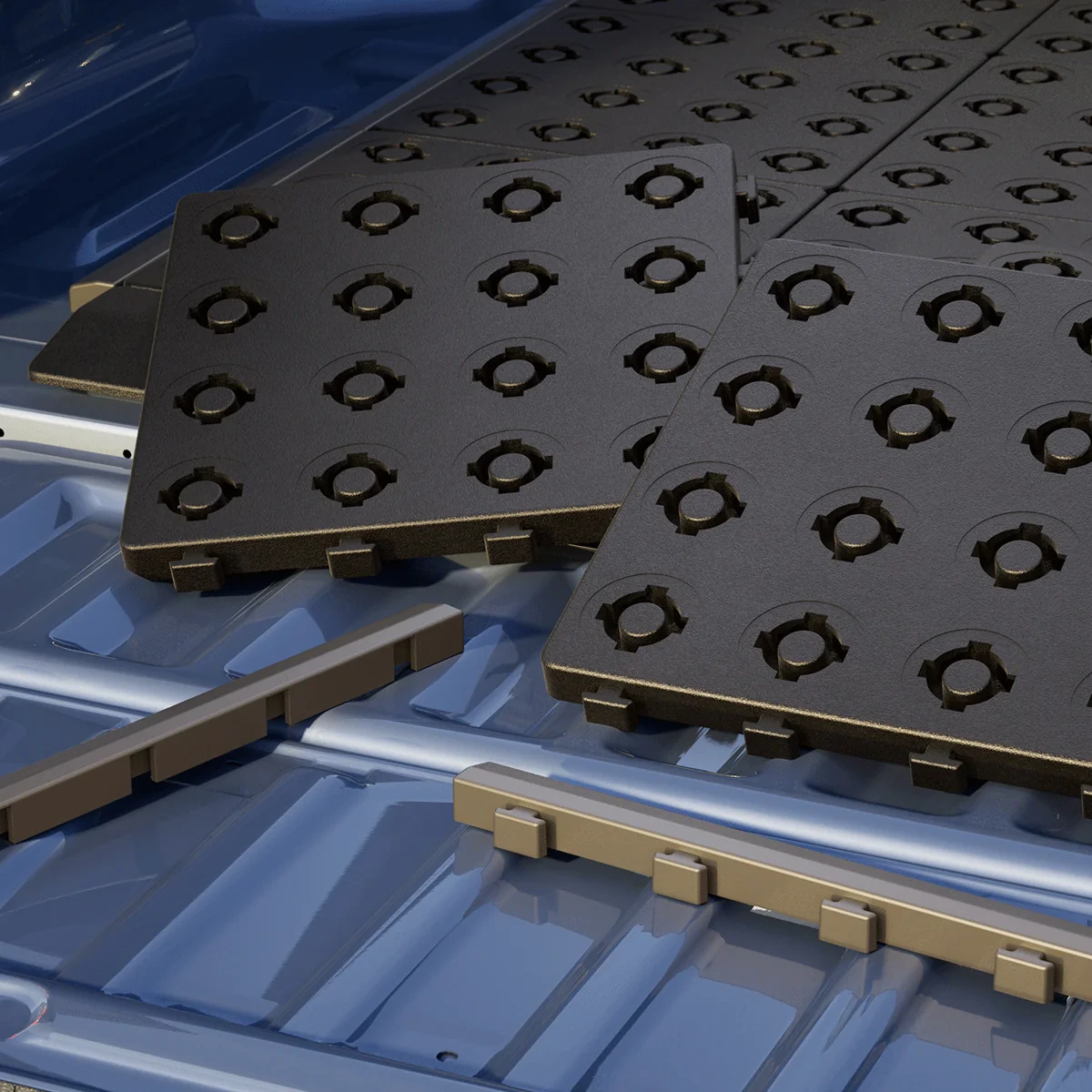
Neither material seals the bed against rust by itself. Both need a clean, dry bed underneath and occasional lifting so trapped grit does not sit in the paint. For private-label programs, pick one primary compound family per SKU so packaging claims, smell and weight stay consistent across lots.
Typical production for molded pickup bed mats involves compounding the rubber or TPE, molding or die-cutting the floor piece (and optional tailgate piece), trimming edges, then checking fit against the target bed length and corrugation pattern. Factories in this category usually inspect thickness, surface texture, edge trim and dimensional fit—not a lab “lifetime” claim without a stated test method.
How hard is installation for each option?
Bed mats and most drop-ins are DIY in under an hour. Spray-in work is a shop process. Roll-on kits sit in the middle: the materials are sold for DIY, but the prep quality decides whether the coating lasts.
- Confirm fitment first. Year, make, model and bed length (for example 5.5 ft, 6.5 ft, 8 ft) must match. A mat cut for a short bed leaves the rear floor bare on a long bed; a drop-in for the wrong generation may hit the bulkhead or utility track wrong.
- Clean the bed. Wash out mud, salt and loose rust. Let the metal dry. For any bonded coating, shops also scuff, degrease and mask rails, cameras and harnesses.
- Mat install: lay the mat flat, seat it into the corrugations, add the tailgate piece if included, and check that the mat does not bunch against the bulkhead when the tailgate closes.
- Drop-in install: lower the shell, align stake-pocket and rail features, fasten only where the instructions allow, and confirm the tailgate still latches freely.
- Spray-in install: leave this to a shop unless you have enclosure ventilation and the right respirators. Professional spray-on truck bed liner chemistry is commonly based on MDI (methylene diphenyl diisocyanate) systems; NIOSH warns that unprotected workers can develop serious or fatal respiratory disease from MDI exposure during spray-on bed liner work 1.
- Roll-on DIY: follow the kit’s film thickness and recoat windows. Thin spots on the floor wear through first under boots and sliding freight.
If the truck is leased, read the lease before anything permanent goes on the paint. A mat that lifts out is usually the safer choice for a short ownership window. If you already plan a spray-in, ask the shop whether your bed rails, bed cameras and power outlets stay usable after masking.
Which option should you choose for your truck?
Choose by how the bed works each week, how long you will keep the truck, and whether you need sealed metal or removable convenience. A simple chooser:
- Daily tools, lumber, coolers; want easy rinse: rubber or TPE bed mat. Add a tailgate mat if that surface takes as much abuse as the floor.
- Wet climate, salted winters, truck you will keep for years: professional spray-in liner for sealed coverage; optionally add a mat on top for knee comfort and extra impact cushioning.
- Used truck with an ugly but solid bed: drop-in can hide damage quickly, but plan to lift it and dry underneath on a schedule—or prefer spray-in if the paint is already compromised and you want a seal.
- Leased truck or unknown resale path: removable mat. Avoid permanent coatings unless the lease allows them.
- Light, clean cargo (luggage, furniture pads): carpet-style liner can work; switch to rubber/TPE or spray-in if the bed starts seeing mulch, gravel or oily parts.
- Fleet / shop inventory: standardize on one mat SKU family per popular bed length for fast swaps, and reserve spray-in for units that stay in the fleet long enough to pay back the shop visit.
Putting a mat over a spray-in is a common owner setup for a reason: the coating seals the metal, and the mat softens kneeling and adds another wear layer you can replace. Just lift the mat after wet or sandy loads so grit is not ground into the coating.
If your real problem is weather and theft rather than floor scratches, a bed mat will not replace a cover. Compare cover types separately in the tonneau cover decision guide and the truck bed cover overview. If the need is cargo organization rather than floor protection, compare a truck bed rack, bed rails and a bed organizer before you add another floor product.
Risks and exceptions: what mats and liners will not fix
No bed product makes an overloaded truck safe, and none turns a rusty bed into new metal. The failure modes below are the ones forums and installer guides keep repeating.
Moisture under floating products. Corrosion is the deterioration of metal from a chemical or electrochemical reaction with its environment; humidity and salt exposure are classic drivers 2. A mat or drop-in that traps wet sand against scratched paint creates a small, wet, salty microclimate. Lift floating products after wet hauls, rinse the bed, and let corrugations dry. In winter salt regions, treat this as routine maintenance, not an optional chore.
Spray-in is not automatic rustproofing. A bonded liner only protects where film thickness and adhesion are sound. Thin spots, missed edges and unsealed rail cavities still rust. Ask a shop what surface prep they use and whether they can point to a coating durability method such as chip-resistance testing in the spirit of SAE J400 for coated surfaces 5—without treating any single number as a lifetime guarantee.
Hard use exceptions. Sharp steel edges can slice a soft mat. Dragging pallets can polish grip ribs smooth. Carpet liners stain and hold water. Spray-in textures are rough on knees and can show chemical stains. Drop-ins can rattle if fasteners loosen and then rub paint—the same MotörTrend-era complaint still shows up on owner forums.
- Do not leave wet sand under a mat “until next weekend” in a salt climate.
- Do not treat a thin DIY roll-on as equal to a full professional spray film.
- Do not expect a floor-only mat to protect bedsides from shifting 4×8 sheet goods.
- Do not spray MDI-based liner chemicals without the enclosure, ventilation and respirator controls NIOSH describes for spray-on truck bed liner work 1.
What should B2B buyers put in a bed-mat or liner RFQ?
Distributors, accessory shops and private-label brands lose margin on bed products when fitment, smell, packaging or thickness drift between lots. Put the checks in the RFQ instead of discovering them after a container arrives.
- Vehicle list: year, make, model, bed length, and whether the bed has factory utility tracks, a bed camera, a 12V outlet or a spray-in already installed.
- Product type: floor mat only, mat + tailgate, modular panel system, or liner referral (if you do not sell coatings).
- Material family: rubber or TPE; request data sheets. For rubber, ask how the compound maps to an automotive classification such as ASTM D2000 4.
- Dimensions and feel: thickness, Shore hardness target range, mass per set, and whether the texture is ribbed, honeycomb or custom.
- Fit samples: dry-fit on a real bed before bulk; check bulkhead gap, wheel-house relief and tailgate clearance.
- Packaging: corner protection, odor-venting if needed, labeled hardware, and clear model/year stickers on the carton.
- Quality checks: thickness map, edge trim, flash, warpage after heat/cold cycle if you sell into hot/cold markets.
- If you also source spray work for retail customers: require shops to follow isocyanate controls aligned with NIOSH spray-on bed liner guidance 1, and confirm coating VOC compliance under the federal automobile refinish coating rules in 40 CFR Part 59 Subpart B where those rules apply to the products they use 3.
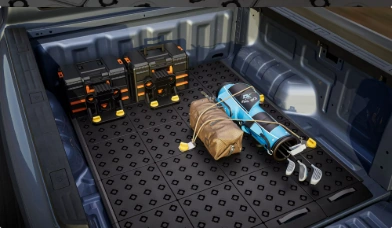
Yirox supplies pickup accessories in this category, including molded bed cargo systems such as the Ford Ranger and Raptor modular truck bed cargo mat. For vehicle-specific programs, use a clear year/make/bed list and sample sign-off—the same discipline as other model-matched exterior parts under vehicle-specific development. Low MOQ is available on selected items when the program fits existing tools.
Conclusion
A truck bed mat and a bed liner solve overlapping problems with different trade-offs. Mats win on removability, impact cushioning on the floor and simple DIY install. Bonded spray-in liners win on sealing the metal against water and grit when the prep and film are done well. Drop-ins and carpet liners fill niches, but both need honest maintenance around moisture and dirt.
If you haul mixed cargo and want a mat you can rinse, choose rubber or TPE by climate and handling preference, then keep the bed dry underneath. If you keep the truck for years in a wet or salted region, budget for a professional spray-in and decide later whether a mat on top is worth the extra comfort. Match the product to bed length and ownership horizon before you compare brand names.
For shops and distributors, write the RFQ around fitment, compound family, thickness and packaging. Those details prevent most returns. The chemistry and corrosion science behind spray shops and floating liners is already documented by NIOSH, AMPP and EPA—use it when you set supplier questions rather than relying on brochure adjectives.
Next step
If you are narrowing bed-floor protection for a specific pickup, compare removable mats in our truck bed accessories range—including the Ranger/Raptor modular cargo mat—or send the year, bed length and material preference through sourcing solutions / contact so a sample plan can be scoped without guessing fitment.
Frequently asked questions
What are the key differences between a bed liner and a bed mat?
A bed mat is a removable pad that mainly protects the bed floor. A bed liner is either a drop-in shell or a bonded spray-in/roll-on coating that usually covers more of the bed and, when bonded well, helps seal the metal.
Is a truck bed mat worth it?
Yes for many owners who haul tools or gear and want impact cushioning plus easy cleaning without a permanent coating. It is less ideal if your main problem is rust on bedsides or wheel wells, which a floor mat does not cover.
Is a spray-in bed liner better than a bed mat?
Neither is universally better. Spray-in is better for sealing and full-bed coverage; a mat is better for removability, DIY install and knee comfort. Many owners use both.
Can a bed mat cause rust?
The mat itself does not create rust, but wet grit trapped under it against damaged paint can speed corrosion. Lift and dry the bed after wet or salty loads.
Should I choose a rubber or TPE truck bed mat?
Choose rubber when you want maximum mass and traditional grip and can accept more odor/weight. Choose TPE when cold flexibility, lower odor or lighter handling matter more. Request hardness and thickness data either way.
Can I install a spray-in bed liner myself?
Consumer roll-on kits exist, but professional spray-on systems often involve isocyanates such as MDI and need controlled ventilation and respirators. For permanent spray-in quality, a trained shop is the safer path.
References
- National Institute for Occupational Safety and Health (NIOSH). Preventing Asthma and Death from MDI Exposure During Spray-on Truck Bed Liner and Related Applications, DHHS (NIOSH) Publication No. 2006-149. cdc.gov/niosh/docs/2006-149
- Association for Materials Protection and Performance (AMPP). Corrosion Basics. ampp.org — Corrosion Basics
- U.S. Environmental Protection Agency. Automobile Refinish Coatings: National Volatile Organic Compound Emission Standards; Code of Federal Regulations, 40 CFR Part 59 Subpart B. epa.gov · eCFR 40 CFR 59 Subpart B
- ASTM International. ASTM D2000-18, Standard Classification System for Rubber Products in Automotive Applications. astm.org/standards/d2000
- SAE International. SAE J400, Test for Chip Resistance of Surface Coatings. sae.org — J400