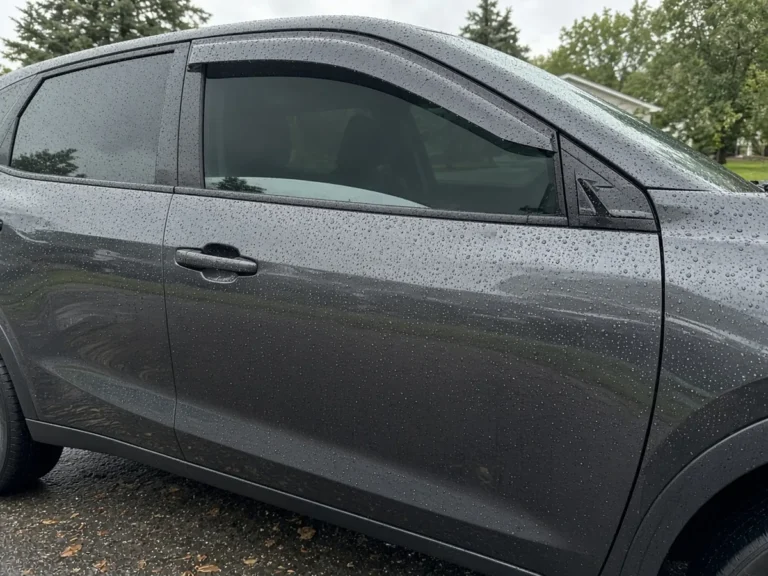




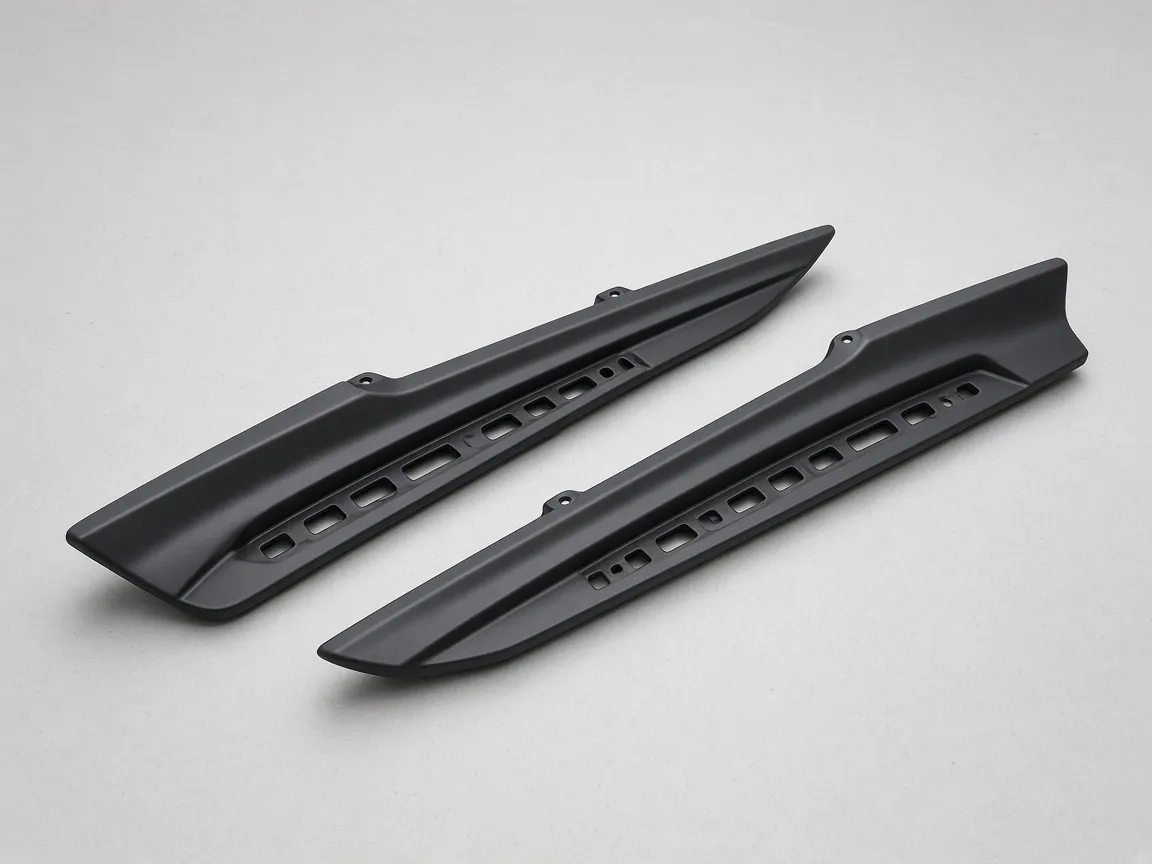
Side skirts on a car are the long panels that run under the doors between the front and rear wheels. They sit on or below the rocker area to manage side airflow, connect the front and rear body line, and protect the lower sill from road debris. They are styling and aero parts, not structural body panels.
Scope: this guide explains what side skirts are, how they differ from rocker panels, common types and materials, and the fitment checks that matter before you buy or source them. It is a general explainer for passenger cars and light vehicles. Front lips, splitters and diffusers are covered in a separate guide. Model-brand kit walkthroughs (for example EV brand body kits) are out of scope here.
What are side skirts on a car, and what do they do?
Ask five owners what side skirts are and you will hear five answers: rocker moldings, ground-effect panels, body-kit lips, or just “the black pieces under the doors.” The useful definition is simple.
A side skirt is an exterior add-on (or factory trim piece) that runs along the lower side of the vehicle between the wheel openings, usually attached to the rocker panel or sill area. It is part of the exterior styling and aero kit family, not a frame rail.
On a moving car, air pressure under the floor is often lower than the air at the sides. Higher-pressure air from the sides can spill under the car, disturb the underbody flow and hit the rear wheels. Side skirts act as a lateral barrier that helps keep that side air out so a front lip or splitter and a rear diffuser can work more as a set.
The effect grows with speed and with how smooth and low the underbody already is. On many stock street cars the visual change is larger than any felt aero change.
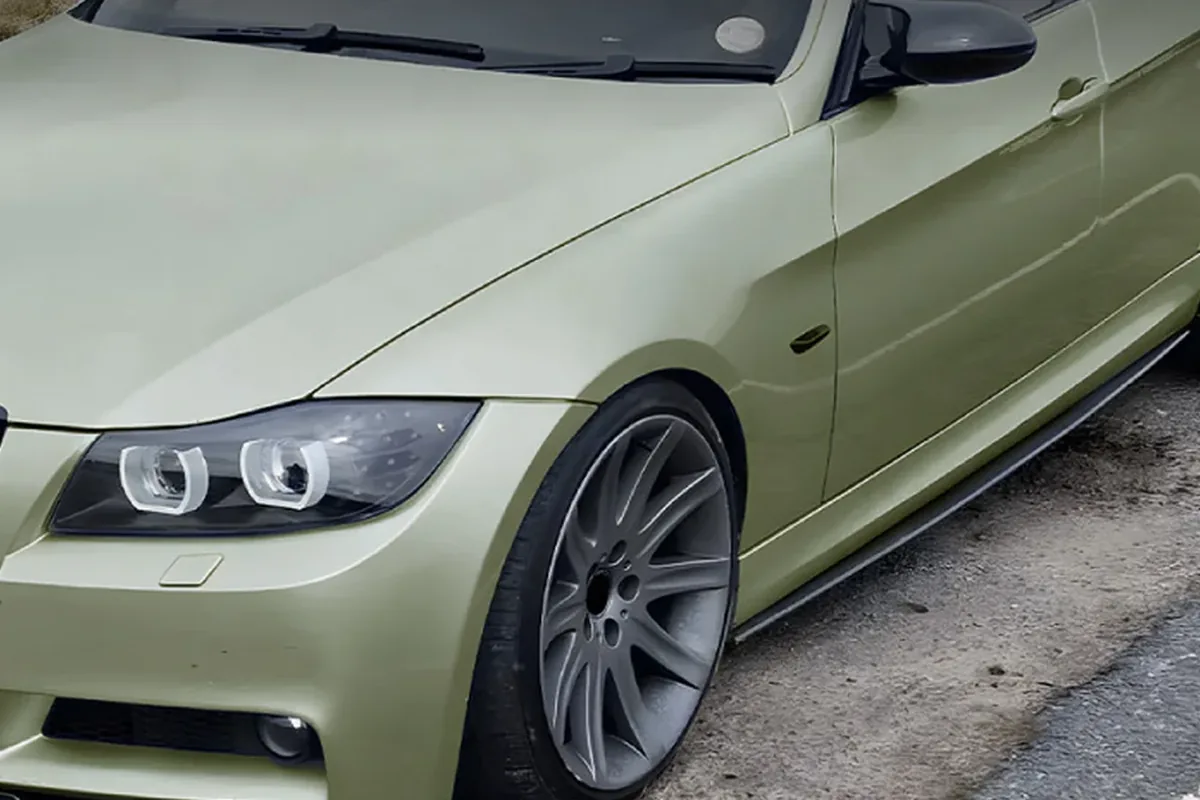
That is why skirts are almost always discussed with the rest of the lower body line. A front lip alone can make a car look nose-heavy; skirts continue that lower edge past the doors; a rear valance or diffuser closes the line.
For how lips, splitters and diffusers differ from each other, see our guide to the front lip vs splitter vs diffuser. Browse current molded options in our side skirts category when you are ready to compare product styles.
Besides airflow and appearance, skirts can also take some of the stone chips and road grit that would otherwise hit the painted rocker. That is a secondary job, not armor. A skirt that hangs too low will scrape; a skirt that fits poorly will collect dirt in a visible gap. Function and fitment are tied together.
Side skirt vs rocker panel: what is the difference?
The rocker panel is a structural body panel; the side skirt is usually a styling or aero add-on that sits on or below it. Confusing the two names is the most common search mix-up, and it shows up in “People Also Ask” for this topic.
Use this as a buying test. If the part is a structural sill the body is built around, you are looking at a rocker panel, or at a repair for one. If the part can come off and the body still stands, and it mainly changes the lower side line or airflow, you are looking at a side skirt or rocker molding.
Do not treat a skirt as a patch for a rusted or crushed rocker. Repair the metal first, then specify the trim.
Some factory cars already wear plastic rocker moldings or cladding that look like mild skirts. Aftermarket side skirts may bolt or tape over those moldings, replace them, or hang below them. If you are only trying to hide rust or crush damage, a skirt will not restore the sill. Forum threads on cheap universal skirts used as a cover usually end the same way: fix the metal first, then decide on trim.
Related names you will see in listings:
- Side skirt extension / side skirt lip — a thinner strip that deepens an existing skirt or rocker molding rather than replacing the whole panel.
- Side cowl — a shorter or higher piece that updates the side line without hanging as low as a full skirt (common on sports cars where scrape risk is high).
- Rocker molding / sill guard — often OEM cladding; may be functional protection more than aero.
What types of side skirts are there?
Most buyers choose among three commercial types, then decide how aggressive the shape should be.
Model-specific skirts almost always beat universal kits on gap quality and resale look. Universal parts can work for a short extension lip on a straight sill, but full-length universals rarely follow door curvature, jacking points and flared rockers without visible compromise. Owners who report polypropylene or thin ABS universals flexing away from the rocker after a few weeks are describing that mismatch, not bad luck.
Within model-specific kits you will also see style families: subtle OEM-plus edges, flat track-style planes, and flared skirts that widen toward the rear wheel. Flared designs change how the rear tire sits in the airflow and must clear the tire and suspension travel. Aggressive depth looks strong in photos and scrapes first on driveways.
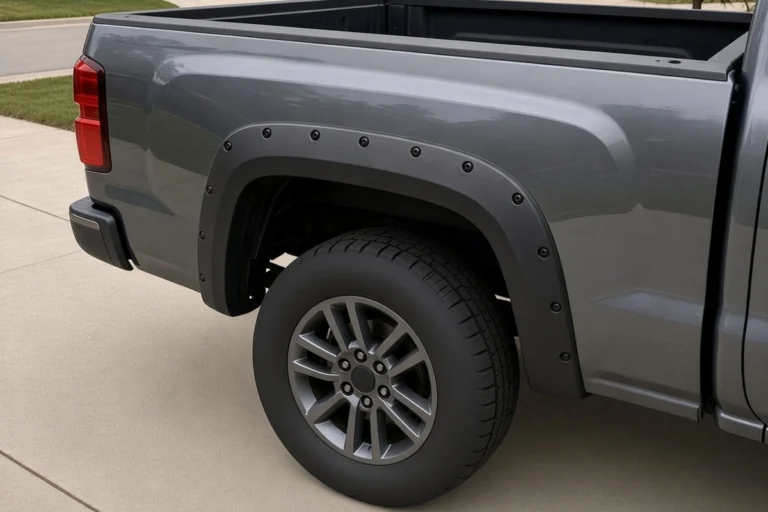
For a wider view of how aftermarket exterior parts compare with factory pieces, see OEM vs aftermarket exterior accessories. Multi-piece aero programs sit under our auto body kits and aero parts category. If the plan is a wider stance rather than only a lower side line, see what a widebody kit is, including how bolt-on overfenders differ from cut-fender kits, or what fender flares are if you only need more tire coverage at the arch.
Which materials are used for side skirts?
Material choice is a trade-off among impact behavior, paint work, weight and cost. There is no single best material for every car.
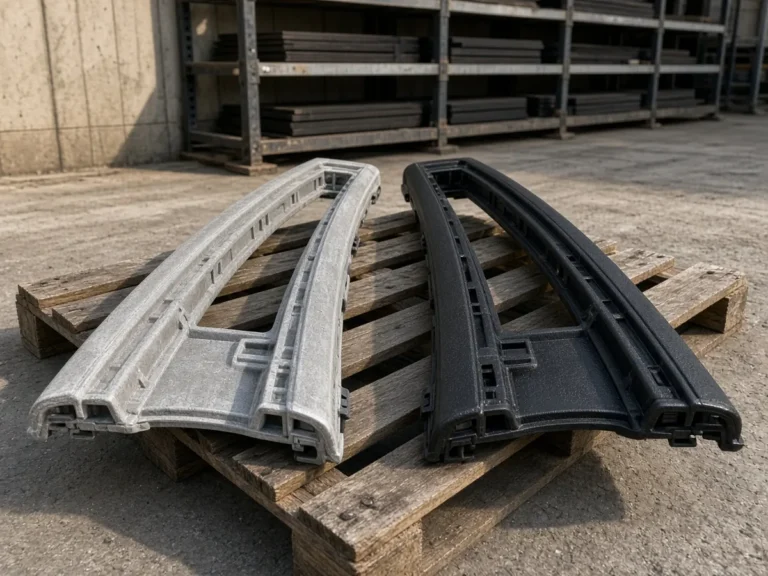
Typical production for plastic exterior styling parts such as side skirts involves injection molding in ABS, PP or ASA, then trimming, surface prep, paint or a molded-in or film finish, and a try-fit check for gap and hole position. Factories in this category usually inspect color, gloss, sink marks, mounting holes and the gap to the door and wheel arch on a representative body.
If you are comparing resin choices in more depth, start with our material notes on ABS and PP/TPO. For a spoiler-focused materials comparison that overlaps on ABS, fiberglass and carbon fiber trade-offs, see carbon fiber vs ABS vs fiberglass spoilers — use it for material behavior, not as a skirt fitment guide. Process context for molded exterior parts is also covered in automotive injection molding.
How do you check fitment before you buy or install?
Fitment is the difference between a skirt that looks factory and one that looks taped on. Check the vehicle data and the physical sill before you order, then confirm mounting method and clearance.

Use this checklist:
- Year, make, model, body code and door configuration. A two-door and a four-door often need different lengths. Facelifts change rocker moldings even when the nameplate stays the same.
- Measure the sill. Note curvature at the doors, height of any factory cladding, jacking-point cutouts and how the skirt must clear the rear wheel at full lock and bump.
- Decide depth vs ground clearance. Measure the lowest point you already scrape (often the front lip or exhaust). A skirt that hangs lower than that point will scrape mid-wheelbase on crests and steep driveways.
- Mounting method. Mechanical fasteners into existing holes or supplied brackets hold better long-term than adhesive alone on a full-length panel. Acrylic foam tape is common as a secondary seal or for light extensions; clean, dry, warm panels matter.
- Paint and finish plan. Paint-ready parts need primer compatibility. Gloss black and carbon-look finishes show waves and gaps more than body color.
- Reject universal if gaps matter. If the listing cannot name your exact vehicle, expect trimming and visible mismatch.
Install difficulty ranges from peel-and-stick extensions to full bolt-on sets that need two people to align a long panel. After install, check door swing, jack access and whether the skirt edge can trap water against bare metal. Retorque or reseat fasteners after the first drives. Lowered cars amplify every mistake: a 10 mm deeper edge that looked fine on a stock car becomes a weekly scrape when the ride height drops.
Risks and exceptions: scraping, legality and what skirts will not do
Side skirts will not turn a stock daily driver into a race car. Alone, on a high ride height with a rough underbody, the aero gain is usually modest. Skirts help most as part of a matched lower line and at higher speed. Marketing claims that skip those conditions oversell the part.
Scraping is the everyday risk. Because skirts sit in the middle of the wheelbase, they often touch first on speed bumps, driveway aprons and steep parking ramps. Rigid fiberglass and carbon edges crack; flexible PU and some PP parts may bend and recover. Either way, repeated scrapes chew the finish and can loosen fasteners. If you already bottom the front lip, adding deep skirts without measuring is a bad bet.
On legality in the United States, there is no single federal rule that sets a ground-clearance number for aftermarket side skirts. Most specialty exterior parts are not covered by an equipment Federal Motor Vehicle Safety Standard of their own.
What does apply federally is the “make inoperative” rule: a manufacturer, distributor, dealer, rental company or motor vehicle repair business may not knowingly make inoperative a device or element of design that was installed to comply with an applicable federal motor vehicle safety standard 1. In plain terms, a commercial install should not disable required safety equipment or degrade a compliant design feature while fitting a skirt.
States and inspection programs add their own rules. As one example, Utah’s vehicle inspection rules for the body tell inspectors to reject vehicles when metal, molding or other body parts protrude in a way that creates a hazard, and when parts or accessories are not properly secured 2. Other states use different wording for width, hazardous projections or modified vehicles.
Industry overviews of aftermarket regulation note that states often regulate areas such as suspension height and similar equipment topics when no identical federal design rule exists 3. Always check the rules where the car is registered and inspected. Export markets can be stricter still; some overseas inspection regimes treat body kits and side skirts as modifications that must avoid hazardous external projections, must not weaken structure and must not block lamps 4.
- Do not use a skirt to hide active rocker rust; repair the metal first.
- Do not block jacking points or side sensors/cameras if the vehicle has them in the rocker area.
- Do not assume a track-depth skirt is street-legal or driveway-safe without measuring.
- Do not treat adhesive-only full-length skirts as permanent on rough roads without a mechanical backup the maker specifies.
What should B2B buyers put in a side skirt specification?
Distributors, tuning shops and private-label brands lose money on skirts for the same few reasons: wrong body code, wavy paint, weak clips, and packaging that cracks corners in transit. A clear RFQ prevents most of that.
Send suppliers a checklist like this:
- Vehicle list — year, make, model, body code, doors, and photos of the rocker/cladding on a real car.
- Design intent — OEM-plus, track-flat, flared; target depth below the sill; whether left/right are mirrored or asymmetric.
- Material and wall thickness — ABS, PP/TPO, PU, fiberglass or CF; nominal thickness; UV/weathering expectations.
- Mounting — clip map, bracket drawings, hole positions, whether drilling is allowed, and adhesive brand/grade if used.
- Finish — primed paint-ready, gloss black, carbon-look; paint process and who paints (factory vs local shop).
- QC gates — gap photos on a try-fit body or buck, sink-mark criteria, color/gloss targets, fastener torque or clip retention checks.
- Packaging — edge protectors, labeled left/right, hardware kits bagged, install sheet with torque and surface-prep notes.
- Compliance language — confirm the part is intended as exterior trim/aero, and that recommended install steps do not make required safety devices inoperative 1.
Ask for a sample approval path: dry-fit photos along the full door length, clearance at the rear tire, and a scrape-risk note if the design hangs below the factory sill. For molded programs, align early on whether you need vehicle-specific development from a scan or drawing set rather than adapting a near-fit tool. We start that work with 3D scanning and reverse engineering of the sill and door line.
Conclusion
Side skirts are the lower side panels that run between the wheels to shape airflow, complete the body line and give the rocker area some shielding. They are not the same as the structural rocker panel, and they are not a substitute for fixing rust or crash damage in the sill.
Choose type and material for the car you have: model-specific parts for flush fit, flexible materials when scrape risk is high, and matched depth so the skirt does not become the first thing that hits a driveway. Pair skirts with a coherent front and rear lower line when aero matters, and treat legality as a local check — federal make-inoperative rules plus state projection and securement rules — rather than a single clearance number.
For shops and importers, the specification is the product: vehicle data, mounting map, material, finish and try-fit evidence. That is what separates a skirt that sells once from a SKU that comes back.
Next step
Yirox supplies side skirts and related body-kit exterior parts from its own injection molding factory, and we check drawings, vehicle lists and fitment details with you before sampling. Browse side skirts or send your model list through our sourcing solutions path.
Frequently asked questions
What are side skirts on a car?
They are panels fitted along the lower sides between the front and rear wheels. Their jobs are airflow management at the sides, a lower visual body line and some protection of the rocker area from debris.
Are side skirts the same as rocker panels?
No. Rocker panels are structural body parts under the doors. Side skirts are usually add-on or factory styling/aero pieces that attach along that area.
Do side skirts improve performance by themselves?
On many stock street cars the change is small. Skirts help more when ride height is low, the underbody is relatively smooth and they work with a front lip or splitter and a rear diffuser.
Are universal side skirts worth buying?
They can work for temporary or low-risk looks, but full-length universals often show gaps and need trimming. Model-specific skirts are the better choice when fit quality matters.
Will side skirts scrape on driveways?
They can, especially deep designs on lowered cars, because they sit mid-wheelbase where crests and aprons touch first. Measure your current lowest point before you choose depth.
Are aftermarket side skirts legal in the US?
There is no single federal clearance number for skirts. Commercial installers must not make required safety devices inoperative, and states may reject hazardous protrusions or loose parts. Check your state rules.
References
- 49 U.S.C. § 30122 — Making safety devices and elements inoperative (Legal Information Institute).
- Utah Admin. Code R714-160-16 — Body (example state inspection rules on protruding and unsecured body parts).
- SEMA — Federal Regulation of Aftermarket Parts (industry overview of FMVSS scope and state equipment rules).
- NZTA vehicle inspection criteria — body kits and components (external projections, structure, lamps; relevant for export markets).