



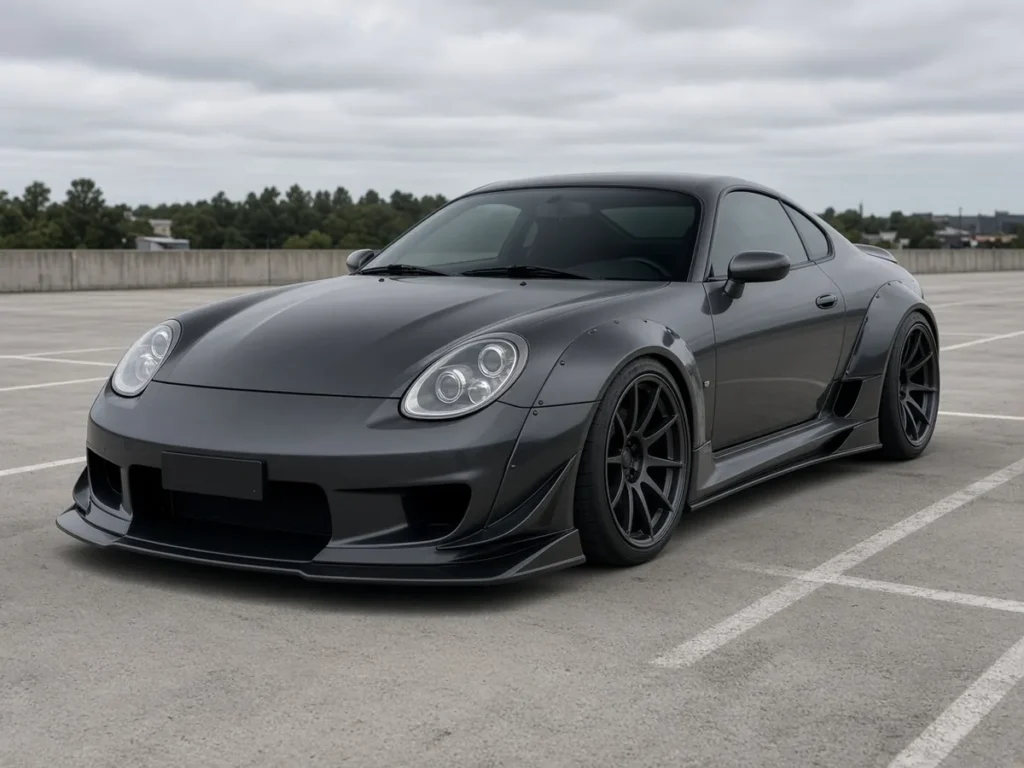
A widebody kit is a set of wider fenders or overfenders, plus matching skirts and bumper extensions, that makes a car’s body wider so it can run wider wheels and tires. Some kits bolt over the factory fenders; most need the original arches cut. The widebody kit creates room. The wheels and tires you fit decide grip and stance.
Scope: this guide explains widebody kit types, materials, wheel fitment and buying checks. Individual parts have their own guides: side skirts explained, front lip vs splitter vs diffuser and what wheel offset means.
What is a widebody kit, and what parts come in one?
A widebody kit is an exterior conversion that moves the outer edge of the wheel arches outward, so the car can carry a wider track of wheels and tires without the tires sticking out past the body. The word “widebody” describes the result: a car whose body is wider than the standard model. A kit is the set of parts that gets you there on a car that left the factory narrow.
The core of every kit is the arch extension. On some kits that is a pair of front and rear overfenders, which are add-on panels that sit over the factory fender and quarter panel. On others it is a complete replacement front fender and a rear quarter extension that is bonded or bolted into the body. A quarter panel is the rear body side panel around the rear wheel; on most cars it is welded to the body shell, which is why rear widening is usually the harder half of the job.
Around the arches, a full kit adds parts that make the new width look intentional rather than bolted on. Without them, the car looks wide at the wheels and narrow everywhere else.
| Part | What it does | Included in |
|---|---|---|
| Front overfenders or wide front fenders | Push the front arch out to cover a wider front wheel and tire, with room to steer | Almost every widebody kit |
| Rear overfenders or quarter extensions | Cover the wider rear wheel; usually the largest visual change | Almost every widebody kit |
| Side skirts (rocker extensions) | Fill the gap between the wider front and rear arches along the sill | Most full kits |
| Front bumper extensions or a wider lip | Blend the front arches into the bumper line | Most full kits |
| Rear bumper extensions or diffuser | Blend the rear arches into the rear bumper | Most full kits |
| Spoiler or wing | Styling and, on track cars, rear downforce | Optional |
| Hardware: rivet nuts, bolts, brackets, sealing strip | Holds the panels and closes gaps to the body | Should be listed in every kit; check before you buy |
If a listing calls a set of lips and skirts a “widebody kit” but has no arch parts, it is a regular body kit. Our body kits and aero parts range shows how the two are usually sold.
Widebody kit vs fender flares vs overfenders vs a regular body kit
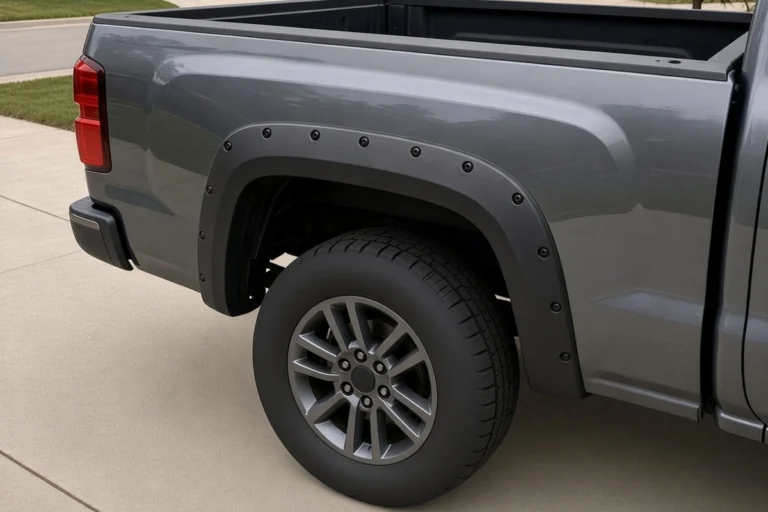
The difference is how much width each one adds and how much of the body it changes. Fender flares and overfenders are both arch extensions, but a flare is usually a narrow trim strip around the wheel opening, while an overfender is a larger panel that covers more of the fender. A widebody kit is the full system of arches plus the skirts and bumper pieces that tie them together. A regular body kit keeps the factory width.
| Option | Added width | Cutting | Typical look | Best fit for |
|---|---|---|---|---|
| Regular body kit (lip, skirts, diffuser, spoiler) | None at the arches | No | Lower, sharper factory shape | Owners who keep stock wheels |
| Fender flares | Small; covers a little extra tire | Usually no | Trim around the arch; common on pickups and SUVs | Slightly wider tires, tire coverage, stone protection |
| Overfenders (bolt-on arches) | Moderate to large | Often needed for real wheel clearance | Visible arch panels, often with exposed bolts or rivets | Stance builds, track-style cars |
| Full widebody kit | Moderate to large, front and rear | Usually | Car looks redesigned, not decorated | Owners committed to wider wheels long term |
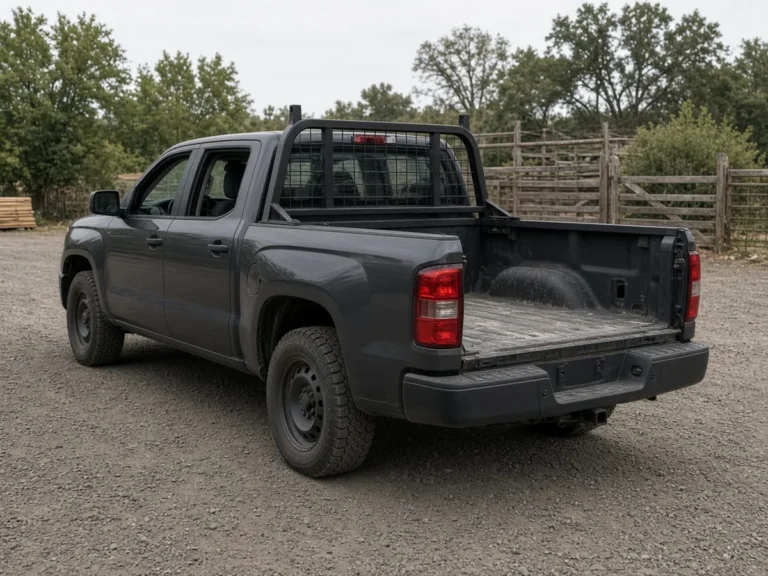
Pickups and off-road vehicles mostly use flares, because they need tire coverage for taller, wider tires rather than a new body shape. Sports cars and sedans are where full kits are common. If you only want a lower look, a set of side skirts and a lip do more for the profile than flares do.
Bolt-on, cut-fender or replacement panel: which kind of widebody is it?
“Bolt-on” describes how the panels attach, not whether the car gets cut. Many kits sold as bolt-on still need the factory arch lip trimmed so a wider wheel can move up and turn without hitting metal. Before you buy, ask the seller one question: what has to be cut, and can the car go back to stock?
| Kit type | How it attaches | What gets cut | Reversible? | Paint | Who should fit it |
|---|---|---|---|---|---|
| Riveted or bolted overfenders, no cutting | Rivets, bolts or rivet nuts through the factory fender | Nothing, but holes are drilled | Partly: the holes remain | Optional; many are left black or wrapped | Experienced DIY or shop |
| Cut-and-bolt overfenders | Same fasteners, over a trimmed arch | Factory fender and quarter panel lip, sometimes the inner liner | No, without new panels and bodywork | Usually painted to match | Body shop |
| Replacement fenders and quarter extensions | Front fender swaps on the factory mounts; rear parts are bonded and blended | Rear quarter panel opening | Front yes, rear no | Painted to match | Body shop |
| Factory widebody package | Designed and installed by the carmaker | Done at the factory | Not meant to be | Factory paint | Dealer order |
| Welded metal widebody | Steel or aluminum welded into the body | Large sections of the arches | No | Full respray of the area | Specialist fabricator |
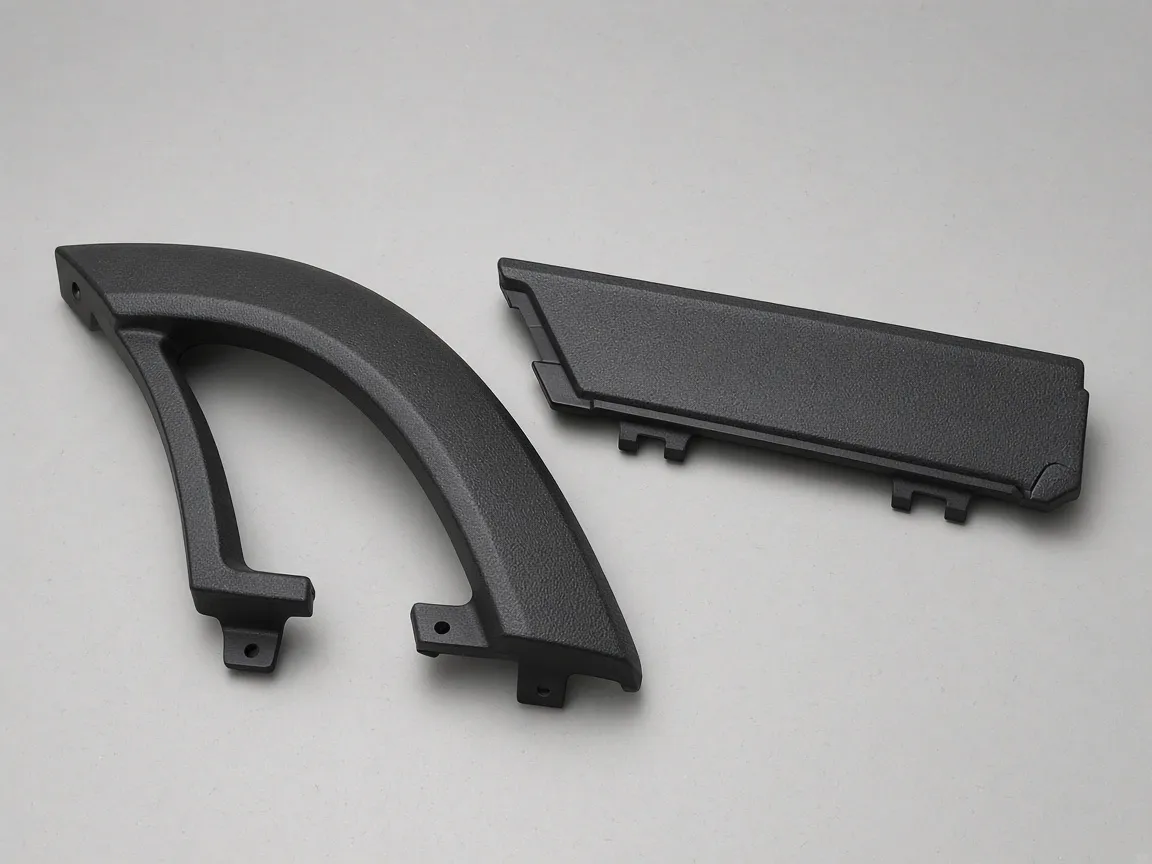
For a daily car, the riveted no-cut type is the only one you can undo without a body shop. Even then, the drilled holes stay in the factory panels, so plan as if any widebody is permanent and decide on the wheel spec before anything is drilled.
What does a widebody kit actually change on the car?
The kit itself adds no grip. It makes space for wider wheels and tires and a wider track, and those are what change grip and handling. Track width is the distance between the centers of the left and right tires on one axle. A wider track and wider tires reduce how much the car leans on its tires in a corner and give the tread more contact area.
The best public example comes from a carmaker. Dodge’s 2018 Challenger SRT Hellcat Widebody used fender flares that add 3.5 inches to the car’s overall width. Under them it ran 20 × 11-inch wheels with 305/35ZR20 tires, and Dodge reported a lap about 2 seconds quicker on a 1.7-mile road course than the standard Hellcat 1. Dodge also fitted a new electric power steering system on that model 1, which shows that a wider tire setup is tuned as a package, not just covered by new arches.
There are costs. Wider panels and tires add weight and frontal area, wider tires can make steering heavier and follow ruts more, and a lower, wider car is harder to park and to clear curbs with. A widebody is a trade of practicality for grip and presence, so it makes the most sense on a car that is driven hard or shown, not one that only commutes.
Which cars get widebody kits?
Kits are most common on rear-drive coupes and sedans with a strong owner community, such as muscle cars and Japanese sports cars, because the market is big enough for kit makers to develop and tool parts for one body. Full-size pickups get widebody and flare kits too, mainly to cover larger off-road tires. Some carmakers sell a factory widebody, as the Challenger example shows. For less common models, kits are rarer and usually cost more, because tooling is spread over fewer sales.
How much width do you gain, and how do you match wheels to it?
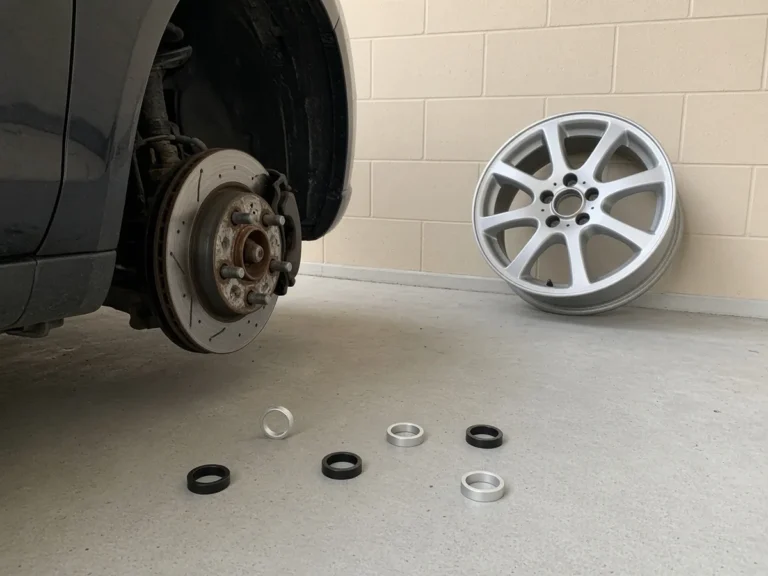
Start from the kit’s added width per side, then choose wheel width and offset so the tire sits inside the new arch with clearance at full steering lock and full suspension compression. A kit does not fill itself: if you keep stock wheels, they will sit deep inside the new arches and the car will look unfinished.
Offset is the distance in millimeters from the wheel’s centerline to its mounting face; a lower or negative offset pushes the wheel outward. Our guide to wheel offset and backspacing covers the definition. For widebody planning, one formula does most of the work:
- Outer lip moves out by (new width − old width) ÷ 2 − (new offset − old offset).
- Inner lip moves in by (new width − old width) ÷ 2 + (new offset − old offset).
Widths go in millimeters (1 inch = 25.4 mm). A kit that adds 3.5 inches overall, as on the factory example above 1, gives about 1.75 inches, or 44 mm, per side if the extra width is split evenly.
| Change (example) | Outer lip | Inner lip | What it means under a 44 mm-per-side kit |
|---|---|---|---|
| 9.5 in → 11 in wheel, offset +20 → +20 mm | 19 mm further out | 19 mm further in | Outside still 25 mm short of the new arch; inside clearance to the strut drops by 19 mm |
| 9.5 in → 11 in wheel, offset +20 → +5 mm | 34 mm further out | 4 mm further in | Fills most of the arch; check tire bulge and fender clearance at full lock |
| 9.5 in → 10.5 in wheel, offset +20 → 0 mm | 33 mm further out | 7 mm further out | Similar outside position with more inside clearance, but more scrub and steering effort |
Example figures, not a measured vehicle. Tire choice matters as much as the wheel: a wider tire bulges past the rim, so leave margin rather than lining the rim up exactly with the arch. Test-fit one corner with the car loaded, the wheel at full lock both ways and the suspension compressed before you order a full set.
Are widebody kits street legal?
A widebody kit is not illegal by itself in most places, but the result must still cover the tires and pass local equipment rules. The rules differ by market, so check where the car is registered. Two real examples show what inspectors look at:
- Louisiana’s vehicle inspection rules say tires shall not extend beyond fenders or attachments by more than 1 inch 3. A kit that is narrower than the new wheel setup can push a car out of compliance.
- In the EU, passenger cars are type-approved against wheel-guard rules: within the sector from 30° in front to 50° behind the wheel center, the guard must be wide enough to cover the full tire width, taking into account the tire envelope (maximum width and diameter) and the widest wheel and tire combination the maker specifies 2. Changes made after registration are judged by the national inspection body, so get approval before you drive on public roads.
Overall vehicle width limits, insurance disclosure and roadworthiness checks also apply in some countries. If a kit seller cannot tell you the finished width per side, you cannot check any of them.
Which widebody kit material is best?
For most street cars, the best material is the one that fits the car accurately and survives impacts and temperature swings: well-made molded plastic or good fiberglass usually beats a cheap kit in any material. Material sets the price, the prep work before paint, the weight, and how the panel behaves on the car for years.
| Material | How it is made | Strengths | Watch-outs | Typical use |
|---|---|---|---|---|
| Fiberglass (FRP) | Glass fiber and resin laid in an open mold | Cheap tooling, easy to repair, suits low-volume kits | Quality varies; can crack on impact; often needs filling and reshaping before paint | Most aftermarket widebody kits for niche models |
| Polyurethane (PU) | Cast or reaction-molded | Flexible, absorbs knocks | Heavier; needs more fixing points; paint prep matters | Bumper-style parts, some flares |
| ABS | Injection molded or vacuum formed | Consistent shape part to part, takes paint well | Higher thermal growth; impact strength drops in the cold | Molded overfenders and kits for popular models |
| PP / TPO | Injection molded | Tough, flexible, can be molded in color without paint | Needs adhesion promoter if painted; tooling cost needs volume | OEM-style flares, arch trims and molded kits |
| Carbon fiber (CFRP) | Carbon fabric and resin, often vacuum-bagged | Light and stiff | Expensive; visible weave must be flawless; impact damage is costly | Show and track cars |
| Steel or aluminum | Hand-formed and welded | Durable, truly custom | Weeks of skilled labor; not removable | One-off builds |
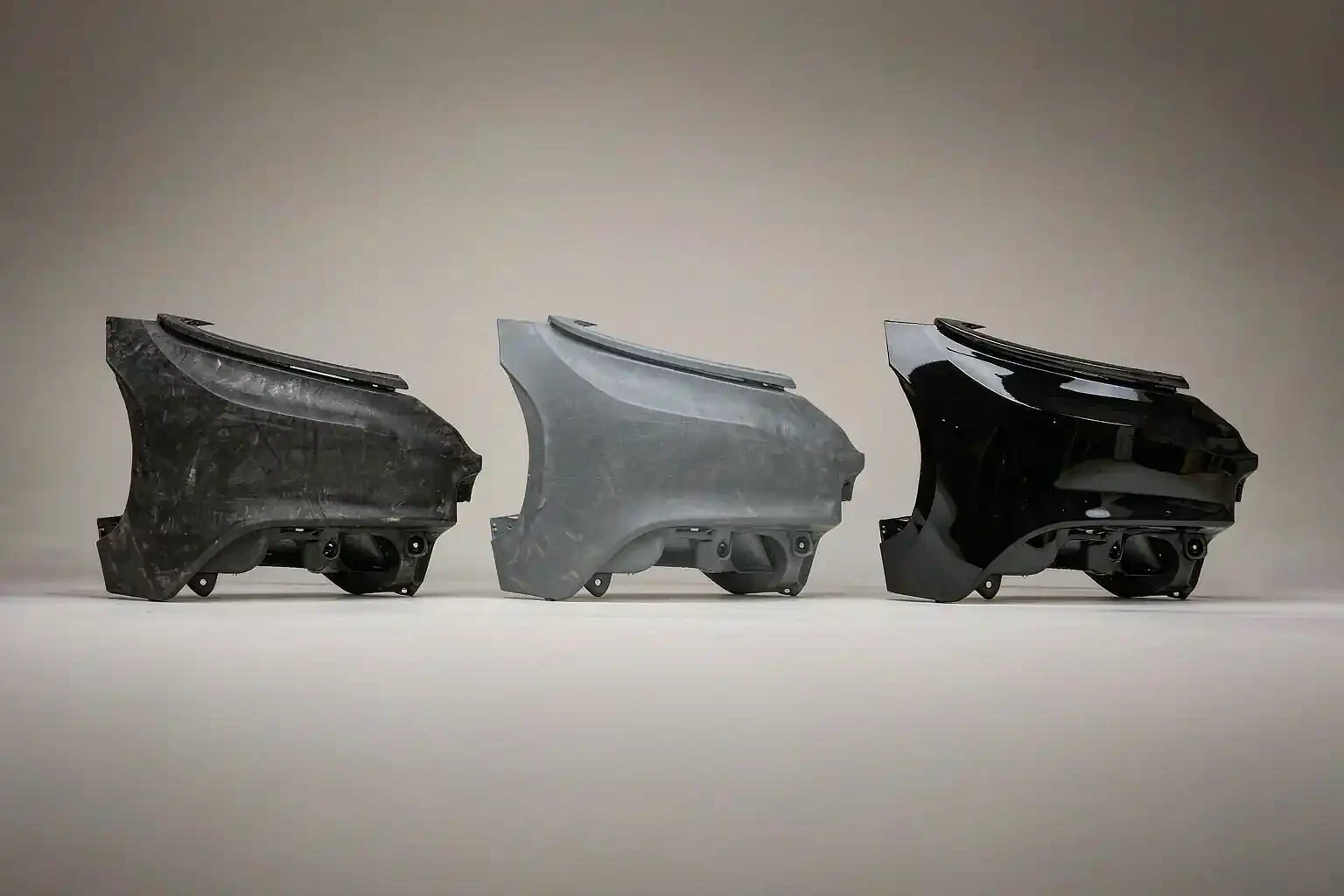
Plastic panels also move with temperature far more than the steel body under them. SABIC lists a coefficient of linear thermal expansion (CLTE, how much a material grows per degree) of 8.82 × 10⁻⁵ per °C for its CYCOLAC MG47 ABS 4. LyondellBasell lists 50 × 10⁻⁶ per °C in the flow direction for Hifax TRC 2029P E, a 30% talc-filled polypropylene made for large exterior parts 5. Over a 90 °C swing, from a −30 °C winter night to a 60 °C sun-soaked panel, a 1,000 mm arch flare would grow by roughly:
- ABS: 0.0000882 × 1,000 mm × 90 °C ≈ 7.9 mm.
- Talc-filled PP: 0.000050 × 1,000 mm × 90 °C ≈ 4.5 mm.
Example figures, not a measured part; the datasheets quote these values over narrower test ranges. The point is the size of the movement. A panel locked down with tight, round holes at both ends has to buckle or crack to absorb several millimeters, which is why well-designed kits use slotted holes, large washers and fasteners that are snug rather than crushed. Cold makes it worse: the same ABS grade drops from 22 kJ/m² notched Izod impact strength at 23 °C to 8 kJ/m² at −30 °C 4, so a curb strike or an over-tightened bolt in winter is more likely to crack it.
Molded kits make sense when a model sells in volume, because the injection mold is a fixed cost spread over many sets; fiberglass suits small runs. Our PP and TPO materials guide explains why molded-in-color polypropylene is used for exterior trim, and the carbon fiber vs ABS vs fiberglass comparison covers the same choice for spoilers.
How is a widebody kit installed, and when do the fenders get cut?
A widebody install is mostly measuring and fitting; drilling and cutting come last. The fenders are cut when the new wheel and tire would hit the factory arch lip or inner liner under steering or suspension travel. A typical sequence:
- Fit the final wheels and tires first, set the ride height and alignment you will drive with, and mark where the tire comes closest to the arch at full lock and compression.
- Dry-fit every panel with tape or clamps. Check left-right symmetry, gaps to doors and bumpers, and that the arch centers line up with the wheel centers.
- Mark the cut line inside the new arch, leaving a margin for the mounting flange and clearance to the tire.
- Cut and seal. Trim the factory lip and liner, deburr, and protect bare steel with primer and seam sealer so the cut edge does not rust behind the panel.
- Drill and fasten. Use rivet nuts or the supplied hardware, slot holes where the panel needs to move, add washers, and tighten evenly without crushing the plastic.
- Seal and finish. Close gaps with the supplied strip or a flexible sealant, refit liners, paint or wrap, then recheck alignment and clearance after a test drive.
Owners on body-shop forums describe the failure this avoids: panels bought on a used car that had warped at every fastening point because the previous owner overtightened the bolts, and the distortion stayed after the bolts were loosened. Torque is not a substitute for fit; a panel that only meets the body when pulled down hard will crack or ripple later.
Riveted no-cut overfenders are a reasonable DIY job for someone with good tools and patience. Cut-and-bolt and bonded quarter extensions belong in a body shop, because cutting, rust protection and paint matching are hard to redo. Labor time varies widely with the kit’s fitment quality, so ask the shop to see the parts before quoting.
What does a widebody build cost, and what drives the price?
The kit is often the smaller part of the bill; prep, paint, labor, wheels and tires make up the rest. Prices vary so much by car, material and region that a single number would mislead you. Instead, price each line below for your car before you commit.
| Cost line | What drives it | How to keep it down |
|---|---|---|
| The kit | Material, number of pieces, how common the car is | Buy a kit with fitment photos on your exact model and year |
| Prep before paint | Surface quality and fit; poor fiberglass can need hours of filling | Ask the supplier for primed parts and a fitment guarantee |
| Cutting and fitting labor | Kit type (no-cut vs cut), panel accuracy | Let the shop inspect the parts before quoting |
| Paint or wrap | Number of panels, color matching | Molded-in-color black or a wrap can replace paint on some kits |
| Wheels and tires | Wider, lower-offset wheels and wider tires | Choose the wheel spec before the kit is installed |
| Suspension and alignment | Ride height, camber, clearance at full lock | Budget an alignment after the build and after any height change |
| Hardware, liners and sealing | Rivet nuts, brackets, liner trimming | Check what the kit includes before ordering |
A cheap kit that needs extra fitting hours can end up costing more than a better kit, so compare the total, not the sticker price.
Risks and exceptions: resale, insurance, daily driving and winter
The biggest risk is that a widebody is hard to undo, so a mistake in kit or wheel choice is expensive to fix. Weigh these before you order:
- Resale: a cut widebody narrows the pool of buyers. Some will pay for a well-executed build; many will not, and a bad fit lowers the value.
- Insurance and registration: body modifications are often expected to be declared, and repair costs for custom panels are higher. Ask your insurer before the work, not after a claim.
- Daily use: wider tires follow grooves in the road, a wider car is harder to park, and low front panels scrape on ramps.
- Winter and road salt: plastic panels are more brittle in the cold 4, and badly sealed cut edges can rust behind the arches.
- Exceptions: no-cut riveted overfenders and front fenders that replace the factory part on the original mounts can be removed later; factory widebody packages carry the carmaker’s own validation.
- Legal limits: tire coverage and width rules apply after the change, as shown in the legal section above.
Is a widebody kit worth it? A quick decision checklist
A widebody kit is worth it when you have already decided on a much wider wheel and tire setup and plan to keep the car. If you are unsure, start with wheels, tires and a lip and skirts on the stock body. Tick through this list:
- I know the wheel width, offset and tire size I want, and they do not fit under the stock arches.
- The kit maker states the added width per side and shows the kit fitted on my exact model and year.
- I know which panels get cut, and I accept that the car will not go back to stock.
- The kit includes the fasteners and sealing parts, or I know what to buy.
- I have a shop quote for prep, fitting and paint, not just the kit price.
- The finished car will still cover its tires under my local rules.
- I will keep the car long enough that resale value is not my main concern.
If two or more answers are “no”, fender flares, wheel spacers within the wheel maker’s limits, or a regular body kit are the safer first steps. When you do buy, read owner reviews that show the gaps on a finished car, not just studio photos.
Buying widebody or arch kits for a shop or resale: what to check
For a shop or distributor, a widebody kit is only sellable if it fits the listed car without hours of rework, so the RFQ and sample stage should test fit, not just looks. Use this checklist when you source kits or arch parts:
- RFQ details: make, model, body style, years and trims; the target wheel width, offset and tire size; the added width per side; material; finish (raw, primed, molded-in black, painted); and whether the kit is no-cut or cut.
- Hardware list: number and type of fasteners, brackets, rivet nuts and sealing strip per car, and whether holes are pre-drilled or slotted.
- Sample fit on a real car: left-right symmetry, gaps to doors and bumpers, arch center over wheel center, and contact points at full lock.
- Surface and material checks: sink marks and flow lines on molded parts, pinholes and fiber print on fiberglass, wall thickness at mounting points, and a cold-handling check for ABS parts.
- Packaging: large thin panels need rigid support, corner protection and separation between pieces; deformation in transit becomes a fitment complaint.
- Documentation: a printed or digital fitment guide with the cut line, so customers and installers do not guess.
Molded kits for volume models are a different product from hand-laid fiberglass kits: they cost more to start because of the mold, but every set comes out the same shape. Examples in our range include a full PP exterior kit for a compact hatchback, a gloss-black sedan body kit and an off-road style kit with wheel-arch trims. A reseller can test one model before stocking a range, since we offer low MOQ on selected items.
Conclusion
A widebody kit makes room for a wider wheel and tire setup by moving the arches outward and tying them into the rest of the body with skirts and bumper extensions. It is different from fender flares, which add a little tire coverage, and from a regular body kit, which keeps the factory width. The real decision is not the look of the arches but the wheel spec they have to cover, how much of the car gets cut, and whether you can live with that permanently.
Plan the build backwards. Fix the wheel width, offset and tire first, check the result against your local tire-coverage rules, and choose a kit whose added width per side matches. Pick the material for fit and durability rather than the lowest price, allow plastic panels to move with temperature, and get a shop to quote the whole job, including prep, paint and alignment.
Next step
Write down your target wheel and tire spec and the width per side you need, then compare kits against that number. Yirox molds body-kit and arch parts in PP and ABS in its own injection molding factory and can develop vehicle-specific overfenders as an OEM/ODM project; send your model and target width through our sourcing page or browse current body kits.
Frequently asked questions
Are widebody kits legal?
Usually yes, as long as the finished car still covers its tires and meets local equipment rules. Louisiana, for example, does not allow tires to extend more than 1 inch beyond the fenders or attachments.
Do you have to cut your fenders for a widebody kit?
Not always. Some riveted overfenders mount over uncut fenders, but most kits need the factory arch lip trimmed so wider wheels can steer and compress without rubbing.
Do widebody kits need wider wheels?
Yes, in practice. The kit only creates space, so the wheels need more width or a lower offset to fill the new arches; stock wheels will sit too far inside.
Can a widebody kit be removed later?
Only some can. No-cut overfenders and bolt-on replacement front fenders can come off, though drilled holes remain; kits fitted over cut quarter panels cannot be undone without bodywork.
Is a widebody kit the same as fender flares?
No. Fender flares are narrow arch extensions that add a little tire coverage, while a widebody kit widens both axles and adds matching skirts and bumper pieces.
References
- FCA US (Stellantis Media) — New Challenger SRT Hellcat Widebody Completes Dodge’s Most Powerful Muscle Car Lineup Ever for 2018, press release, June 27, 2017 (width, wheels, tires, lap time, steering).
- Commission Implementing Regulation (EU) 2021/535, Annex V Wheel guards, Part 2 points 1.1 and 2.2.1 (EUR-Lex).
- Louisiana Administrative Code, Title 55, Part III, § 813 — Required Equipment, U. Fenders (Cornell LII).
- SABIC — CYCOLAC™ Resin MG47 Technical Data Sheet (CTE −40 °C to 40 °C, ASTM E831; notched Izod impact, ISO 180/1A, +23 °C and −30 °C).
- LyondellBasell — Hifax TRC 2029P E product data (30% talc-filled PP copolymer; CLTE, flow, 23 °C to 80 °C).