




A useful EV charging accessories specification sheet identifies the exact product and revision, compatible connector or equipment, electrical and environmental ratings, materials, dimensions, installation or handling requirements, documents, packaging, and traceability. It should state conditions and exclusions instead of hiding them behind a generic rating.
Buyers, installers, and distributors often receive a datasheet that looks complete but cannot answer the questions that matter at the point of purchase or installation. Which exact product revision does the file describe? Does “compatible” mean a tested vehicle, a connector family, or only a similar interface? Is the rating continuous, conditional, or limited to a specific installation? Which manual, label, declaration, and test report belong to the same SKU?
The right specification sheet is a controlled product record. It lets engineering evaluate fitment, quality review evidence, sales describe the product accurately, installers plan the work, and procurement compare supplier responses. The EV charging accessories buying guide provides category-level selection context. This article shows what to verify in the product data before a sample, quotation, listing, or purchase order is approved.
Table of Contents
- What Is an EV Charging Accessories Product Specification Sheet?
- What Should an EV Charging Accessories Specification Sheet Contain?
- How Should Product Identity and Revision Be Verified?
- How Should Connector and Fitment Information Be Verified?
- Which Electrical and Environmental Ratings Need Conditions?
- What Materials, Dimensions, Installation, and Handling Details Matter?
- Which Documents, Packaging, and Traceability Fields Should Be Included?
- How Should Buyers Verify a Specification Sheet?
- How Should Revision Control Be Managed After Approval?
- What Copyable Product Specification Sheet Template Can Buyers Use?
- Conclusion: Approve the Data Pack With the Product
- Frequently Asked Questions
- References
What Is an EV Charging Accessories Product Specification Sheet?
An EV charging accessories product specification sheet is a controlled technical and commercial reference that defines what a product is, where it fits, how it is rated, how it should be installed or handled, what evidence supports it, and how its revision is controlled. It is more useful than a catalogue description because it records conditions, scope, and exclusions.
The sheet may be a datasheet, product data page, technical drawing pack, or controlled specification form. The format matters less than the information and its relationship to the exact product. A complete sheet should allow a reviewer to answer:
- What is the product, SKU, model, revision, and included configuration?
- Which vehicle, inlet, charger, outlet, station, cable, holder, cap, cover, or mounting surface does it fit?
- Which AC or DC mode, voltage, current, phase, signal, or locking conditions apply?
- What are the operating and storage boundaries?
- What materials, dimensions, weight, bend radius, load, and clearances matter?
- What does the installer need to know about mounting, handling, storage, and limitations?
- Which documents, labels, reports, declarations, listings, packaging, and traceability records belong to the product?
- What changes require a new revision, sample, approval, or customer notification?
Keep the sheet specific to the product family and configuration. A cable, adapter, connector cap, wall holder, and mounting bracket need different fields. A generic “EV accessory” form can be a starting template, but it should not replace the product-specific information that installers and buyers need.
What Should an EV Charging Accessories Specification Sheet Contain?
An EV charging accessories specification sheet should contain eight linked sections: identity and revision, connector and fitment, electrical ratings, environment, materials and dimensions, installation and handling, documents and packaging, and traceability and change control.

Use this review map:
| Section | Minimum information to verify |
|---|---|
| Identity and revision | Product name, SKU, model, revision, date, manufacturer or supplier owner, and included components |
| Connector and fitment | Connector family, interface, direction, vehicle or equipment references, keying, locking, and exclusions |
| Electrical ratings | AC or DC mode, rated voltage, current, phase, power basis where relevant, communication or control conditions |
| Environment | Operating and storage temperature, indoor or outdoor use, UV, rain, dust, corrosion, cleaning, and ingress boundary |
| Materials and dimensions | Cable and housing materials, length, diameter, weight, bend radius, critical dimensions, clearances, and tolerances |
| Installation and handling | Mounting method, hole pattern, fasteners, load, cable management, storage, handling, and safety instructions |
| Documents and packaging | Datasheet, drawing, manual, label, declaration, certificate or listing, test report, packaging, barcode, language, and bundle contents |
| Traceability and change control | Lot or batch, serial or date code, revision history, change notification, revalidation, and approval owner |
The sheet should state whether a field is measured, declared, tested, calculated, or provided for reference. If a value is not applicable, mark it N/A with a reason. A blank field creates uncertainty about whether the supplier forgot to answer or the feature was not assessed.
How Should Product Identity and Revision Be Verified?
Product identity and revision should be verified by matching the specification sheet to the physical sample, quotation, label, drawing, document pack, packaging, and purchase-order line. The buyer should be able to identify one controlled configuration without combining fragments from different files.
Check:
- Product name, supplier part number, buyer SKU, model, and revision.
- Configuration, connector pair, cable length, color, material, hardware, accessories, and bundle contents.
- Manufacturer, factory, document owner, and contact for technical changes.
- Effective date, document number, revision history, and approval status.
- Relationship between the sheet and the sample or product photographs.
- Relationship between the sheet and every supporting document.
- Product variants that are similar but not interchangeable.
Ask the supplier to state the exact revision covered by the datasheet and drawing. A file name such as EV-cable-final.pdf is not revision control. The same product name can be used for multiple lengths, connector combinations, current ratings, colours, or packaging versions.
For cable assemblies, also verify the identity of the connector ends, cable construction, strain relief, marking, and included protective parts. For holders or mounting accessories, verify the model or interface drawing, hole pattern, fasteners, surface, and load assumptions. For adapters, verify the source interface, destination interface, direction, locking, and supported use cases.
When the sheet is used for sales or catalog content, keep a clear difference between a product claim and a tested fitment claim. The EV charging cable markings explained page can support a more detailed review of cable markings and identity.
How Should Connector and Fitment Information Be Verified?
Connector and fitment information should be verified against named vehicle, inlet, charger, outlet, station, cable, or mounting references. A connector name by itself is not a complete compatibility statement.
Record:
- Connector or inlet family and the exact interface type.
- Plug or socket, vehicle-side or charger-side, and adapter direction.
- Pin or contact configuration where relevant to the product.
- Keying, latch, lock, release, proximity, pilot, or communication features that the product must preserve or accommodate.
- Mating dimensions, clearance, orientation, cable exit, and bend space.
- Vehicle, charger, outlet, station, holder, cap, cover, or mounting model references.
- Tested models, untested models, and explicit exclusions.
- Whether the information comes from a drawing, supplier declaration, sample fitment, or third-party evidence.
Use the EV charging accessories compatibility checklist when the product will be sold against a vehicle or charger list. The specification sheet should link to the compatibility matrix or include the relevant model references rather than using “universal” as the only description.
Where standards are relevant, identify the standard and edition as a reference point, then state the product-specific evidence. IEC 62196-1 covers plugs, socket-outlets, vehicle connectors, and vehicle inlets within its scope. Cite it as 2. IEC 61851-1 covers general requirements for conductive charging systems, including connection and electrical-safety aspects within its scope. Cite it as 1. Neither reference removes the need to verify the exact configuration, market, and installation boundary.
For a mount, holder, or cable-management item, fitment includes the physical surface and cable path. A product may fit the connector while failing the site installation because of cable diameter, bend radius, load, wall material, hole spacing, door swing, or clearance. Put those conditions in the sheet.
Which Electrical and Environmental Ratings Need Conditions?
Electrical and environmental ratings need conditions because a number without its basis can be misunderstood. The sheet should state what the rating describes, which configuration it covers, and what installation or operating conditions must be met.
For a plain-language explanation of the electrical fields, see EV Charging Amps, Volts, and Kilowatts Explained before copying values into a specification sheet.
Electrical fields may include:
- AC or DC charging mode.
- Rated voltage and current.
- Phase or conductor arrangement.
- Power basis where relevant, with the calculation or system condition identified.
- Charging mode, pilot, proximity, communication, control, locking, or interlock requirements.
- Cable length, conductor construction, temperature range, and flexibility.
- Marking, installation, and user-information requirements that apply to the product.
- Conditions, derating, exclusions, and required upstream or downstream equipment.
Environmental fields may include:
- Operating and storage temperature.
- Indoor or outdoor use.
- UV, rain, dust, salt, corrosion, humidity, cleaning, and chemical exposure.
- Ingress protection boundary and the configuration to which it applies.
- Material, finish, sealing, strain relief, cap or cover retention, and connector protection.
- Shipping, storage, and packaging conditions.
Do not copy a maximum number into a product page without checking how it was obtained. The sheet should distinguish rated, tested, declared, recommended, and maximum under stated conditions. If a rating depends on installation, ventilation, cable routing, duty cycle, ambient temperature, or connector configuration, state that condition next to the value.
For enclosure and exposure claims, use What Does an EV Charging IP Rating Mean? to keep ingress protection, test conditions, and actual site exposure distinct.
For charging cables, IEC 62893-1 covers construction, dimensions, and test requirements within its stated scope. Use IEC 62893-1:2017 as 3 when requesting cable evidence, while asking the supplier to identify the exact cable type, voltage boundary, test method, and report that apply to the quoted assembly.
Third-party testing can support a specification pack, but the evidence must still be linked to the product identity, revision, and intended use. UL Solutions describes safety and performance testing services for automotive cables and connectors. See the UL Solutions safety and performance testing reference as 4.
What Materials, Dimensions, Installation, and Handling Details Matter?
Materials, dimensions, installation, and handling details matter because they determine whether a product can be installed, stored, packaged, and used as described. Product photos are not a substitute for critical dimensions, materials, load conditions, or mounting information.
When the sheet covers cable construction, the EV charging cable jacket materials comparison helps buyers connect TPE, TPU, PVC, and rubber choices to flexibility, temperature, UV, abrasion, and use conditions.
Verify:
| Detail group | Fields buyers and installers may need |
|---|---|
| Cable | Length, outer diameter, conductor arrangement, jacket, flexibility, bend radius, weight, strain relief, storage method |
| Connector | Housing material, contacts, seal, latch, locking, mating dimensions, contact arrangement, protective cap, release space |
| Adapter | Source and destination interfaces, direction, housing, locking, dimensions, weight, use boundary, storage |
| Holder or mount | Product interface, hole pattern, mounting surface, fasteners, load, orientation, cable entry, clearance, finish |
| Cap or cover | Interface, retention, seal, material, protection boundary, removal method, cleaning, replacement |
| Packaging | Individual dimensions, carton quantity, protection, barcode, label, language, bundle contents, shipping marks |
Specify tolerances for dimensions that affect fitment or installation. A nominal dimension without a tolerance may not be useful for a bracket, connector housing, cable holder, or panel cutout. If the buyer has a charger-model drawing, include it and ask the supplier to confirm the interface against that drawing.
Installation information should state mounting surface, fastener type and size, tightening or assembly requirements where applicable, cable routing, clearance, orientation, access for maintenance, and environmental exposure. Handling information should state coiling, bend limits, storage, connector protection, lifting or weight considerations, cleaning, and inspection before use.
For cable handling fields, the EV charging cable bend radius and strain relief basics helps translate routing, coiling, and termination limits into verifiable specification entries.
The sheet should also state what the product is not designed to do. Examples include unsupported vehicle models, unsupported adapter direction, indoor-only use, loads outside the stated range, installation on an unapproved surface, or use with a cable diameter outside the holder’s design range. Clear exclusions reduce the risk of a broad claim being read as a guarantee.
Which Documents, Packaging, and Traceability Fields Should Be Included?
The product specification sheet should include or index every document needed to evaluate, install, list, sell, and support the product. Each item should be tied to the exact SKU, revision, market, and configuration.
Use a document index:
| Document or record | What to verify |
|---|---|
| Datasheet | Product identity, ratings, conditions, dimensions, materials, and revision |
| Technical drawing | Critical dimensions, tolerances, interfaces, hole pattern, cable exit, and revision |
| Label or marking file | Product name, SKU, ratings, warnings, market language, lot or date code, and placement |
| User or installation manual | Intended use, installation, handling, maintenance, warnings, exclusions, and language |
| Declaration, certificate, or listing | Issuer, product scope, revision, edition, date, conditions, and market boundary |
| Test report | Sample or product identity, method, date, result, laboratory or owner, and limitations |
| Inspection plan | Incoming, in-process, final, functional, visual, and packing checks |
| Packaging specification | Box, carton, protection, barcode, language, bundle contents, and artwork revision |
| Traceability record | Lot, batch, serial or date code, component, production, test, and shipment link |
| Change history | Change description, reason, impact review, revalidation, approval, and effective order |
The EV charging accessory certification and test documents checklist can support a deeper evidence review. A document should not be treated as complete merely because a supplier attached a certificate. Check whether the file covers the exact product and whether the rating or claim is conditional.
Packaging belongs in the sheet when it affects product protection, label release, bundle contents, warehouse handling, or market sale. State whether the packaging shown is standard, neutral, custom, or a sample mock-up. Identify who owns the artwork and which revision must be released before production.
Traceability fields should be practical. A product may use a lot code, batch number, serial number, date code, or shipment reference. The specification sheet should explain how a buyer can relate that identifier to a production record, component lot, test result, and document revision. Do not require a serialization method that the product cannot support. Define the actual method and its retrieval path.
How Should Buyers Verify a Specification Sheet?
Buyers should verify a specification sheet by comparing supplier values with the physical product, controlled drawings, supporting documents, sample results, and intended use. Record the condition and evidence for each important field.
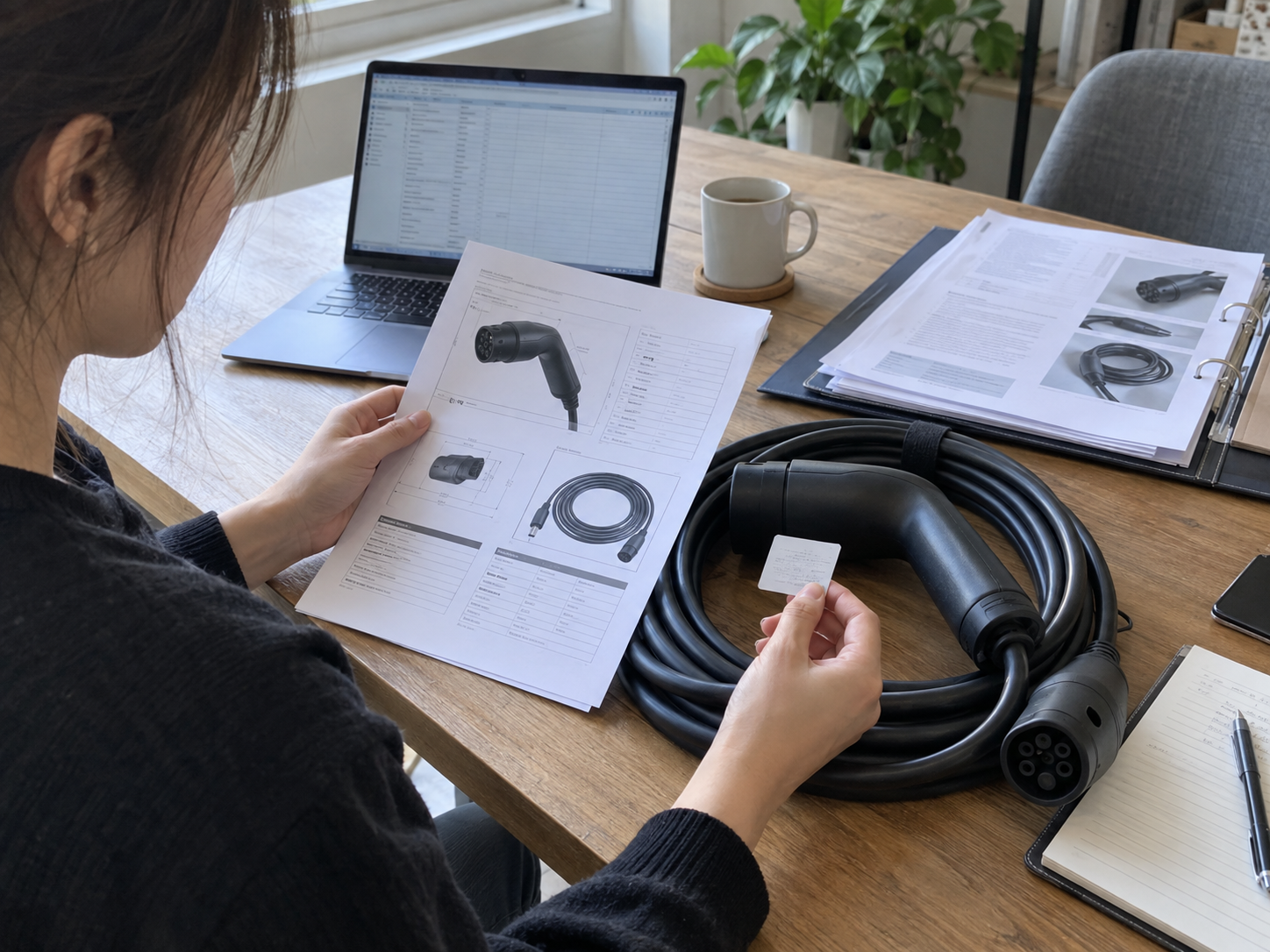
Use a review matrix like this:
| Specification field | Supplier value | Condition or scope | Evidence | Buyer decision |
|---|---|---|---|---|
| SKU and revision | [exact value] | Applies to quoted configuration | Datasheet, label, drawing | Verified / clarify |
| Connector fitment | [interface and direction] | Tested models and exclusions | Fitment record, drawing, photos | Verified / sample required |
| Electrical rating | [voltage, current, phase] | Mode, duty, temperature, or installation condition | Datasheet, report, test record | Verified / conditional |
| Environment | [temperature, outdoor, UV, ingress] | Product configuration and exposure boundary | Datasheet, report, sample | Verified / evidence pending |
| Dimensions | [critical dimensions and tolerance] | Reference drawing and mating clearance | Drawing, measurement record | Verified / rework |
| Installation | [mounting, fasteners, load, clearance] | Surface and orientation assumptions | Installation guide, drawing | Verified / clarify |
| Documents | [file list and revisions] | Target market and language | Document index, controlled files | Verified / pending |
| Packaging | [pack-out and bundle contents] | Standard, neutral, or branded | Packaging spec, sample photos | Verified / conditional |
| Traceability | [lot, batch, serial, date code] | Retrieval time and records linked | Traceability example | Verified / gap |
The verification sequence should be:
- Identity check: Match the specification sheet to the quotation, sample, label, drawing, and packaging.
- Fitment check: Confirm the named vehicle, charger, connector, station, cable, or mounting reference.
- Condition check: Read the footnotes and determine when each rating or claim applies.
- Evidence check: Match the datasheet, report, declaration, listing, manual, and inspection record to the same revision.
- Physical check: Measure critical dimensions and inspect materials, markings, workmanship, included parts, and packaging.
- Use check: Test the accessory under the buyer’s approved conditions and record what was not tested.
- Decision check: Mark verified, conditional, missing, sample required, or rejected, with an owner and next action.
Do not allow a specification sheet to become a list of unchecked supplier claims. The buyer can use verified only when the value is supported by the defined evidence. Use conditional when the product appears acceptable but a stated condition must be controlled. Use missing or pending when the evidence is not available.
For sample decisions, keep the specification review connected to the EV charging cable quality inspection checklist and the EV charging accessories sample order checklist. The specification sheet defines what the product should be. The sample and inspection records show whether the delivered item matches it.
How Should Revision Control Be Managed After Approval?
Revision control should make every change visible and should define whether the buyer needs a new document, sample, test, approval, or market review. The approved specification is a reference for repeat orders, not permission to change the product silently.
Review changes to:
- Connector, contact, cable, housing, seal, fastener, electronic, or packaging component.
- Material, finish, color, dimensions, cable length, connector mix, or bundle contents.
- Supplier, factory, subcontractor, equipment, process parameter, tool, mold, fixture, or test method.
- Datasheet, drawing, label, manual, declaration, certificate, listing, test report, barcode, or packaging artwork.
- Supported vehicle, charger, station, market, language, installation, or environmental boundary.
The change record should state the affected SKU and revision, the current and proposed values, reason for the change, product and market impact, evidence update, sample or revalidation requirement, first affected lot, old-stock plan, and buyer approval. A change that affects a document but not the physical product still needs document and release control. A change that affects fitment, rating, or materials may require technical and sample review.
The EV charging accessories supplier checklist helps buyers assess whether a supplier can maintain traceability and communication. The specification sheet itself should include a revision history with document owner, date, change description, and approval status.
What Copyable Product Specification Sheet Template Can Buyers Use?
Copy the following fields into a technical datasheet, supplier document request, catalog form, or internal review sheet. Remove fields that are genuinely not applicable, and mark them N/A with a reason.
EV CHARGING ACCESSORIES PRODUCT SPECIFICATION SHEET
- Document number:
- Document revision:
- Effective date:
- Prepared by:
- Approved by:
- Target country / market:
- Sales channel:
1. Identity and Configuration
- Product name:
- Buyer SKU:
- Supplier SKU / model:
- Product family:
- Factory / manufacturer:
- Product revision:
- Included components and accessories:
- Variant description:
- Known alternatives:
- Known exclusions:
2. Connector and Fitment
- Connector / inlet / outlet family:
- Plug or socket:
- Vehicle-side / charger-side / station-side:
- Adapter source and destination direction:
- Pin / contact configuration, where applicable:
- Keying, latch, locking, pilot, proximity, or communication features:
- Compatible vehicle / charger / station / holder references:
- Models tested:
- Models not tested:
- Unsupported use cases:
- Controlled drawing or compatibility matrix reference:
3. Electrical Ratings
- AC or DC charging mode:
- Rated voltage:
- Rated current:
- Phase / conductor arrangement:
- Power basis, where relevant:
- Operating mode or duty condition:
- Temperature condition for rating:
- Communication / control requirements:
- Marking and installation information:
- Derating, limitations, or exclusions:
4. Environment
- Operating temperature:
- Storage temperature:
- Indoor / outdoor boundary:
- UV exposure:
- Rain / water exposure:
- Dust / ingress boundary:
- Corrosion / salt exposure:
- Cleaning agents or methods:
- Humidity or chemical exposure:
- Material, sealing, and protection assumptions:
5. Materials and Dimensions
- Cable / housing / contact / seal materials:
- Cable length:
- Cable outer diameter:
- Weight:
- Bend radius:
- Critical connector dimensions and tolerances:
- Mounting dimensions / hole pattern:
- Load and clearance:
- Surface finish / colour:
- Drawing reference and revision:
- Measurement method or inspection reference:
6. Installation and Handling
- Installation method:
- Mounting surface:
- Fasteners and hardware:
- Tightening or assembly requirements, where applicable:
- Orientation and clearance:
- Cable routing and storage:
- Handling and lifting:
- Cleaning and maintenance:
- Warnings and limitations:
- Replacement or service method:
7. Documents and Packaging
- Datasheet file and revision:
- Technical drawing file and revision:
- Label / marking file and revision:
- User / installation manual and languages:
- Declaration / certificate / listing and scope:
- Test report, method, date, and sample identity:
- Inspection plan or QC record:
- Packaging type:
- Barcode and language:
- Bundle contents:
- Artwork owner and revision:
- Shipping and storage protection:
8. Traceability and Change Control
- Lot / batch / serial / date-code format:
- Traceability retrieval method:
- Component and production record link:
- Shipment record link:
- Current approved revision:
- Change notification process:
- Sample or revalidation trigger:
- Buyer approval requirement:
- Old-stock and first-affected-lot rule:
9. Buyer Verification
- Supplier value:
- Condition / scope:
- Evidence ID:
- Physical sample checked: [yes / no / N/A]
- Document checked: [yes / no / N/A]
- Status: [verified / conditional / missing / sample required / rejected]
- Open issue:
- Owner:
- Due date:
- Closure evidence:
Use the template together with the supplier’s actual datasheet, drawing, sample, evidence pack, packaging sample, and quotation. A filled-in form without linked evidence is only a data request. The review is complete when the buyer can explain what the value means, which conditions apply, and what decision the evidence supports.
If you are verifying an EV charging accessory specification pack, share the exact SKUs, connector references, ratings, target market, and required documents. We can help compare the supplier data with the physical sample and identify fields that need evidence before release.
Conclusion: Approve the Data Pack With the Product
An EV charging accessories product specification sheet should identify the exact product and revision, define connector and fitment, state electrical and environmental conditions, describe materials and dimensions, support installation and handling, index documents and packaging, and preserve traceability and change control.
Verify every important value against a drawing, physical sample, test record, document revision, installation reference, or supplier record. Record exclusions and conditions next to the claim. A precise specification sheet reduces fitment misunderstandings, inconsistent listings, installation questions, sample disputes, and repeat-order changes.
If you need help building a target-market-ready data pack, request a product specification pack review with the product list, connector references, drawings, market, packaging requirements, and required evidence. The goal is a controlled document set that sales, installers, quality, procurement, and suppliers can all interpret the same way.
Frequently Asked Questions
What is an EV charging accessories product specification sheet?
It is a controlled product record that identifies the SKU and revision, fitment, ratings, environment, materials, dimensions, installation, handling, documents, packaging, traceability, and change-control requirements. It helps buyers, installers, distributors, and suppliers work from the same product definition.
Is a product catalogue page the same as a specification sheet?
Usually not. A catalogue page may summarize features and applications. A specification sheet should add exact product identity, conditions, dimensions, ratings, documents, revision, exclusions, and evidence references that support technical and procurement decisions.
Which fields are most important for connector fitment?
Record the exact interface, plug or socket, vehicle-side or charger-side position, adapter direction, keying, locking, mating dimensions, clearance, tested references, and exclusions. A connector family name without a model or use boundary may be too broad for a purchase or installation decision.
Should a specification sheet include electrical ratings?
Yes, when the accessory has an electrical or charging-related function. State AC or DC mode, voltage, current, phase, operating condition, temperature, communication or control requirements, derating, and exclusions. Values should be linked to the exact configuration and supporting evidence.
Why do ratings need conditions and exclusions?
The same number can be understood differently depending on mode, duty, ambient temperature, installation, ventilation, cable routing, connector configuration, or test method. Conditions show when the value applies. Exclusions prevent a general rating from being read as a guarantee for an unsupported use case.
What documents should accompany a product specification sheet?
Request the current drawing, datasheet, label and marking file, manual, applicable declaration or listing, relevant test report, inspection plan, packaging specification, and traceability record. Each document should identify the product, revision, date, scope, and owner.
How should buyers verify a supplier datasheet?
Match the datasheet to the quotation, sample, label, drawing, packaging, test evidence, and intended use. Record the supplier value, condition, evidence ID, and decision. Use verified, conditional, missing, sample required, or rejected instead of leaving the review as an informal email exchange.
Does a specification sheet replace sample testing?
No. The sheet defines what the product should be. A sample test checks whether the delivered configuration matches the definition and works under the buyer’s approved conditions. Connect the specification, sample approval, and production inspection records.
When should a specification sheet receive a new revision?
Revise it when product identity, connector, material, rating, dimensions, supplier, factory, process, document, label, packaging, bundle contents, fitment scope, or environmental boundary changes. The change record should state whether a new sample, test, document, or buyer approval is required.
Can one specification sheet cover several variants?
It can, if the variants are clearly separated by SKU, revision, connector, length, rating, material, packaging, and fitment. Do not combine values in a way that makes it unclear which rating, document, or drawing belongs to which product.
References
[1] International Electrotechnical Commission. “IEC 61851-1:2017 Electric vehicle conductive charging system – Part 1: General requirements.” 2017.
[2] International Electrotechnical Commission. “IEC 62196-1 Plugs, socket-outlets, vehicle connectors and vehicle inlets – Conductive charging of electric vehicles – Part 1.” 2022.
[3] International Electrotechnical Commission. “IEC 62893-1:2017 Charging cables for electric vehicles for rated voltages up to and including 0,6/1 kV – Part 1: General requirements.” 2017.
[4] UL Solutions. “Safety and Performance Testing for Automotive Cables and Connectors.” 2025.