




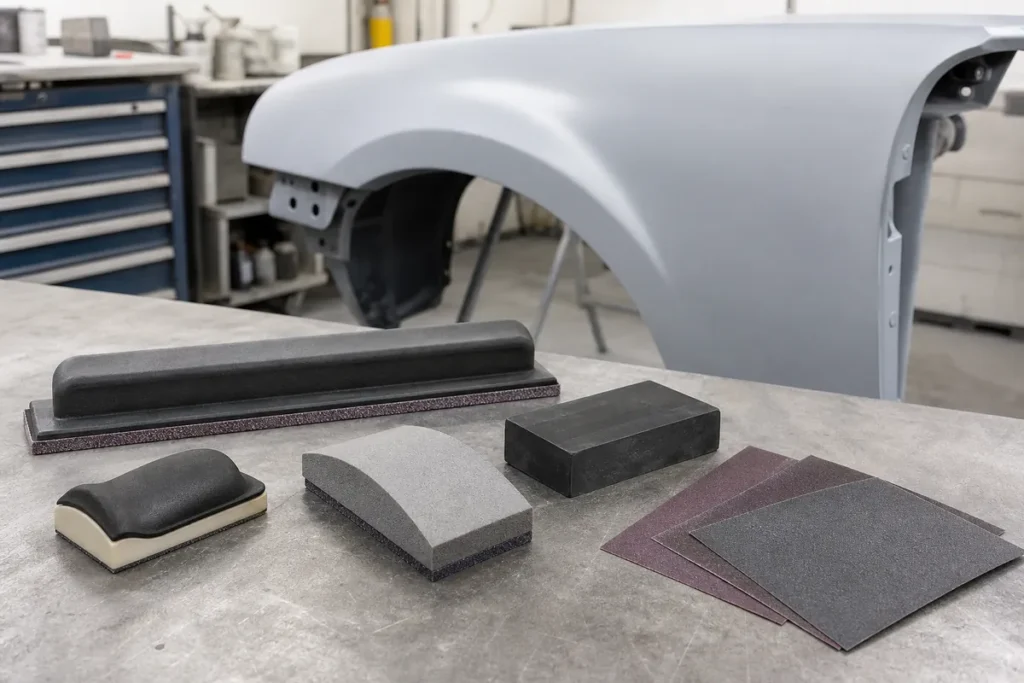
A sanding block is a backing tool that holds sandpaper flat or in a controlled shape while sanding a car panel. In auto body work, the block is what helps the abrasive level primer, shape filler, reveal waves, and avoid the finger marks that happen when sandpaper is used without support.
The block may look simple, but it changes the whole sanding result. Bare fingers follow every dip and high spot. A proper block bridges across uneven areas so the technician can see and correct the panel shape. That is why good body work still depends on sanding blocks even in shops full of DA sanders and power tools.
This guide explains sanding block types, how they are used in automotive repair, when to choose hand blocking instead of machine sanding, and what buyers should check before adding blocks and matching abrasives to a product range.
Table of Contents
- What does a sanding block do in auto body work?
- Why is a sanding block better than sanding by hand alone?
- What are the main types of sanding blocks?
- When should you use a sanding block on a car?
- How do you choose sandpaper for a sanding block?
- How is blocking different from using a DA sander?
- What mistakes make sanding blocks leave poor results?
- What should buyers check before sourcing sanding blocks and sheets?
- Conclusion: A sanding block is a shape-control tool
- Frequently Asked Questions
- References
What does a sanding block do in auto body work?
A sanding block spreads pressure across the abrasive so the panel is sanded by a controlled surface rather than by fingertips. It helps level filler, primer surfacer, and repaired areas while keeping the panel shape easier to read.
The block can be rigid, flexible, soft, long, short, flat, or contoured. Its job is to support the sandpaper in the shape needed for the repair. A long rigid block levels broad panels. A flexible block follows a gentle curve. A small detail block works around tight repairs and edges.
Body work is not only about removing material. It is about removing the right material from the right high spots while leaving the shape correct. A block helps the technician sand the panel, not just the defect.
Why is a sanding block better than sanding by hand alone?
A sanding block is better than unsupported hand sanding because it reduces finger grooves, uneven pressure, and accidental waves. It makes highs and lows easier to find, especially when used with guide coat on primer or filler.
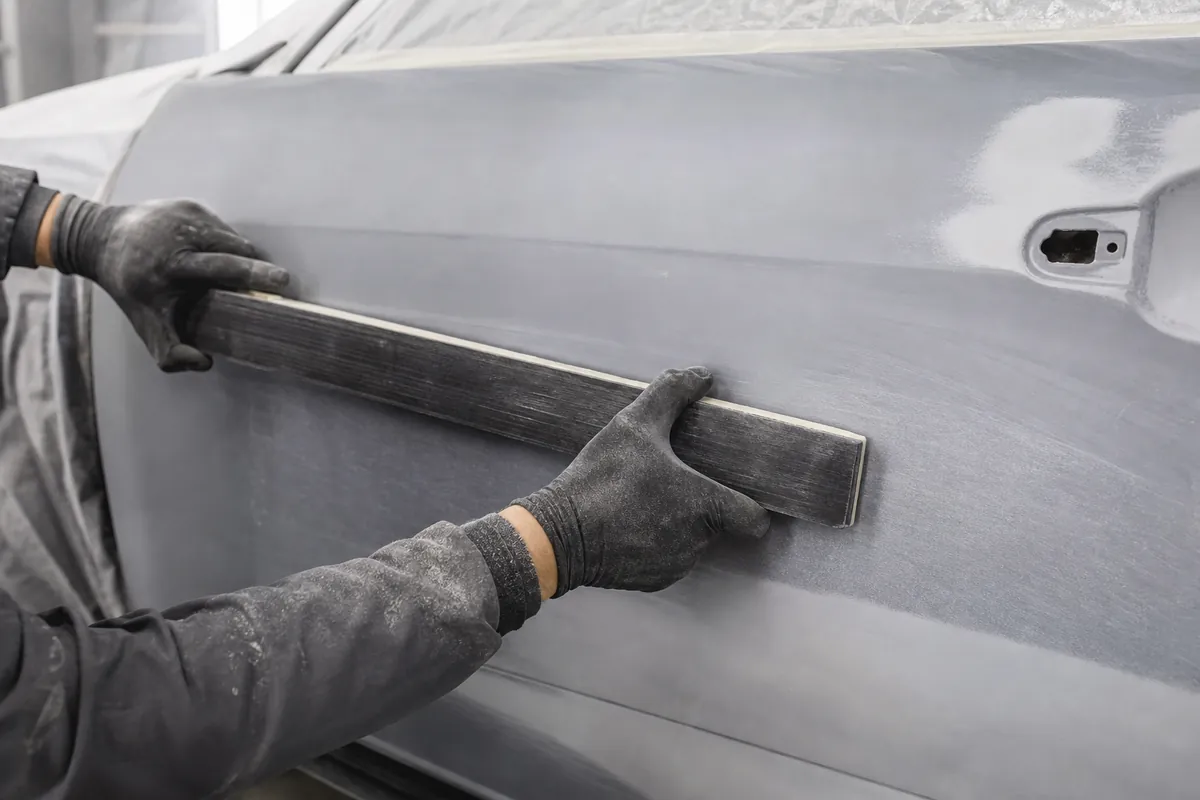
When sandpaper is held only by the fingers, pressure concentrates under each fingertip. That can create grooves or soft low spots. The repair may feel smooth at first, but under paint it can show waves, ripples, or uneven reflections.
A block bridges across the surface. High spots are sanded first, while low spots remain visible through guide coat or unsanded primer. This feedback is one reason hand blocking remains important in collision repair and restoration.
The block also helps keep the abrasive working evenly. Sandpaper that folds, wrinkles, or loads unevenly can create random scratches. A flat backing gives the abrasive a more stable cutting surface.
What are the main types of sanding blocks?
The main automotive sanding block types are long boards, rigid blocks, flexible blocks, foam blocks, rubber blocks, detail blocks, and contour blocks. Each one changes how much the abrasive levels, follows curves, or reaches small areas.
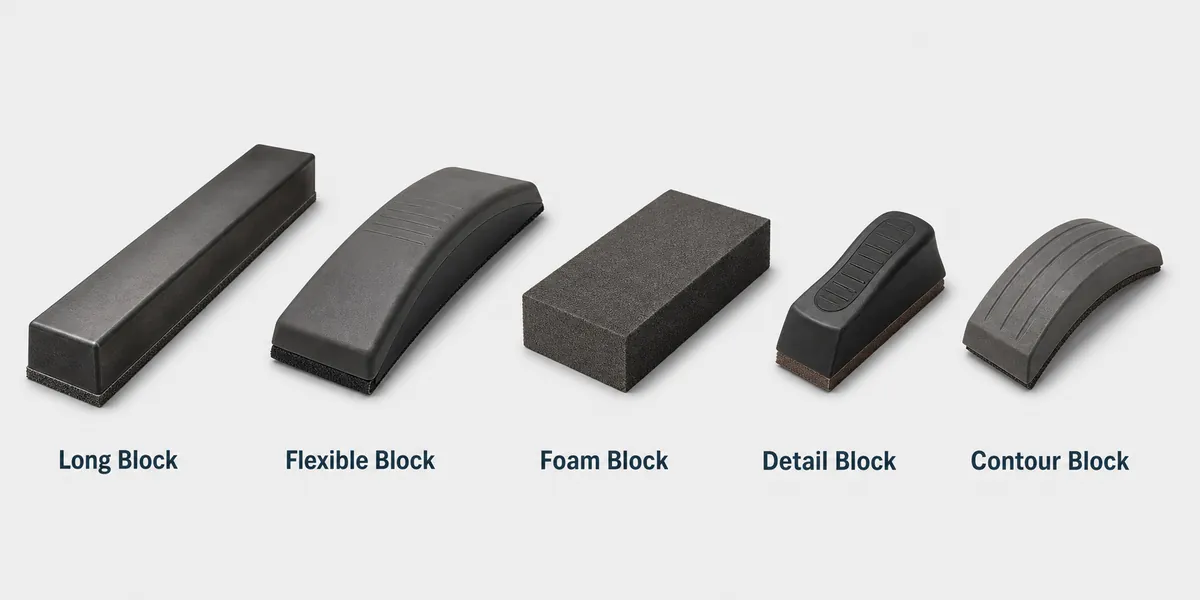
| Sanding Block Type | Best Use | Main Benefit | Main Limitation |
|---|---|---|---|
| Long board | Doors, quarters, hoods, broad repairs | Reveals waves and levels large areas | Hard to use in tight spaces |
| Rigid block | Flat filler and primer work | Strong shape control | Can cut edges if misused |
| Flexible block | Gentle curves and body contours | Follows panel shape | Less aggressive leveling |
| Foam block | Fine sanding and soft curves | Forgiving pressure | Can round edges |
| Detail block | Small repairs and tight areas | Precise control | Slow on large panels |
| Contour block | Curves, channels, body lines | Matches shaped surfaces | Needs the right profile |
No single block is best for every repair. A shop may use a long block to shape primer, a flexible block for curved areas, and a small block near edges. The block should fit the panel, not the other way around.
When should you use a sanding block on a car?
Use a sanding block when shape control matters, especially for body filler, primer surfacer, feathered edges, flat panels, guide coat work, and final surface checks before paint. A block is most valuable when the panel must be straight, not just smooth.
For body filler, a block helps shape the repair without creating finger valleys. For primer surfacer, it reveals waves and low spots. For feathered edges, a small or flexible block can refine the transition without digging into a body line.
Blocking is also useful before final paint because reflections reveal shape problems. A panel can feel smooth but still look wavy under gloss. Guide coat and a sanding block make that problem easier to see before the car reaches the spray booth.
For readers comparing abrasive formats, the related automotive sandpaper guide explains sheets, rolls, discs, backing types, and wet/dry papers used around sanding blocks.
How do you choose sandpaper for a sanding block?
Choose sandpaper for a sanding block by matching grit, backing, sheet size, flexibility, and wet or dry method to the repair stage. The paper should attach securely and stay flat without tearing, wrinkling, or clogging too quickly.
Coarse grits shape filler faster, while medium grits refine primer and repair edges. Fine grits prepare surfaces for sealer or paint depending on the coating system. The related sandpaper grit chart gives a clearer progression for automotive work.
Backing matters. A paper that is too stiff may not wrap a small block well. A paper that is too weak can tear around edges. Wet/dry paper must hold together with water, while dry sanding paper should resist loading and cut cleanly with guide coat.
For dry block sanding, dust feedback is useful, but dust control still matters. For wet block sanding, water helps carry away residue and reduce clogging, but slurry can hide lows and scratches. The related wet sanding vs dry sanding guide explains the practical trade-off.
How is blocking different from using a DA sander?
Blocking is slower but better for reading and correcting panel shape, while a DA sander is faster for uniform sanding over larger areas. Many repairs need both.
A DA sander moves the abrasive in a random orbital pattern, which is useful for paint prep, primer sanding, and fast surface work. The related DA sander guide explains how orbit, pad flatness, and pressure change sanding results. If the machine uses round discs, the related sanding disc guide explains disc size, attachment, backing, and hole pattern.
A sanding block gives more shape feedback. It can reveal waves that a soft DA pad may follow instead of correcting. That is why technicians often rough sand with machines, then block primer or filler to confirm straightness.
The choice is not a contest. Use the DA for speed where it makes sense. Use the block where the surface must be straight and readable.
What mistakes make sanding blocks leave poor results?
Sanding blocks leave poor results when the wrong block is used, pressure is uneven, grit steps are skipped, the paper is loaded, or the technician sands only in one small direction. The block helps, but it cannot fix poor technique.
One mistake is using a soft block when flatness matters. A soft block may follow waves instead of cutting them down. Another mistake is using a rigid block on a tight curve, which can flatten the shape or cut through edges.
Sanding in only one direction can also hide problems. Crosshatch passes make the scratch pattern more even and help the technician read highs and lows. Guide coat should disappear gradually; if it stays in one line, the surface still has a low spot or edge.
Cleanliness matters too. A single coarse particle trapped under fine paper can create a deep scratch. Change paper before it stops cutting, and clean the panel between grit steps.
What should buyers check before sourcing sanding blocks and sheets?
Buyers should check block flatness, grip comfort, flexibility, durability, abrasive attachment, sheet compatibility, packaging, grit labeling, and batch repeatability. A sanding block is simple, but poor flatness or weak paper fit can create bad repair results.
Sample testing should include real automotive primer and filler panels. Check whether the block stays flat, whether it twists, whether the handle is comfortable, and whether the abrasive slips during sanding. For flexible blocks, test whether they return to shape after use.
The automotive sandpaper and abrasives category is a practical place to connect sanding blocks with matching sheets, rolls, and abrasives. Yirox Team sample checks usually focus on abrasive cut feel, backing strength, packaging protection, label clarity, and whether the delivered batch matches the approved sample.
For distributors, compatibility is important. A block and paper range should make sense together: common sheet sizes, clear grit steps, stable packaging, and labels technicians can read quickly in a busy shop.
If you are sourcing sanding blocks for an auto-body workflow, tell us the repair stage, abrasive format, grit range, block shape, backing, and shop conditions you need to support. We can help you identify a practical product and sample brief.
Conclusion: A sanding block is a shape-control tool
A sanding block is not just a holder for sandpaper. It is a tool for controlling pressure, reading panel shape, and preventing the uneven marks that happen when sanding by fingers alone.
Use long and rigid blocks for leveling, flexible or foam blocks for curves, and small blocks for detail areas. Match the block with the correct sandpaper grit, backing, and method. For auto body work, the best finish usually comes from using power tools for speed and sanding blocks for shape control.
Frequently Asked Questions
Do you really need a sanding block for auto body work?
Yes, a sanding block is strongly recommended when panel shape matters. It helps prevent finger grooves and makes highs, lows, and waves easier to see.
What is the best sanding block for body filler?
A rigid or semi-rigid block is often best for shaping body filler because it levels high spots instead of following them. The block length should match the repair area.
Can you wet sand with a sanding block?
Yes, wet sanding with a block is common for fine finishing and paint work. Use wet/dry paper and keep the surface clean so slurry does not hide scratches or trap debris.
Is a foam sanding block good for cars?
Foam blocks are useful for curves, fine sanding, and softer contact. They are less ideal when a repair must be blocked very flat.
Can a DA sander replace a sanding block?
No, not completely. A DA sander is faster, but a sanding block gives better shape feedback for filler, primer, and straightness checks.
References
[1] 3M. *Automotive sanding blocks and surface preparation systems*.
[2] I-CAR. *Collision repair surface preparation and blocking practices*.
[3] OSHA. *Autobody repair and refinishing hazards*.